Repairs · Springwater
Garage Door Tune-Up in Springwater
Twice this week the door started closing, stopped a metre from the floor and reopened on its own.
In plain words
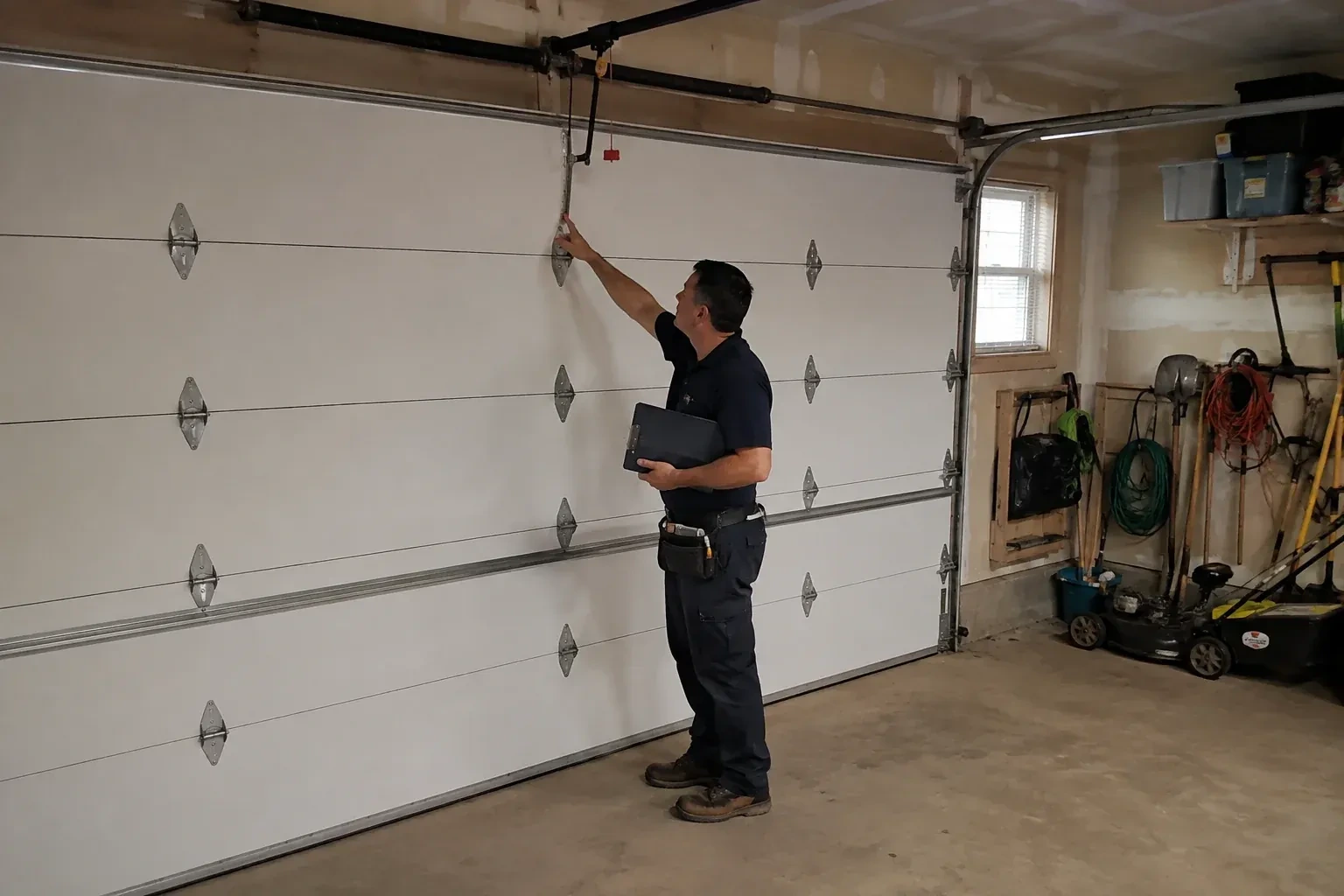
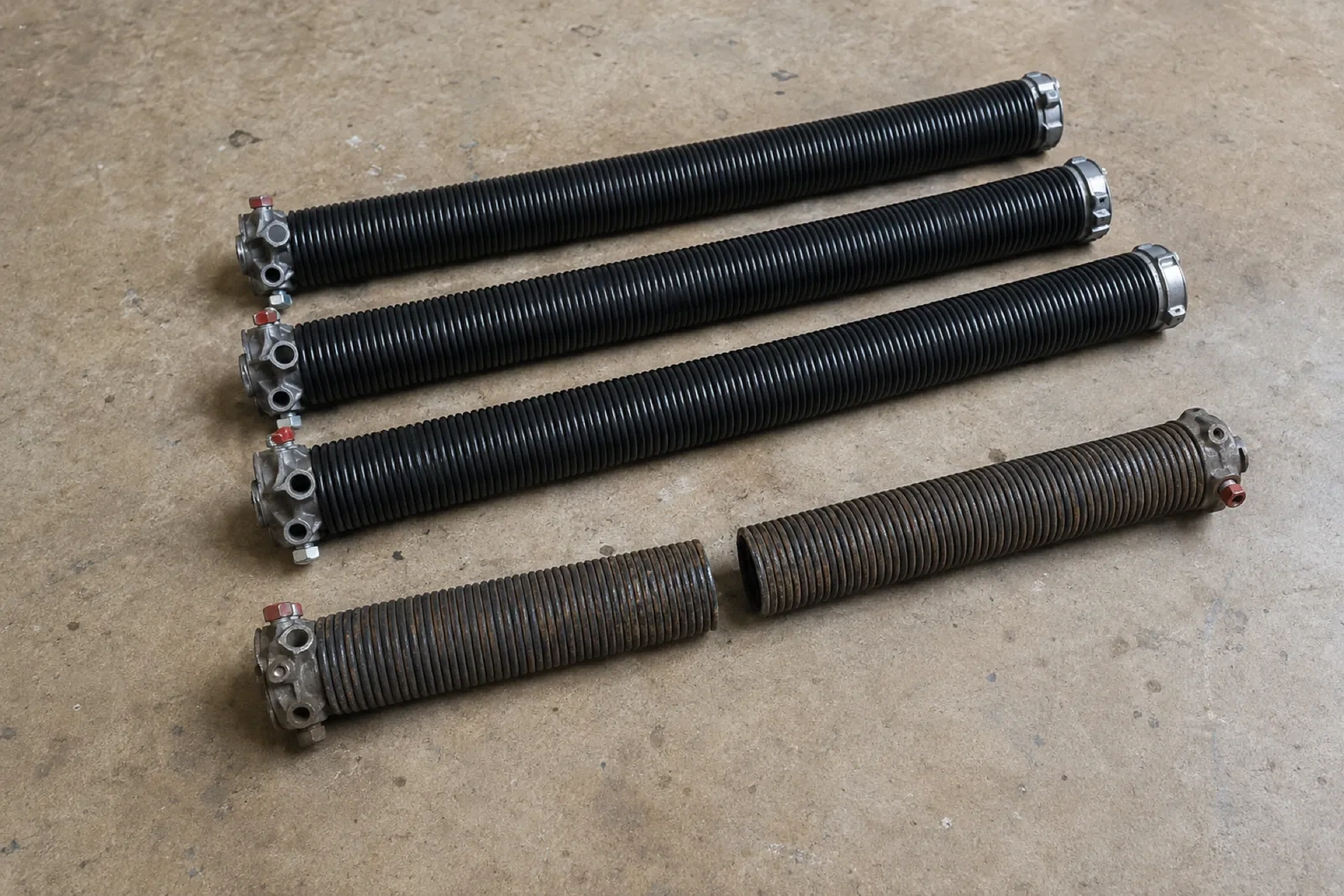
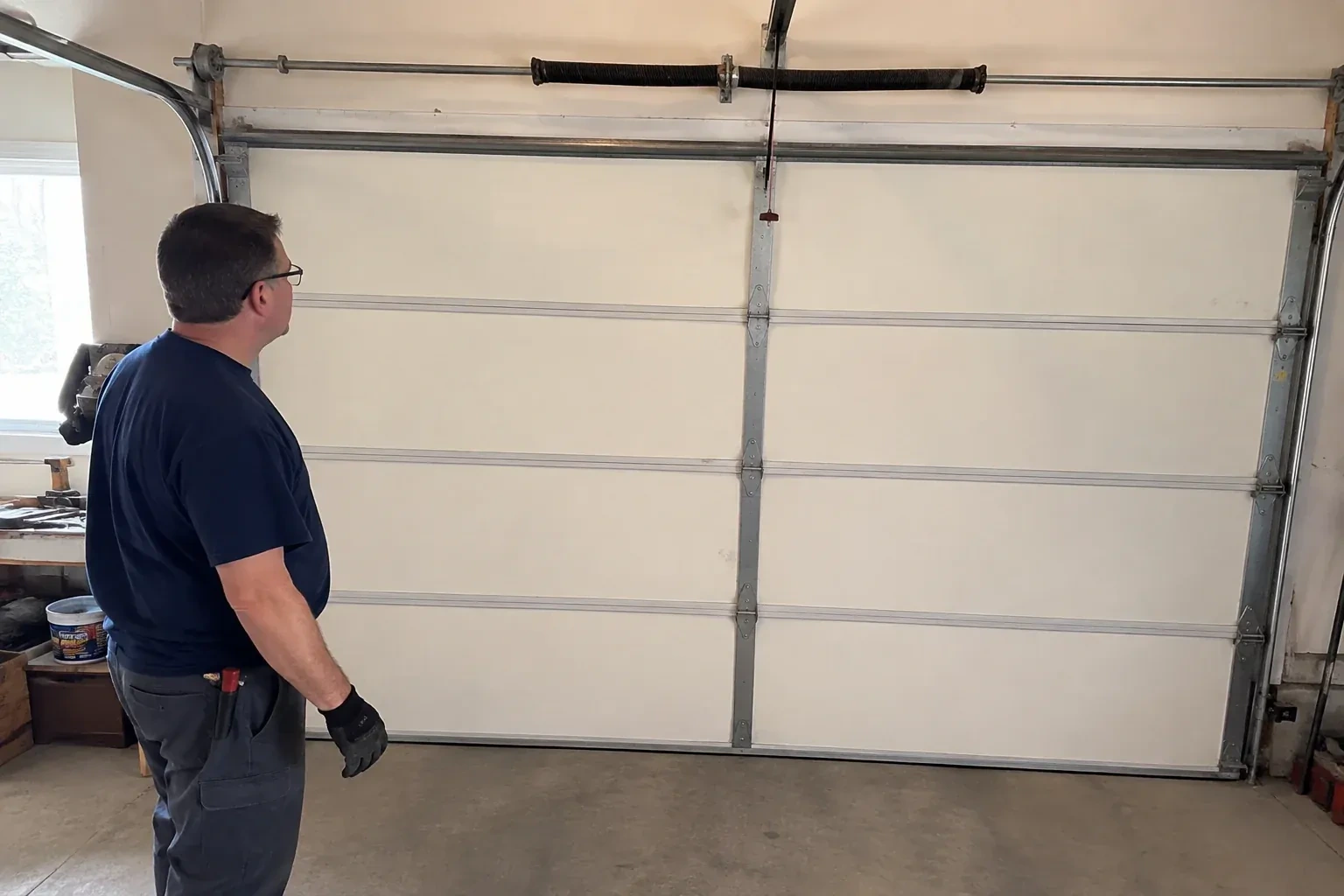
The heart of a tune-up is the balance check. Your springs are meant to carry nearly the whole weight of the door so the opener only has to guide it. When the door is disconnected from the opener and lifted by hand, it should rise without effort, stay open on its own and hold still partway. A door that sinks or feels heavy is telling you the springs have lost tension, and an opener made to move a balanced door is straining. The tune-up identifies this and treats spring adjustment as its own carefully done job, with the door clamped and proper winding bars.
How the visit goesHalfway up, the door shudders. The sections seem to catch for a moment, the whole assembly shakes, then it carries on as if nothing happened. You have started holding your breath at that spot each time.
Garage Door Tune-Up
How the visit goes
Seals, weatherstrip and the threshold
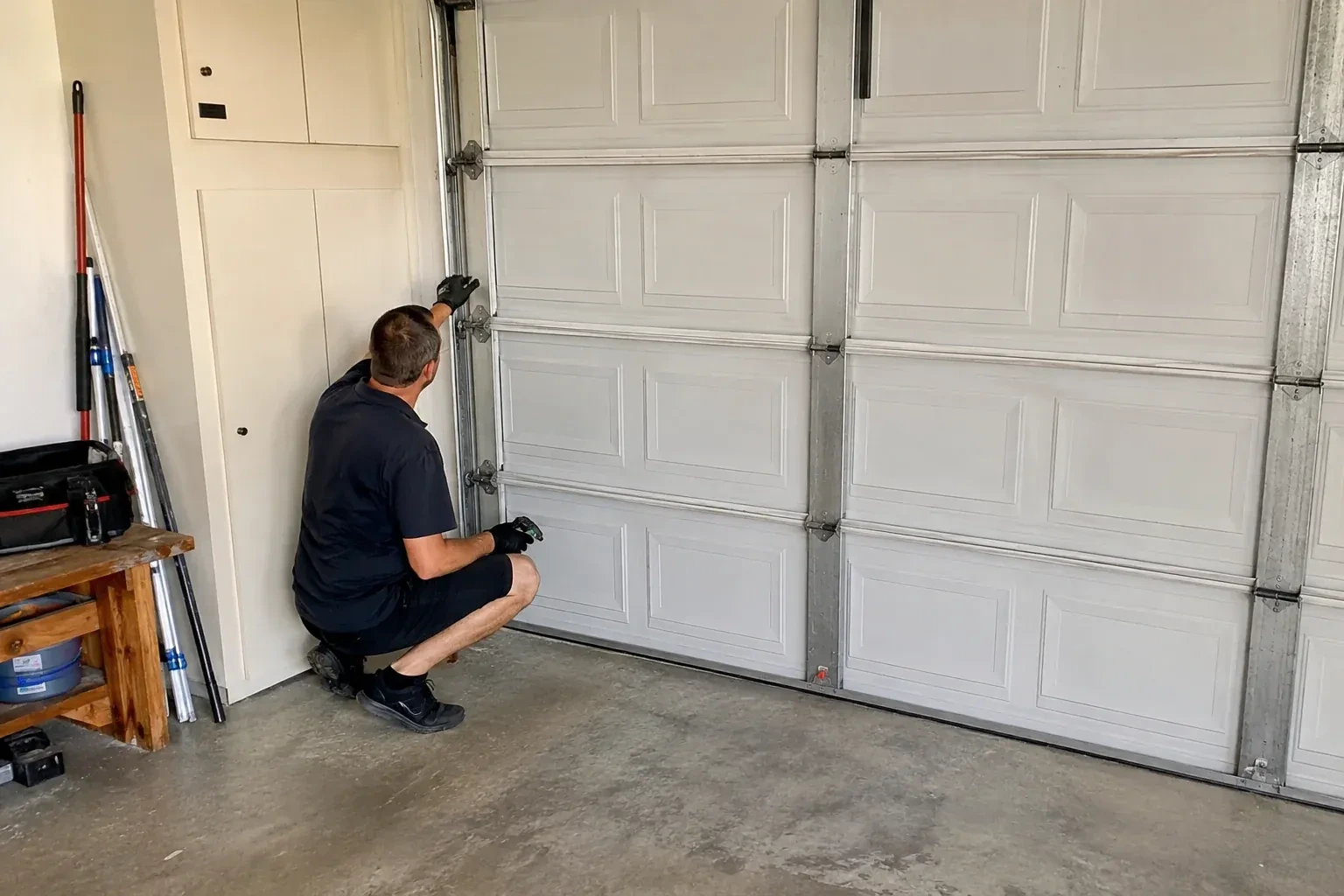
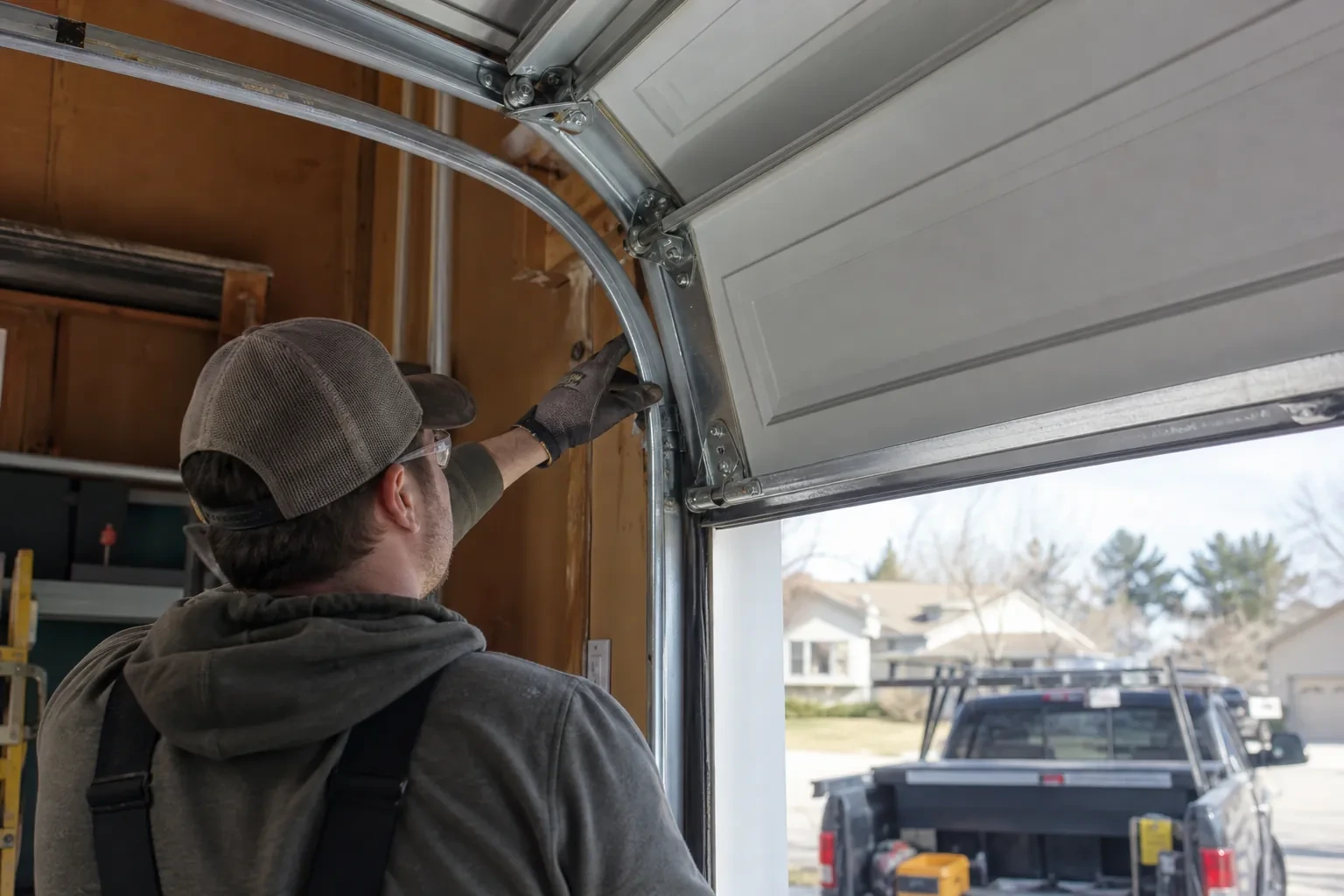
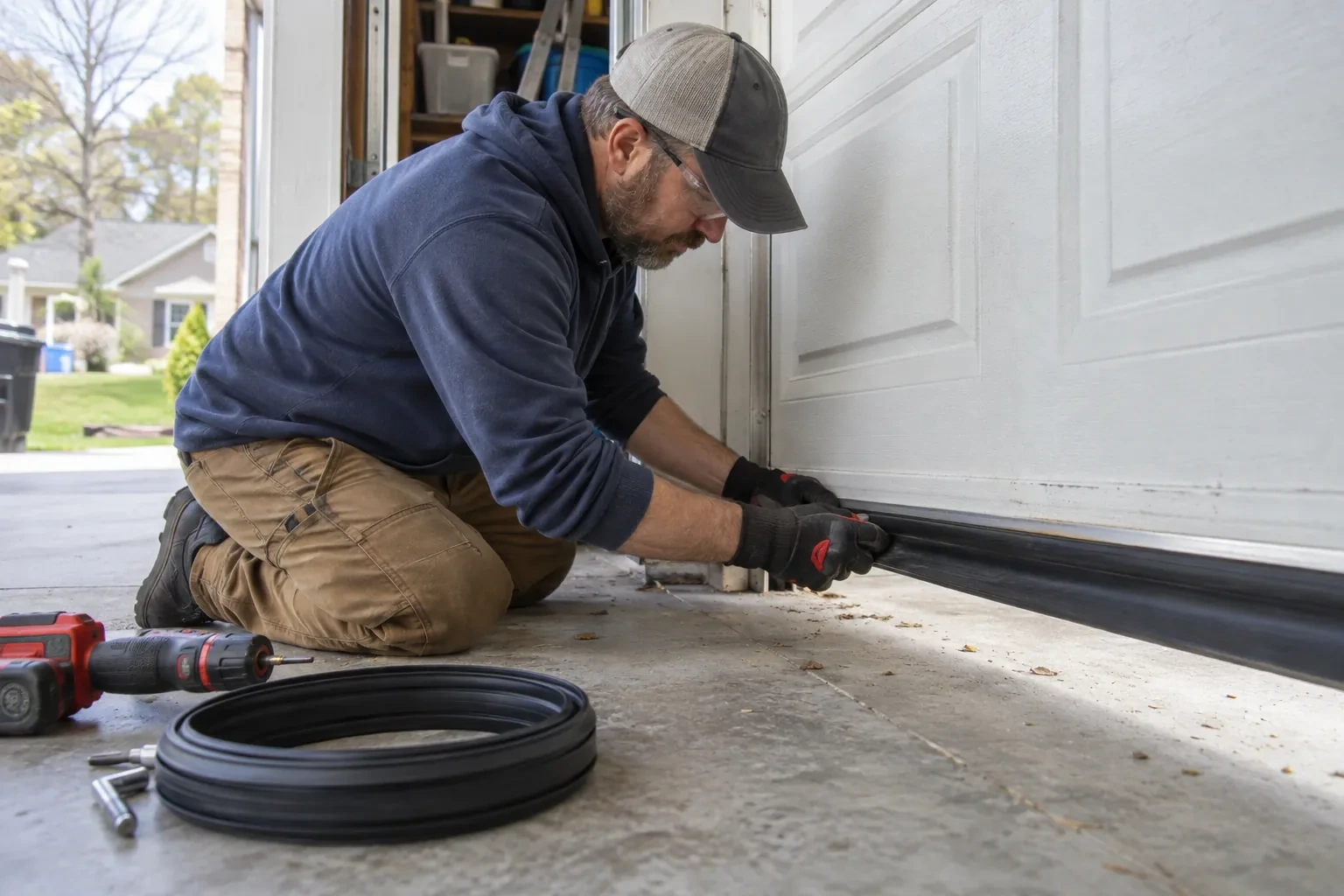
The bottom seal is checked along its whole length for tears, flattening and stiffness, and the threshold is looked at for the low spots where water pools and freezes. The jamb and header weatherstrip are pressed to see whether the rubber or vinyl still flexes or has gone hard, and the technician notes any daylight showing when the door is closed. Because the opener's travel limit decides how firmly the door presses onto its seal, the two are read together: a crushed seal often means the down limit is set too far, and a gap often means the door is stopping early. This part of the check matters most before winter.
Cleaning and aligning the photo-eyes
Photo-eyes work only when each sensor can see the other. The lenses are wiped clean of dust, cobwebs and salt film, the brackets are checked for the bends that a bin or a bicycle tire leaves behind, and the pair are aligned until both indicator lights hold steady. Height is confirmed at no more than about 15 centimetres off the floor, and the wiring is traced back to the opener head for a chafed or loose connection. Where low sun fools a sensor at a certain hour, a small shade or swapping the two units settles it. Once aligned, the beam is tested with the door closing to confirm it reverses and returns fully open.
Balance you can feel with one hand
Before leaving, the technician shows you how to check the balance yourself: pull the red release with the door closed, lift the door by its handle, and feel it rise easily, stay open and hold still partway. Knowing what a balanced door feels like is the single most useful thing a homeowner can take from a tune-up, because a door that starts to sink or grow heavy over the coming year is telling you the springs are tiring, long before the opener fails. If the balance was found wanting on this visit, the operator is taken out of service until the spring work is done, and that finding is in your record with a separate quote.
Garage Door Tune-Up
In the van
Locking pliers or C-clamps
Lag screws for brackets and header
2x4 test block and tape measure
Photo-eye brackets and wire
Hinge screws and track bolts
Garage Door Tune-Up
What affects the quote
Condition of rollers and hinges
Worn rollers or a cracked hinge found during inspection can be replaced on the spot if you choose, and each replaced part is listed as its own line on the quote.
Number of doors
Two or three doors on the same property are usually serviced in one visit, and the second and third door are quoted at a different rate from the first because the travel is shared.
Single or double door
A double-width door has more hinges, rollers and track to inspect and lubricate, a heavier counterbalance and usually a strut or two on the top section, so it takes longer than a single door.
What to have ready
- Has the door been struck by a vehicle or damaged in a storm?
- Are the springs mounted above the door or along the sides beside the tracks?
- Is the door worse in cold weather or after rain?
Garage Door Tune-Up: questions
QuestionsCan a tune-up make my noisy door quieter?
Usually, yes, and often dramatically. Most garage door noise comes from dry hinge pins, dry roller bearings and hardware that vibration has loosened, and those three are exactly what a tune-up addresses. Some noise comes from parts that have worn, such as a roller gone out of round or a chain that has stretched, and the technician tells you which sounds were settled by maintenance and which point to a part worth replacing, with a separate quote for that.
How do I test the safety reversal at home?
Two tests, once a month. With the door open, press close and wave a broom handle through the photo-eye beam near the floor: the door should stop and go back up. Next, set a 2x4 flat on the concrete in the middle of the opening and press close: the door must reverse when it meets the board. If it stops on the board without reversing, the down travel or force setting needs adjustment, and if it fails after that, book a visit.
What is the difference between a tune-up and a safety inspection?
An inspection looks and reports; a tune-up looks, reports and then does the maintenance. Both begin with an observed cycle and a check of hardware, balance, sensors and reversal. A tune-up goes on to tighten fasteners, lubricate the moving points, adjust the opener and align the photo-eyes, and it may swap a worn roller or a bottom seal on the spot. If you want the door serviced rather than assessed, the tune-up is the one to book.
Related services
- Off-Track Garage Door ResetThere was a loud bang from the garage, then silence.
- Garage Door Panel ReplacementYears of slap shots have peppered the lower two sections with dents.
- Garage Door Bottom Seal ReplacementEvery mild afternoon the snow melts off the car, runs to the door, and by morning the rubber strip along the bottom is frozen to the concrete.