Springs · Springwater
Garage Door Balance Adjustment in Springwater
With the door closed, daylight shows under one bottom corner and the seal is squashed flat at the other.
In plain words
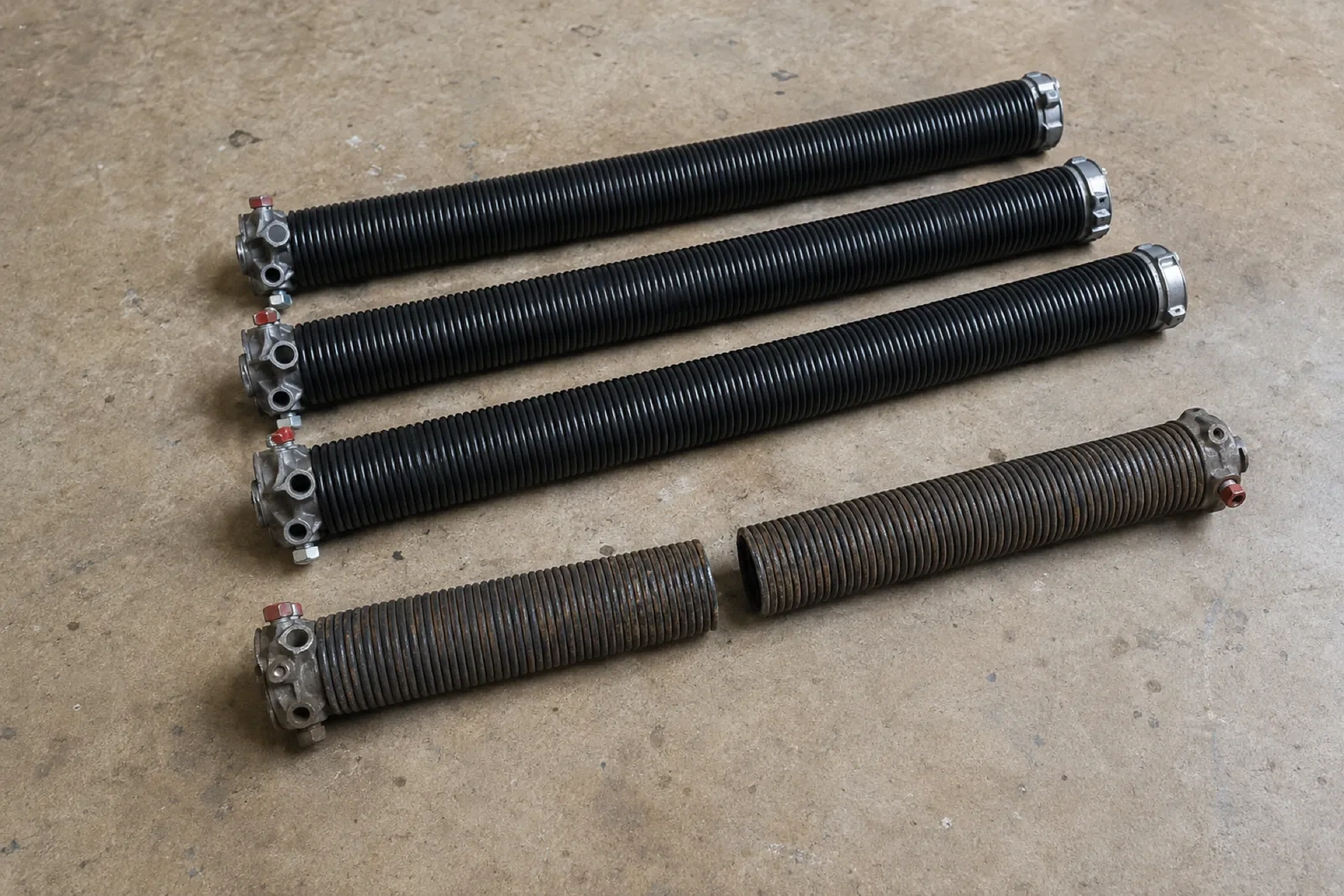
Balance changes for ordinary reasons. Springs are rated for a certain number of cycles and lose a little tension as they age. A new bottom seal, insulated panels, a window section or a decorative overlay adds weight the original springs were never sized for. Rollers stiffen, hinges wear, and in a cold snap the whole system feels heavier for a few weeks. Any of these tips the door from weightless to a chore. A balance adjustment starts by identifying which of them is at work, then resets the springs to suit the door as it is today, and corrects the friction so the adjustment holds.
How the visit goesSomeone replaced the springs a while back and the door has bounced at the top ever since. It slams open against the stops, then creeps down a few inches, and the opener trolley rattles because the door is pushing where it should be resting.
Garage Door Balance Adjustment
How the visit goes
Friction along the path
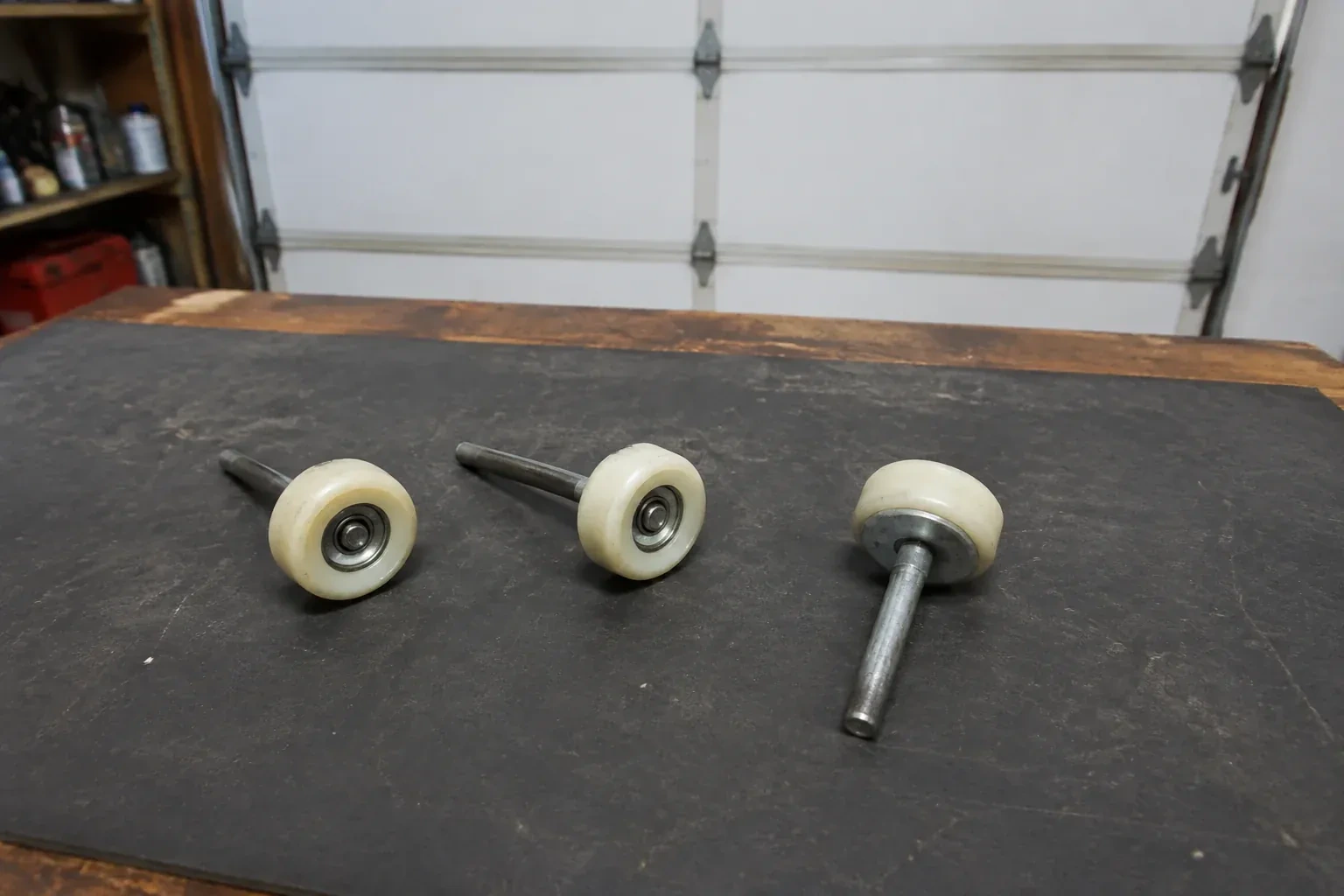
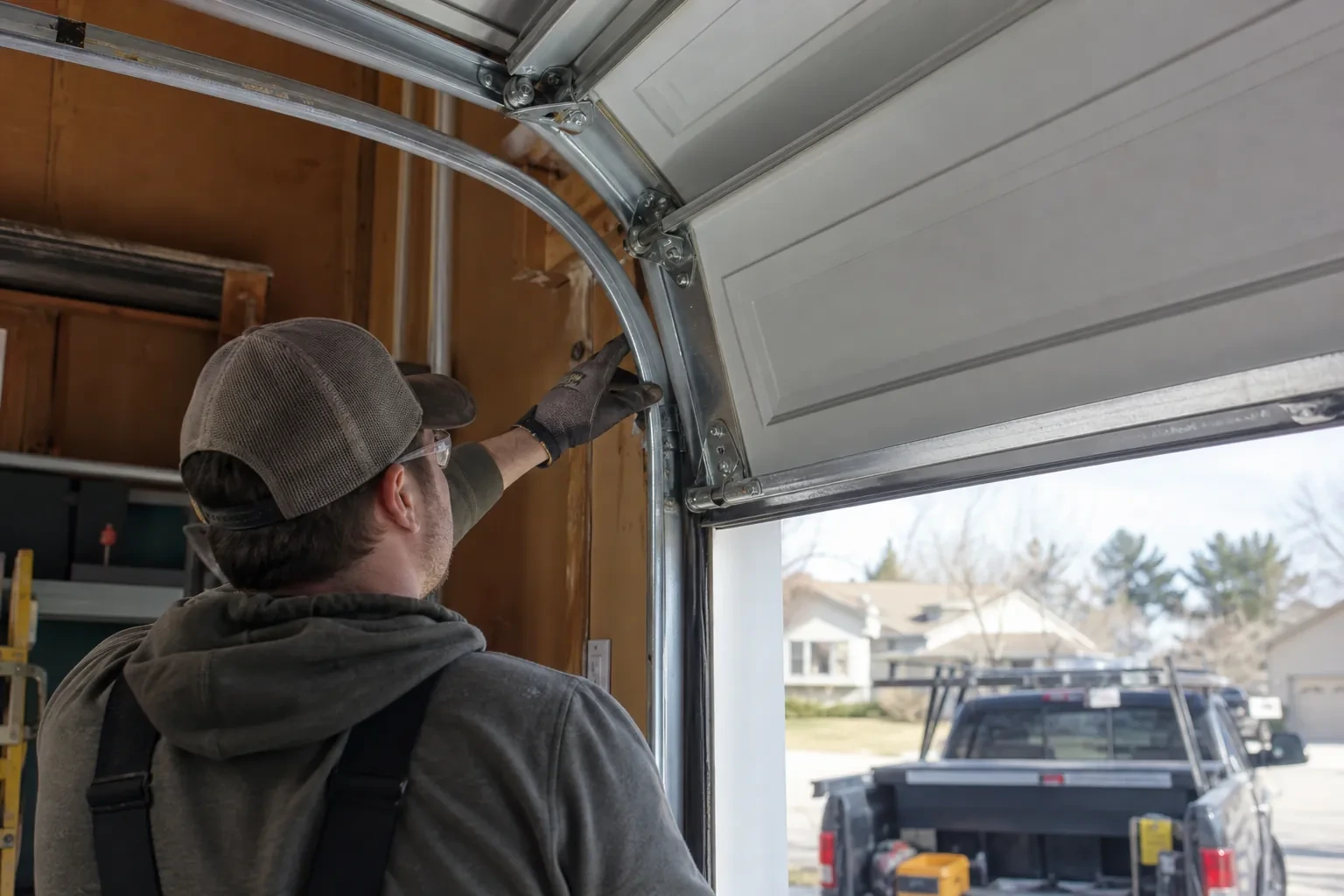
Some doors that feel heavy are not short of spring tension at all; they are dragging. The technician runs a hand and an eye along the vertical and horizontal tracks for dents, misaligned joints and brackets that have pulled away from the jamb, spins each roller to find seized bearings or cracked wheels, and flexes each hinge for play or splits. Dry, worn rollers alone can add real effort to every lift. Binding at one point in the travel, rather than heaviness everywhere, is the signature of a friction problem, and correcting it first means the springs are then adjusted to the door's true weight rather than to the drag.
Resetting the cables so the door sits level
If one corner of the door sat high, that is corrected before the final tension is set. The technician releases the spring tension enough to take the load off the drums, loosens the set screws on the drum on the low side, takes up or lets out cable until the door is level, and locks the drum again with the cable seated snugly in its groove. The bottom of the door is checked against the floor along its whole width, and both drums are confirmed to show the same number of wraps. Only then is the spring tension brought back up, because tension applied to a crooked door simply loads one side more.
Lubrication that keeps the adjustment true
A balanced door stays balanced longer when the parts that move on every cycle are kept easy. Twice a year, spray a lubricant made for garage doors along the torsion spring, onto each hinge pin, the roller stems and bearings, and the bottom bracket pins, then run the door a few times. Wipe the tracks clean but leave them dry, since a coated track collects grit and lets rollers slide. Avoid heavy grease. Friction is part of what the hand test measures, so a door that is well lubricated reads true, and the springs are not asked to overcome drag that a moment's maintenance would remove.
Garage Door Balance Adjustment
In the van
Nylon or steel rollers
Cable drums
Winding bars
Extension springs and S-hooks
Door scale
Garage Door Balance Adjustment
What affects the quote
Access to the spring shaft
Shelving, bikes or storage close to the header, a very high ceiling or a tight low-headroom installation slow the work. Clearing the area beforehand helps the time quoted.
Whether a second person is needed to support the door
A heavier double door or one already sitting unevenly is sometimes safer to adjust with a second person steadying it while the springs are reset. That extra pair of hands is called in once the technician sees how the door is behaving on site.
Commercial or oversized doors
Doors wider or heavier than a standard residential opening use heavier springs, sometimes several on one shaft, and take longer to wind and test, which the quote reflects.
What to have ready
- When were the springs last replaced or adjusted, if you know?
- Does the opener strain, stall, or reverse before reaching the floor?
- Has anyone turned up the force setting on the opener?
Garage Door Balance Adjustment: questions
QuestionsHow often does a garage door need a balance adjustment?
There is no fixed interval; the door tells you. Many doors go years between adjustments, especially when they are lubricated and the springs were sized correctly. A hand test each season is the reliable guide: if the released door holds at about a metre and stays fully open, it is fine. When it starts to drift or sink, that is the time.
Is this something I can do myself?
The hand test, yes, and it is a good habit. The adjustment itself is a job for a trained technician, because the springs, cables, drums and bottom brackets are under high tension whenever the door is closed, and the industry's own guidance reserves any change to them for someone with the right bars, clamps and method. Leaving that part to the visit keeps the whole thing uneventful.
Why does my door sink or slam down when released?
Not enough spring tension for the door's weight. Springs lose a little pull as they age through thousands of cycles, and a door gains weight when insulation, windows or a heavier seal are added. Either way the door outweighs its springs. Adding tension in measured quarter turns restores the hold, provided the springs are sound; if they are near the end of their life, new ones are the right answer.
Related services
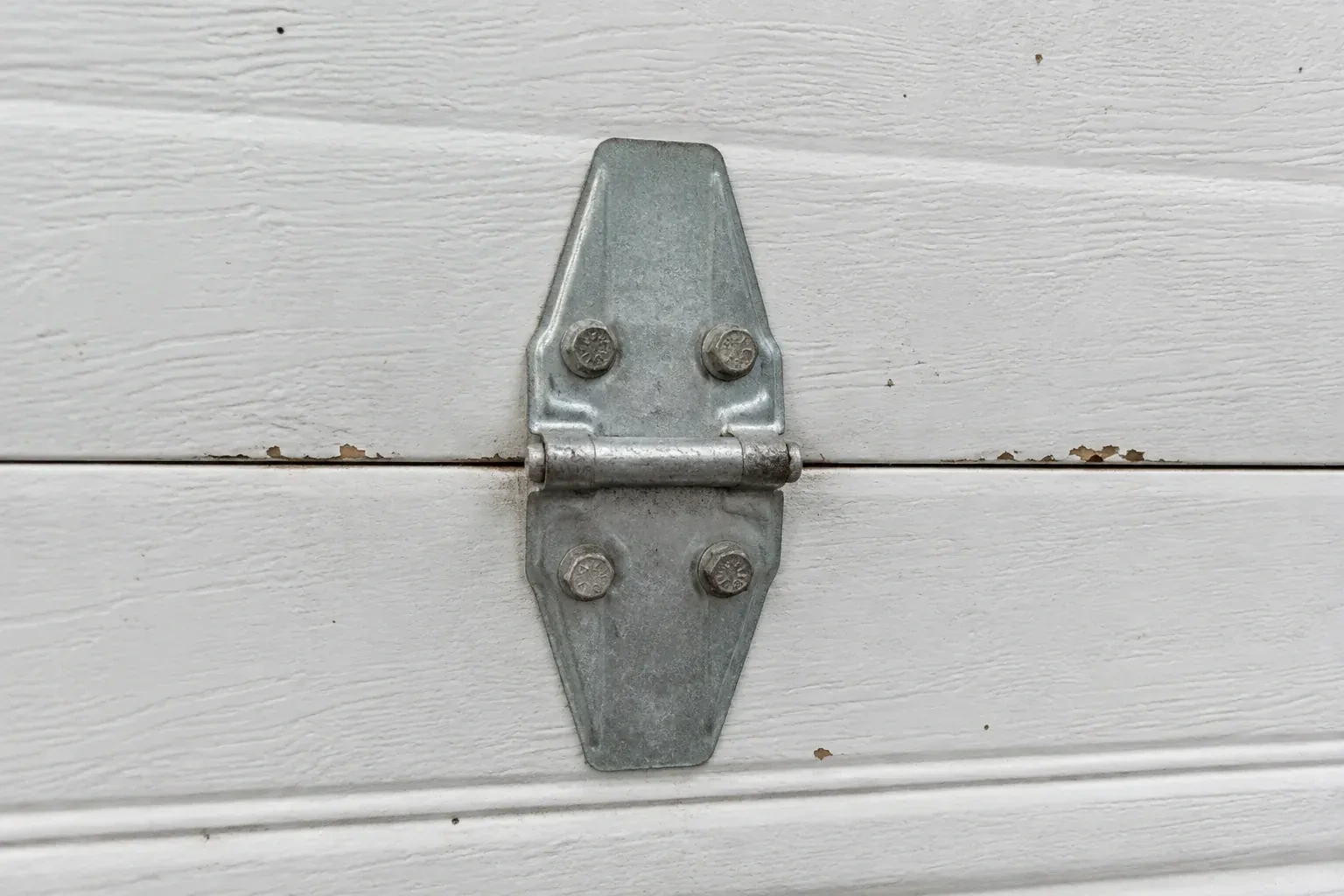
- Garage Door Hinge ReplacementWatching from inside as the door opens, you can see the gap between the second and third panels open up on one side as they turn the corner into the ceiling, then close again.
- Garage Door Track Repair or ReplacementHalfway up, the door lurches and one roller rides onto the lip of the channel.
- Garage Door Cable ReplacementSomeone left the snow shovel leaning in the opening and the door came down on it.