Springs · Springwater
Garage Door Cable Replacement
Someone left the snow shovel leaning in the opening and the door came down on it.
In plain words
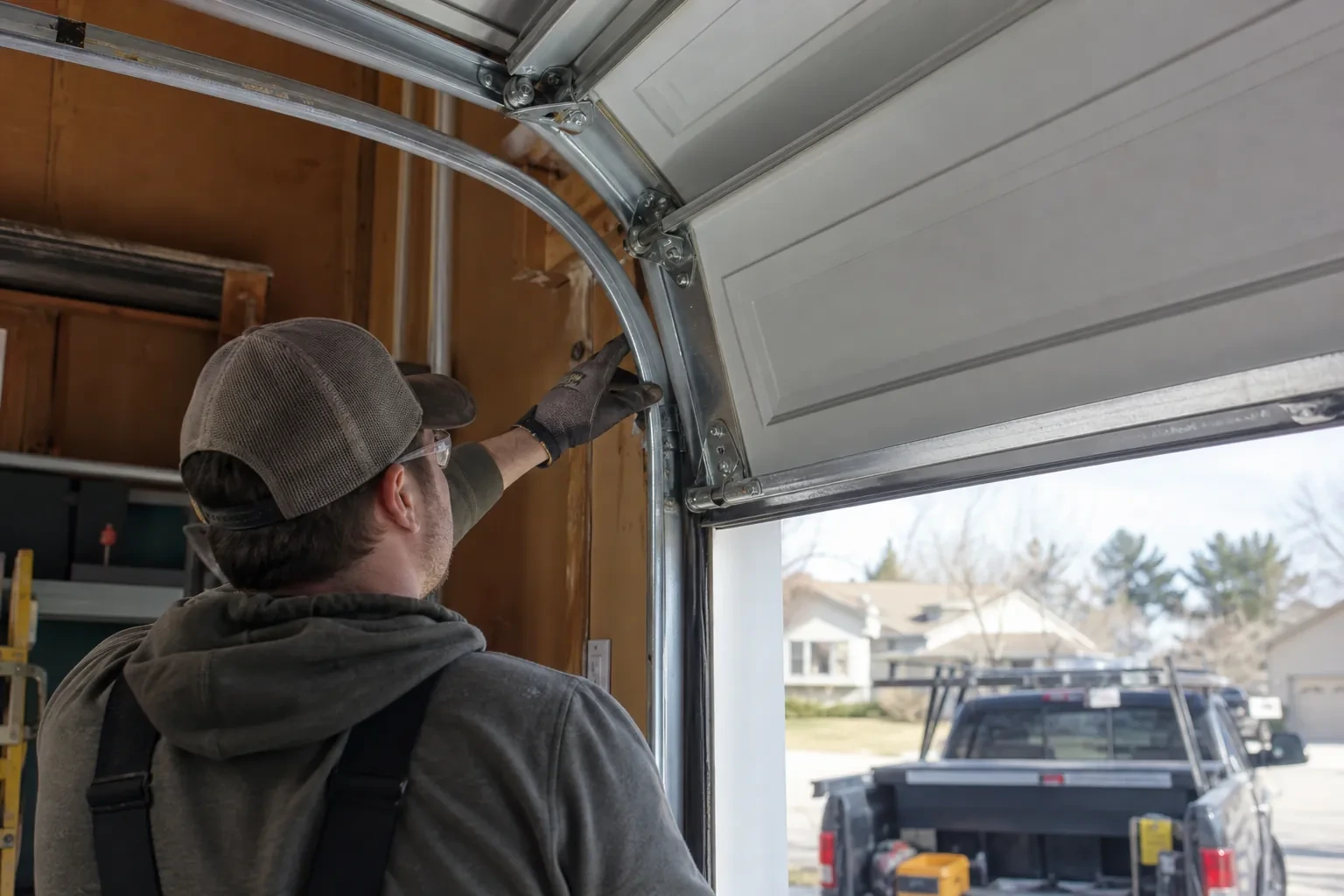
Which counterbalance your door has shapes the job. Torsion doors carry a spring on a shaft above the opening, and the cables wind onto grooved drums at each end; the technician winds the spring down with steel bars, swaps the cables, sets the drums and winds it back up. Extension doors, common on older detached garages, run the cables over pulleys beside the horizontal tracks with a spring stretched behind each; here the door is opened and clamped so the springs relax, then the cable is threaded, adjusted at its clip and checked against its containment cable. Either way, the service ends with a balanced door.
How the visit goesThe door went up as usual this morning, then stopped a third of the way with one corner higher than the other. It is wedged at an angle in the opening, the opener is humming, and nothing you press will move it.
Garage Door Cable Replacement
How the visit goes
Springs and balance behind the cable
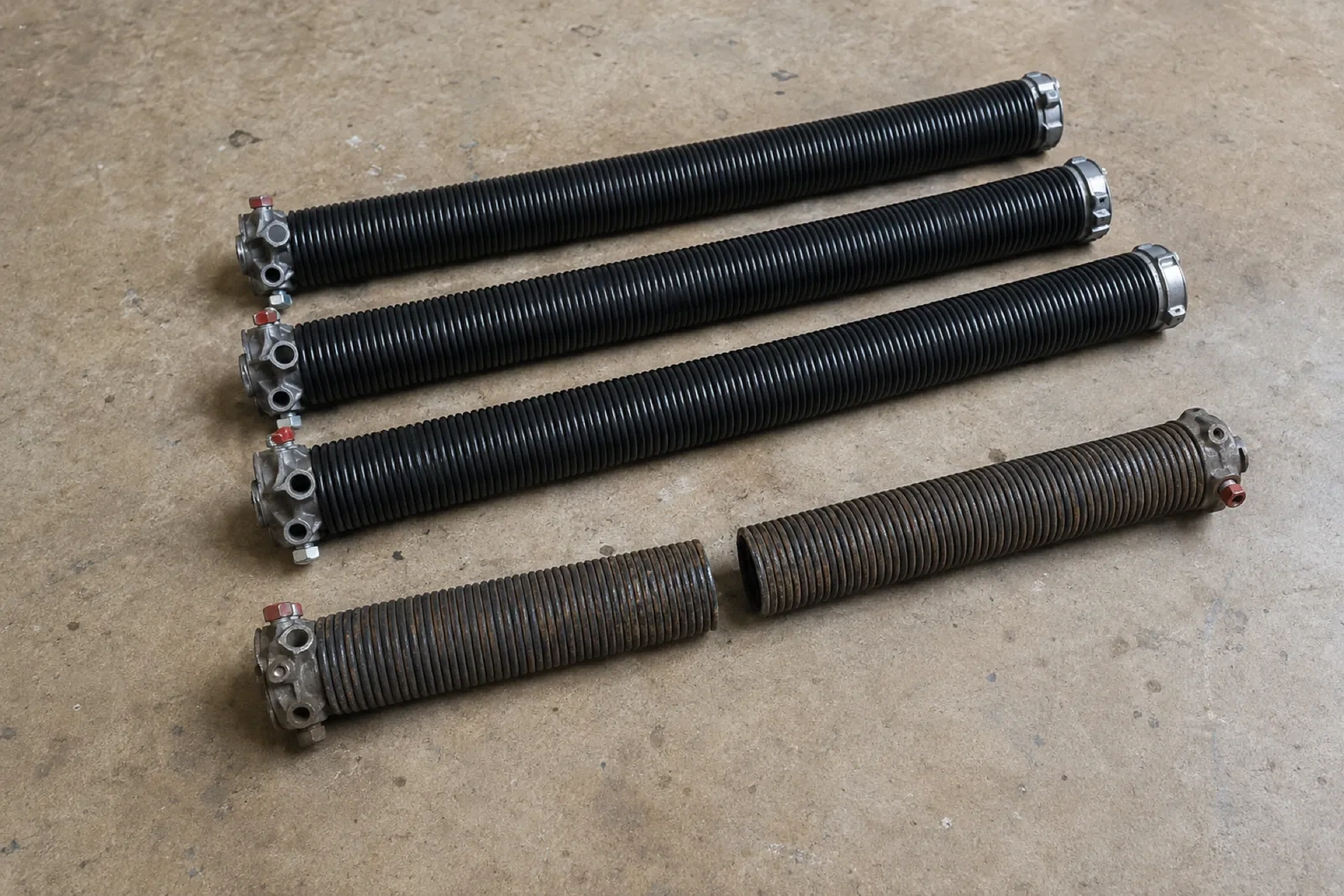
Cables only carry what the springs give them, so the springs are checked next. On a torsion system the technician looks for a gap in the coil that means a break, measures the wire and length to confirm the spring suits the door weight, and notes whether both springs on a double door match. On an extension door each spring is checked for stretch, a broken end or a missing containment cable through the middle. A weak or mismatched spring leaves one cable slack and the door heavy on one side, and if that is the story behind the cable, the spring work is explained and quoted alongside rather than left to surface later.
Removing the old cables
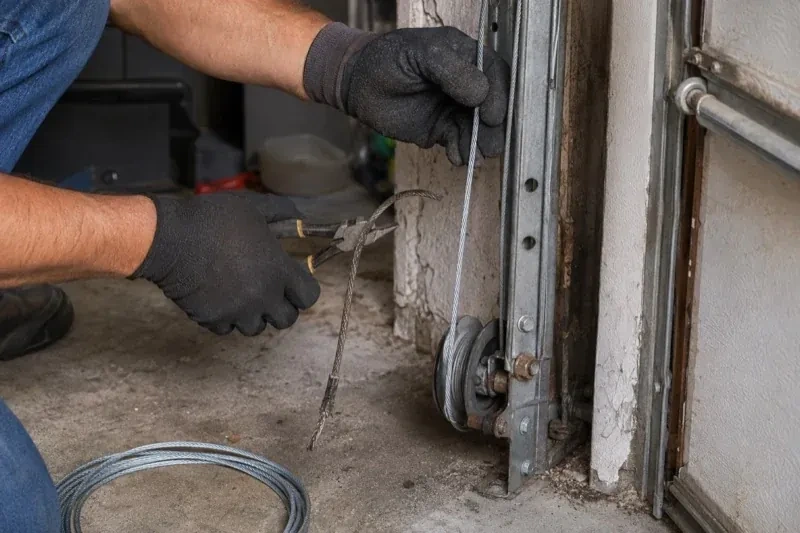
Each drum's set screws are backed off so the drum spins freely on the shaft, and the old cable is unwound from its groove and the stop slipped out of its slot. At the floor, the loop is lifted off the bottom bracket pin, or the clevis pin and cotter pin are withdrawn where the door uses them. The old cable is kept for a moment to measure against its replacement and to show you the wear that caused the call. On an extension door the cable comes off its pulleys and the adjusting clip at the track hanger. Both sides are stripped before anything new goes on.
The record of what was fitted
Before leaving, the technician tells you what went on the door: the cable length and diameter, whether the drums or bottom brackets were renewed, the type of lift hardware, and how many turns the springs carry. It is worth writing this inside the cover of the door manual or on a card taped near the opener, because the next technician, or the same one years from now, can then match parts without measuring everything from scratch. If the springs were left in place, their age and wire size go on the same note so the timing of their eventual replacement is easy to plan.
Garage Door Cable Replacement
In the van
Bottom brackets with cable pin
Extension-spring pulleys and sheave forks
Drum set screws
Cable drums, matched pair
Winding bars
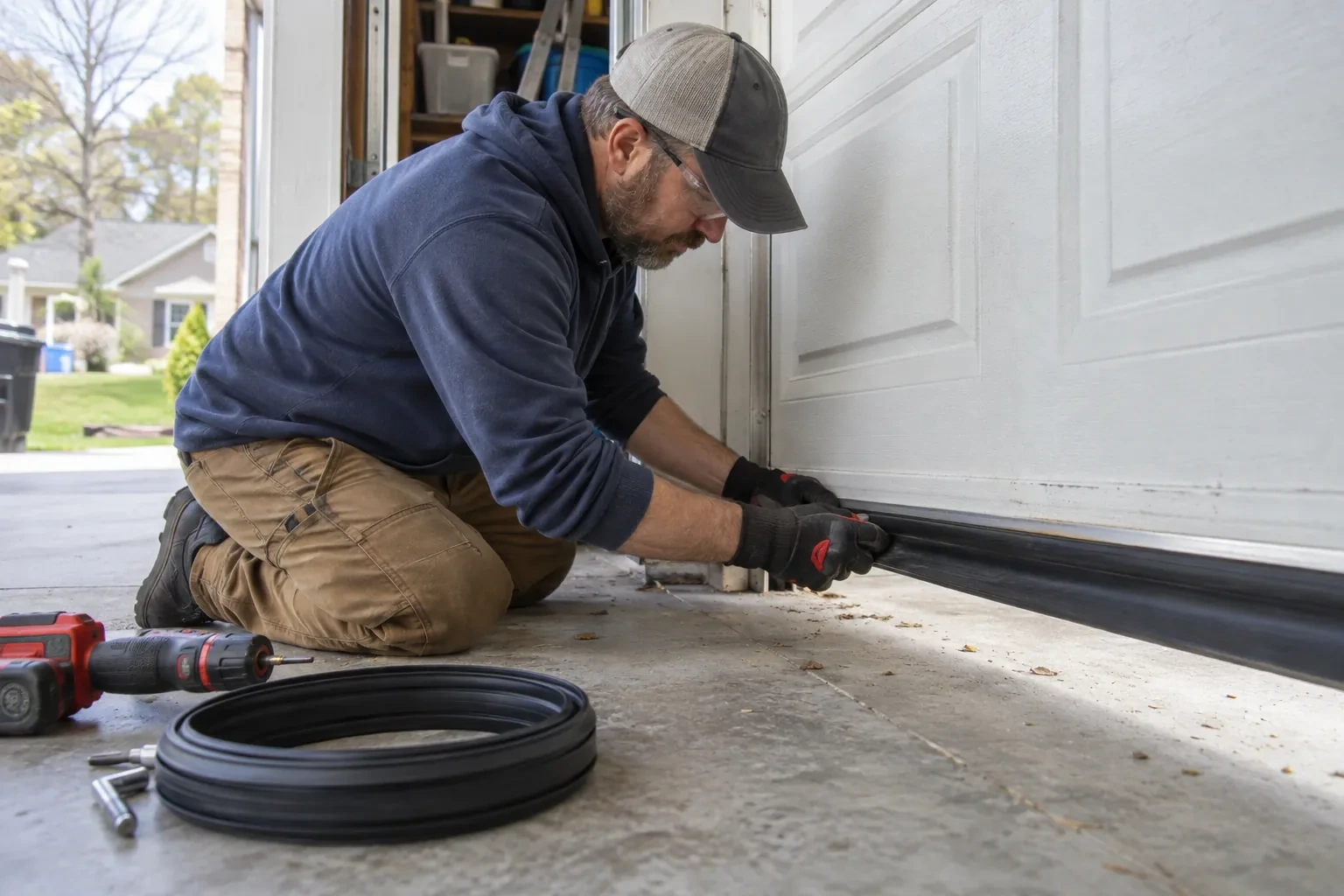
Garage Door Cable Replacement
What affects the quote
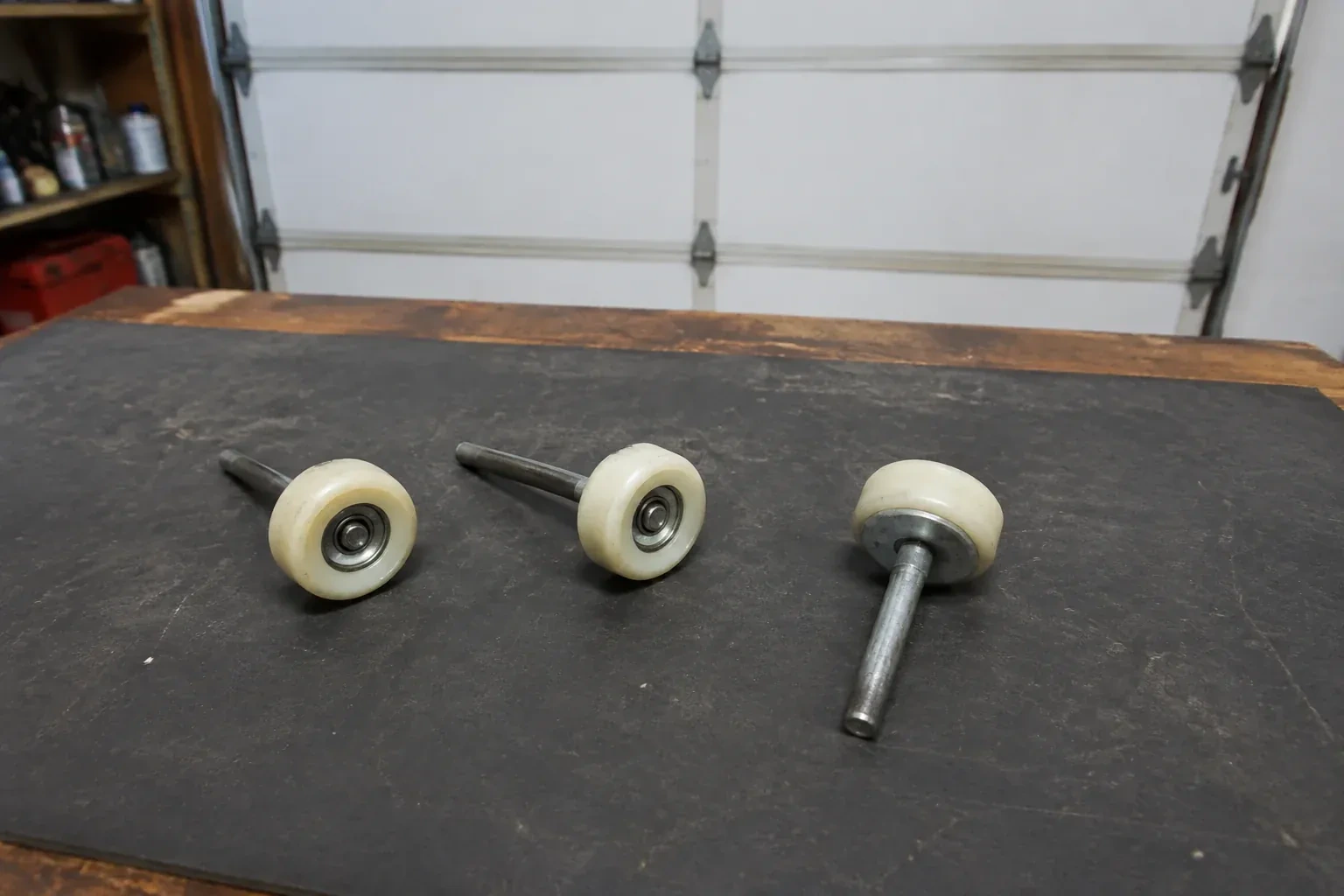
Worn rollers and hinges found on the way
Cracked roller wheels or split hinges seen during the inspection are pointed out and offered as optional items, since replacing them while the door is unloaded is efficient.
Condition of the bottom brackets
A bracket bent by a bumper or corroded by years of salt is replaced while the system is unloaded. New brackets, roller and fasteners are listed as their own line.
One cable or the pair
Cables are normally renewed together, and the quote reflects two cables and the work of setting both sides level. Where one side was recently replaced, that is discussed on site.
What to have ready
- Is it a single or a double door, and roughly how tall?
- Is there one spring above the opening, or springs stretched along the tracks?
- Is the door closed, fully open, or stuck partway?
Garage Door Cable Replacement: questions
QuestionsWhat stops the door from falling if a cable lets go?
It depends, and not reliably. The other cable and its spring may hold that corner so the door tips and wedges in the track rather than falling square, and the rollers binding can add some resistance, but neither is dependable: the door can still drop unexpectedly on the failed side. Some doors also carry a broken-cable device on the bottom bracket that grips the track if a cable fails. Because the door may not be held at all, the technician clamps and supports it before doing anything else.
Why is the door sitting crooked in the opening?
Each corner of the door is held by its own cable. When one cable stretches, slips its drum or breaks, that corner loses its lift and drops while the other stays up, so the door tips and usually wedges against the track. Setting both cables to the same length and tension is part of every cable replacement, and it is what brings the door back level.
Should both cables be replaced when only one has failed?
Yes, as a rule. The two cables were fitted together, have flexed around their drums the same number of times and have sat in the same slush, so the survivor is close to the end of its life. A new cable beside a stretched one also makes it harder to set the door level. Two matched cables give an even lift and one visit instead of two.
Related services
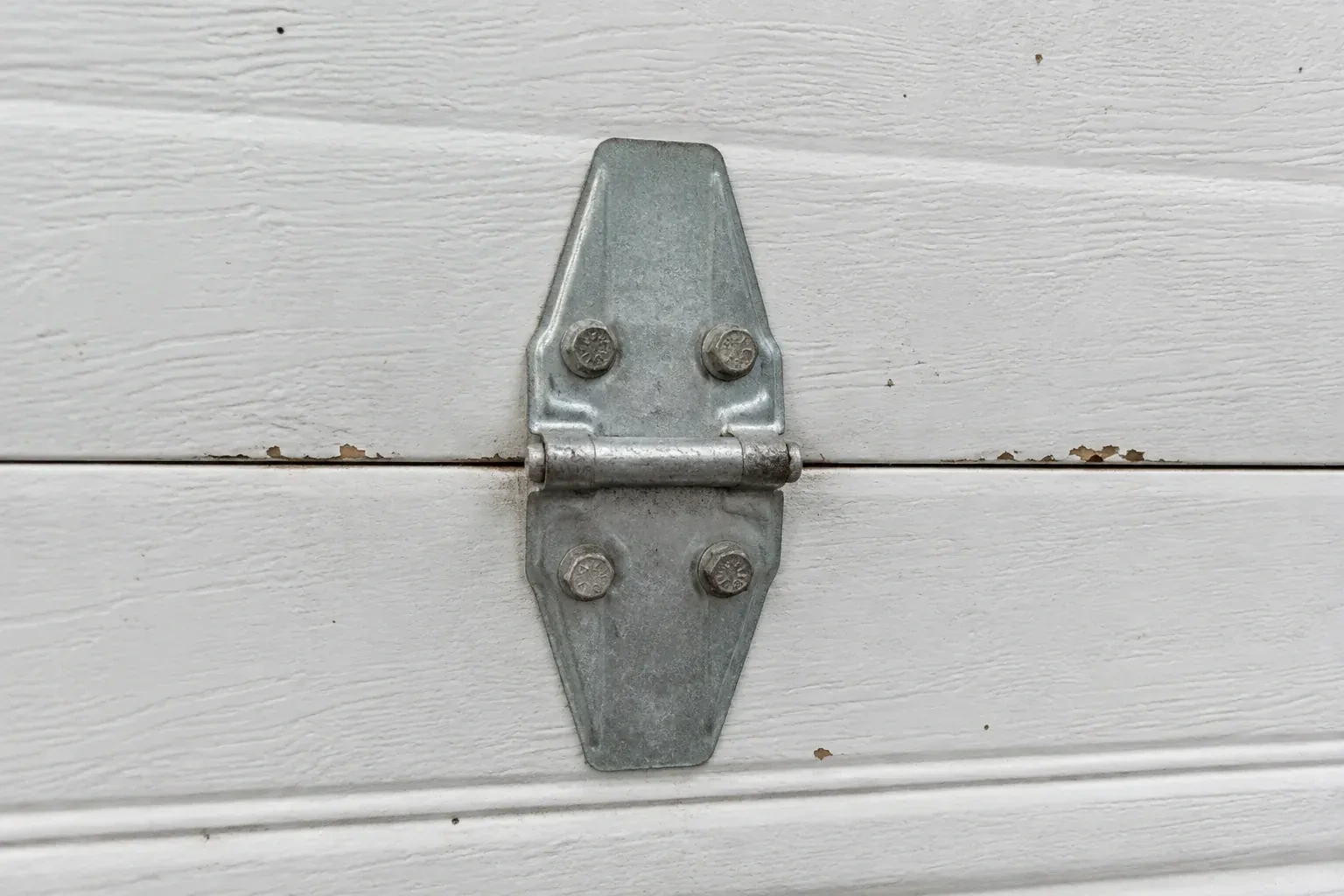
- Garage Door Hinge ReplacementWatching from inside as the door opens, you can see the gap between the second and third panels open up on one side as they turn the corner into the ceiling, then close again.
- Garage Door Track Repair or ReplacementHalfway up, the door lurches and one roller rides onto the lip of the channel.
- Torsion Spring ReplacementYou heard a sharp bang from the garage, and now the opener hums for a second and gives up.