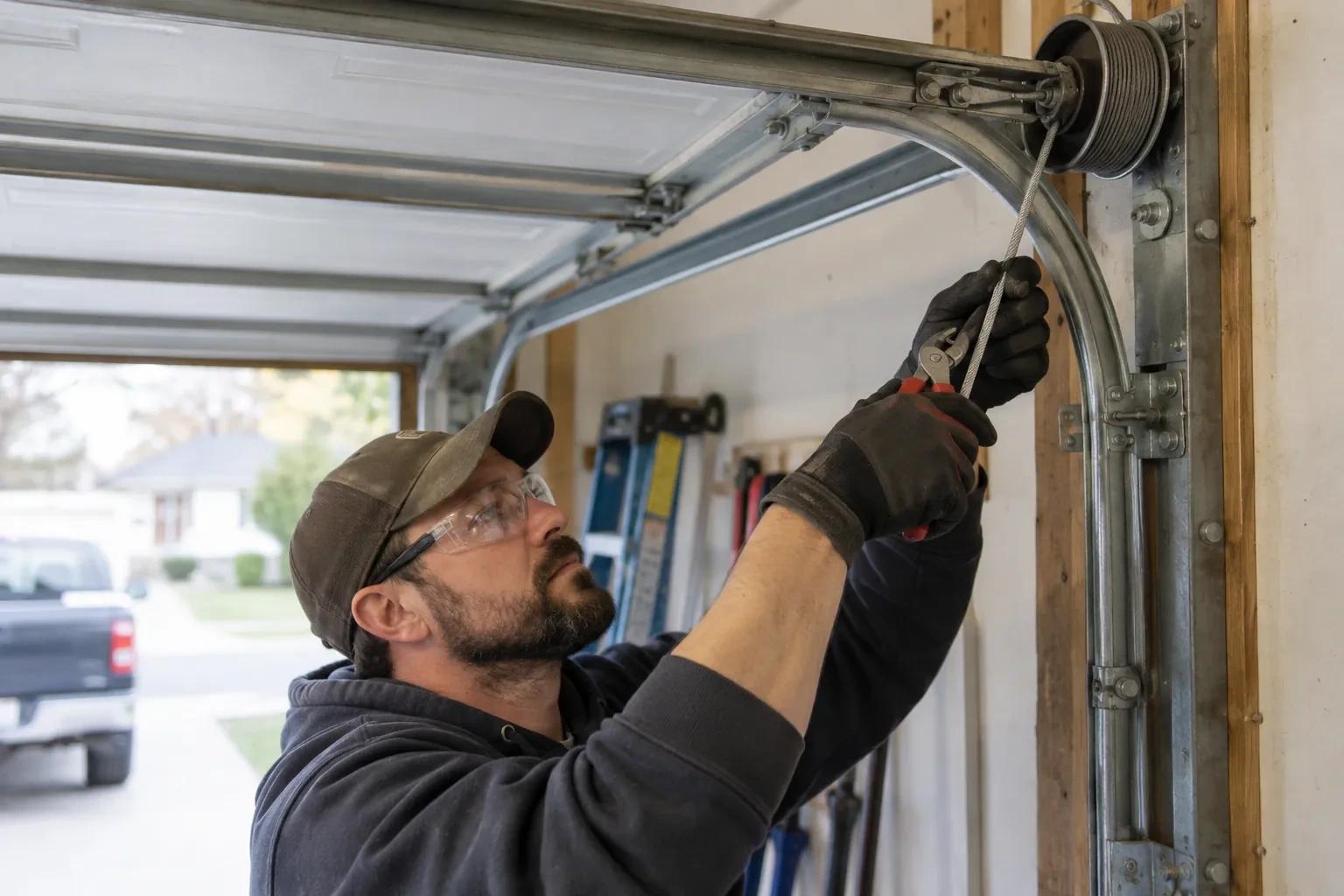
Garage Doors
Plain-language guides
We keep these notes short and practical. Each one takes a single question, gives the honest answer, and points out when the job is one for a technician rather than a Saturday afternoon.
Straight talk
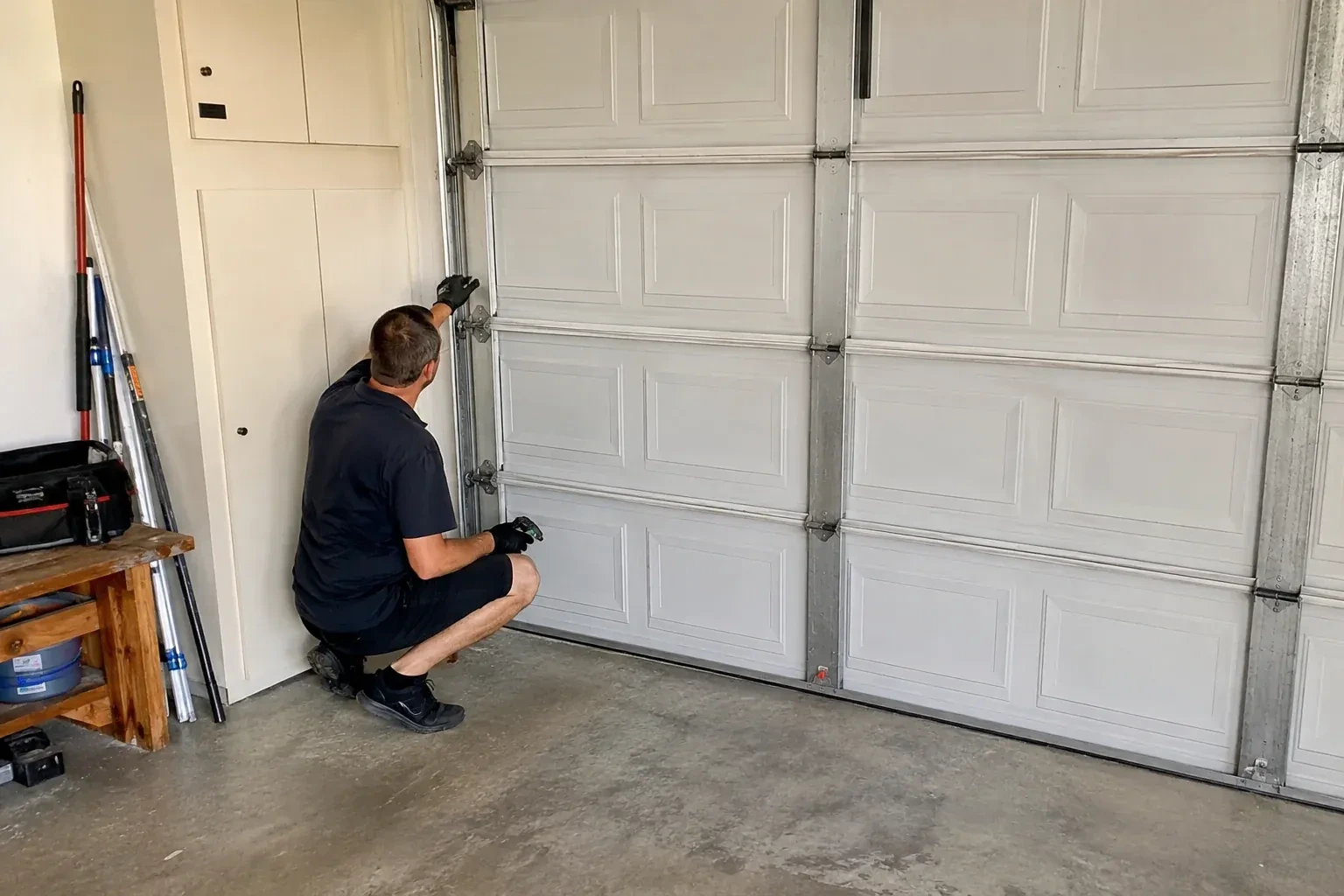
What gets lubricated, and what is left dry?
The moving metal-on-metal points get a light coat: the spring coils, the hinge knuckles, the roller bearings and the pins at the bottom brackets. A silicone or lithium product made for doors is used, then the door cycles a few times to carry it in. The tracks are the exception; they are cleaned and left bare, since a slick track lets the wheels skid and holds grit against them.
Can a tune-up make my noisy door quieter?
Usually, yes, and often dramatically. Most garage door noise comes from dry hinge pins, dry roller bearings and hardware that vibration has loosened, and those three are exactly what a tune-up addresses. Some noise comes from parts that have worn, such as a roller gone out of round or a chain that has stretched, and the technician tells you which sounds were settled by maintenance and which point to a part worth replacing, with a separate quote for that.
My door has springs along the sides, not above it. Is the reset the same?
The principle is the same but the sequence differs. With side springs the door is first opened all the way and clamped, because that is the position where the springs carry no load; the cables are then checked over their pulleys and evened up at the clips. The technician also checks that a containment cable runs through each spring, which stops a broken spring flying across the garage, and fits one if it is missing.
The car has just hit the door. What should I do before you arrive?
Stop using the door and leave it where it is, whether open or closed, unless leaving it open is unsafe. Pull the opener's plug so nobody presses a remote out of habit. Keep people and pets clear, especially if the door hangs unevenly or a cable looks loose, since the springs are still under tension. Take a few photographs, find the manufacturer's label if you can, and tell the technician exactly what happened and how hard the contact was.
Can mice get past a garage door bottom seal?
A worn, hardened or chewed seal is one of their favourite routes, and even a small gap at a corner is enough. A fresh, continuous seal sized to the floor removes that route. For a garage with repeated trouble, seals with a stainless mesh embedded in the vinyl are available and resist chewing. Keeping the jamb seals sound at floor level matters just as much, since a gap beside the door serves them equally well.
What should I do before the technician arrives?
Move the car out of the garage or well back from the door, and clear anything stored against the jambs inside and any bins, planters or snow piled against them outside. Leave the door closed so the gaps can be seen as they are. If you have noticed where the daylight, drafts or snow come in, or where the mice appear, be ready to point it out.
What information helps when I book the visit?
Whether the lock is an inside sliding bar, an outside T-shaped handle with a key, or both; whether the handle turns and whether anything moves when it does; whether the key goes in and turns; whether an opener is fitted and whether it has ever run with the lock engaged; the door's material and age; and whether you hold a key. A photo of the inside of the lock is useful.
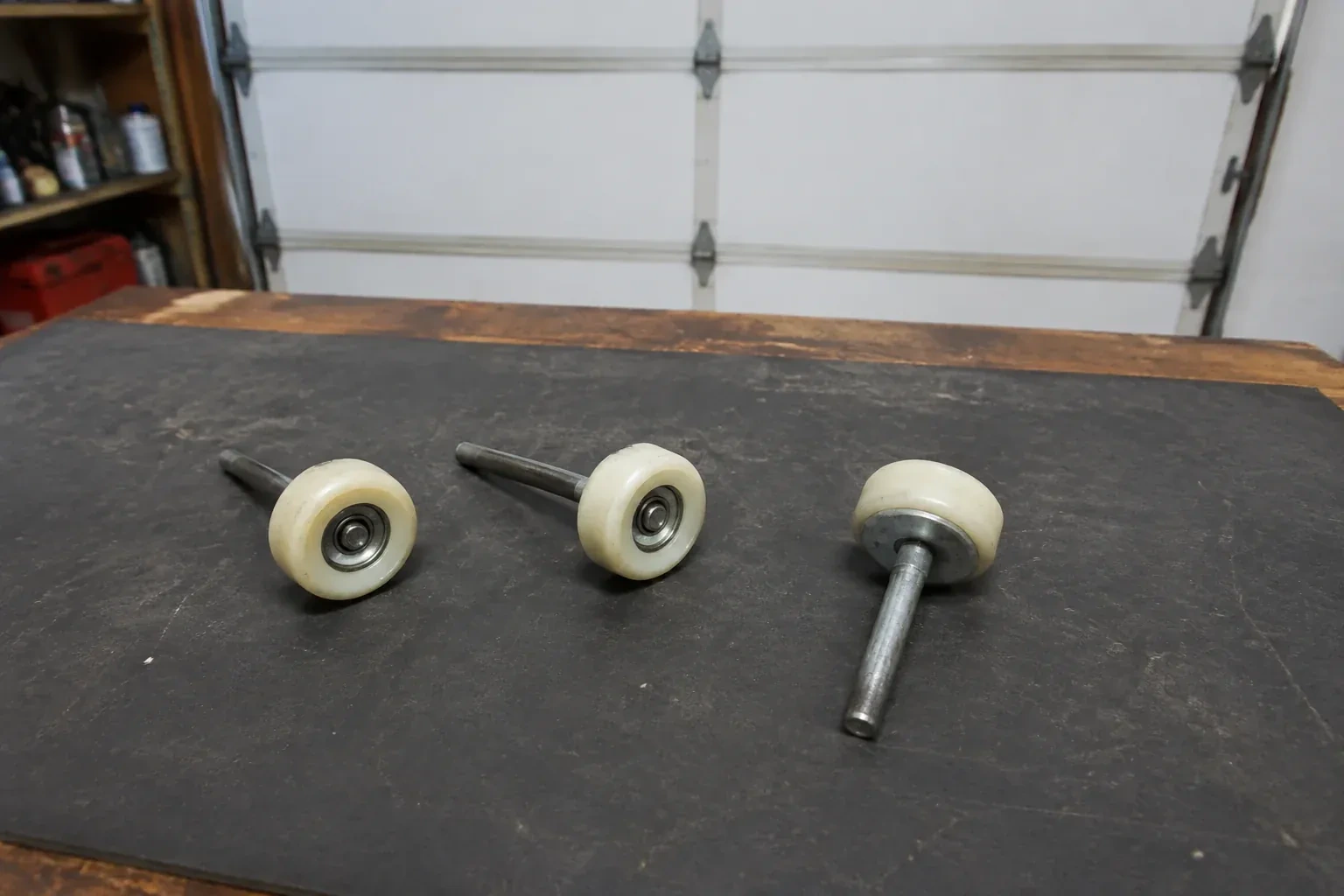
Will new rollers make my door quieter?
Usually, and often dramatically. Rollers are the only part of the door that touches the track, so most of a door's clatter starts there. Moving from worn steel or bare plastic wheels to nylon ball-bearing rollers changes the sound more than any other single part. The rest of the quiet comes from the same visit: hinges lubricated, loose bolts tightened, the track squared so nothing rubs. Springs can still squeak on their own, and the technician can treat those separately.
Can any hinge go in any position?
Edge hinges belong to their own joint. Put a 3 where a 2 belongs and the roller sits at the wrong reach, so the door binds, gaps at the curve or fails to press against the jamb when closed. Centre hinges are the exception, since they all share the geometry of a 1. The technician reads the stamp on the old hinge or counts the joint from the floor before choosing the part.
How often should the track and its fasteners be checked?
A glance each month from inside the garage, with the door closed, is enough to catch a bracket standing off the jamb or a hanger starting to lean. Twice a year, snug the bracket bolts and lag screws, wipe out the channel, and watch the door make a full trip to confirm every roller stays in the track. The industry guidance also suggests an annual visit by a trained door technician, who checks the track with the rest of the system.
What stops the door from falling if a cable lets go?
It depends, and not reliably. The other cable and its spring may hold that corner so the door tips and wedges in the track rather than falling square, and the rollers binding can add some resistance, but neither is dependable: the door can still drop unexpectedly on the failed side. Some doors also carry a broken-cable device on the bottom bracket that grips the track if a cable fails. Because the door may not be held at all, the technician clamps and supports it before doing anything else.
Are springs different for a heavy wooden or insulated door?
Yes, and this is exactly why the door is weighed. A solid wood door or a thick insulated steel door can weigh far more than a single-skin steel door of the same size, so it needs heavier wire, a larger coil or a second spring to balance. The technician measures the actual weight and selects accordingly, so the finished door lifts as easily by hand as a lighter one.
How do you know which springs my door needs?
By weight. Extension springs are rated for the weight they lift, so the technician releases the opener and weighs the door on a scale, then matches that figure and the door's height to a spring rating and stretch length. The old springs are measured as a check on wire size, coil diameter and length. Where the two disagree, the scale decides, since doors gain weight from added insulation or panels.
How often does a garage door need a balance adjustment?
There is no fixed interval; the door tells you. Many doors go years between adjustments, especially when they are lubricated and the springs were sized correctly. A hand test each season is the reliable guide: if the released door holds at about a metre and stays fully open, it is fine. When it starts to drift or sink, that is the time.
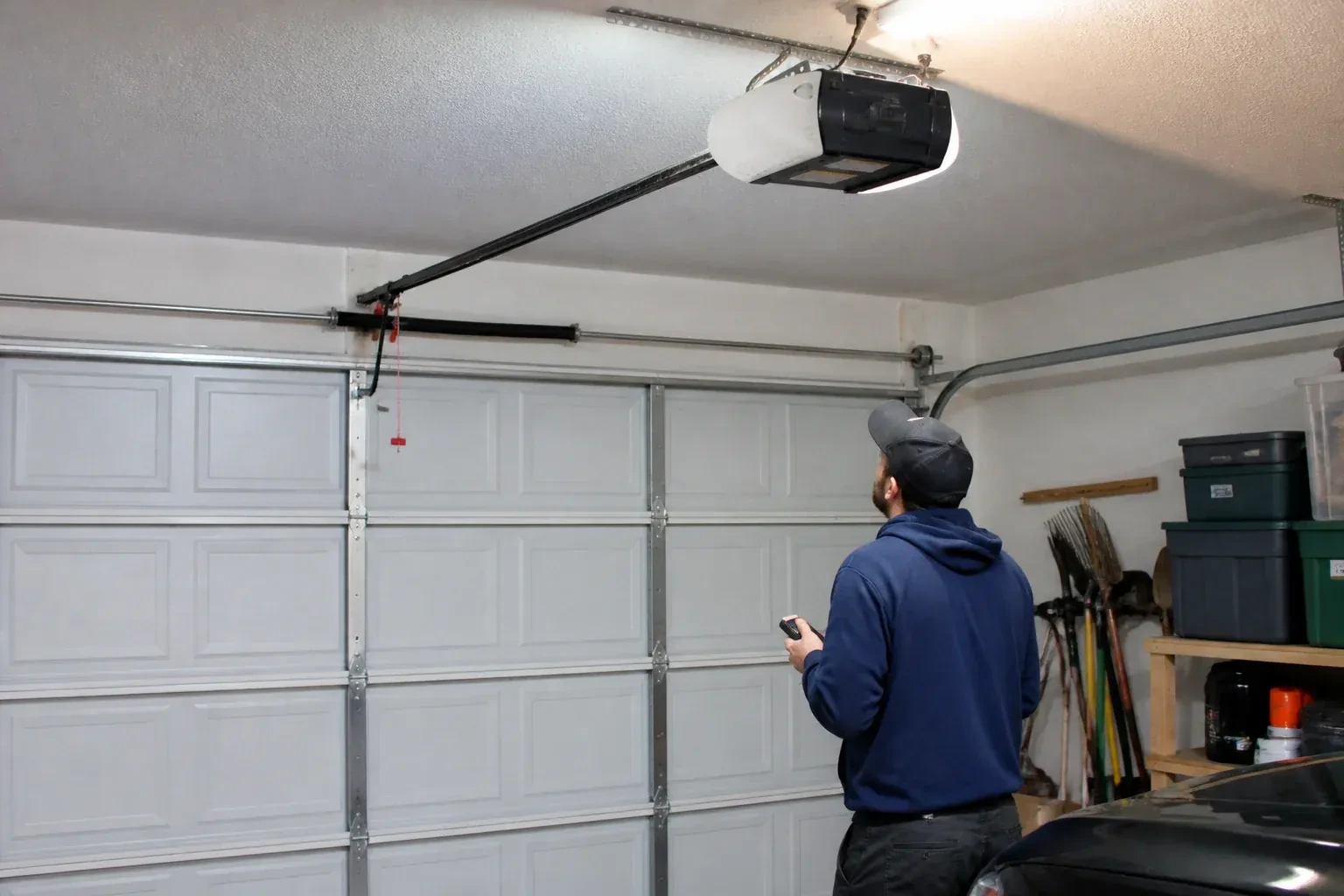
Will the repair happen during the same visit?
When the cause is a common part carried on the truck, yes: capacitors, gear kits, sensor pairs, trolleys, wall controls, remotes and wiring are typical. When the part is specific to an older model and has to be ordered, or when the diagnosis finds a spring or cable problem that needs its own appointment, the door is left safe and the next step is agreed with you before the technician leaves.
My garage is detached and unheated. Does that change the repair?
It shapes it. Cold thickens grease and stiffens a chain with any rust on it, so the technician cleans and regreases the rail and gears, replaces a rust-bound chain rather than tensioning it, and sets force so the door moves at low temperature without the operator being oversensitive. Salt corrosion on the chain and bottom hardware from vehicles is checked. The advice afterwards leans on keeping the threshold clear so the seal does not freeze to the slab.
Is a belt drive harder to repair than a chain drive?
No, just different. The belt is lighter, runs dry and is replaced as one length with a clip, where a chain has links and takes grease. The tensioning at the trolley works the same way on both, and the sprocket, idler and trolley are similar parts. What a belt drive rewards is care with tension and a straight rail, because it is chosen for quiet and shows any fault as noise.
How many remotes and keypads can be added?
Capacity depends on the model: current operators hold anywhere from about eight to forty remote codes, so most households can pair every driver, a keypad, in-car buttons and a phone with room to spare. Remotes are added by holding the learn button on the head unit and pressing the remote; the console guide shows the steps and the technician leaves them written down. If a remote is lost later, clearing the memory and re-teaching the others takes only a few minutes.
Will the sensors need replacing or just aligning?
Most visits end in alignment, cleaning and bracket work, because the sensors themselves are hardy. Replacement comes into it when a lens has clouded or crazed, when the housing is split or holds water, an indicator stays dark with the wiring proven good, or the pair is from a different generation than the opener and is never recognised. The technician tests before choosing, so the parts list matches what the door needs.
What is rolling code and why does it matter for programming?
Most openers made from the mid-1990s on change their code every time a remote is pressed, choosing from billions of possibilities, so a copied code is usually useless next time; the technician confirms the actual system from the model, not age. Programming matters because the opener has to learn each remote's sequence at the learn button; a remote cannot simply be set to match. Older fixed-code openers, set by small switches, can be upgraded with an add-on rolling-code receiver.
What does the colour of the learn button tell you?
On many openers the learn button's colour marks the generation of radio coding the unit uses, which decides how a hub can talk to it. Some generations accept a simple two-wire connection at the wall-control terminals; others use an encrypted console and need the hub paired by radio or through a small adapter. Sending a photo of the button and the label ahead of the visit lets the technician arrive with the right hardware.
Where should I grip the door when lifting it by hand?
Use the door's own handles or the gripping points built into the panel face, on the inside and outside of the door. Sectional doors are meant to have them near the bottom section and again on the second or third section. Never take hold at the joint between two sections, which closes as the door bends around the track. If your door has no handles or they have been removed, the technician can fit a pair during the visit.
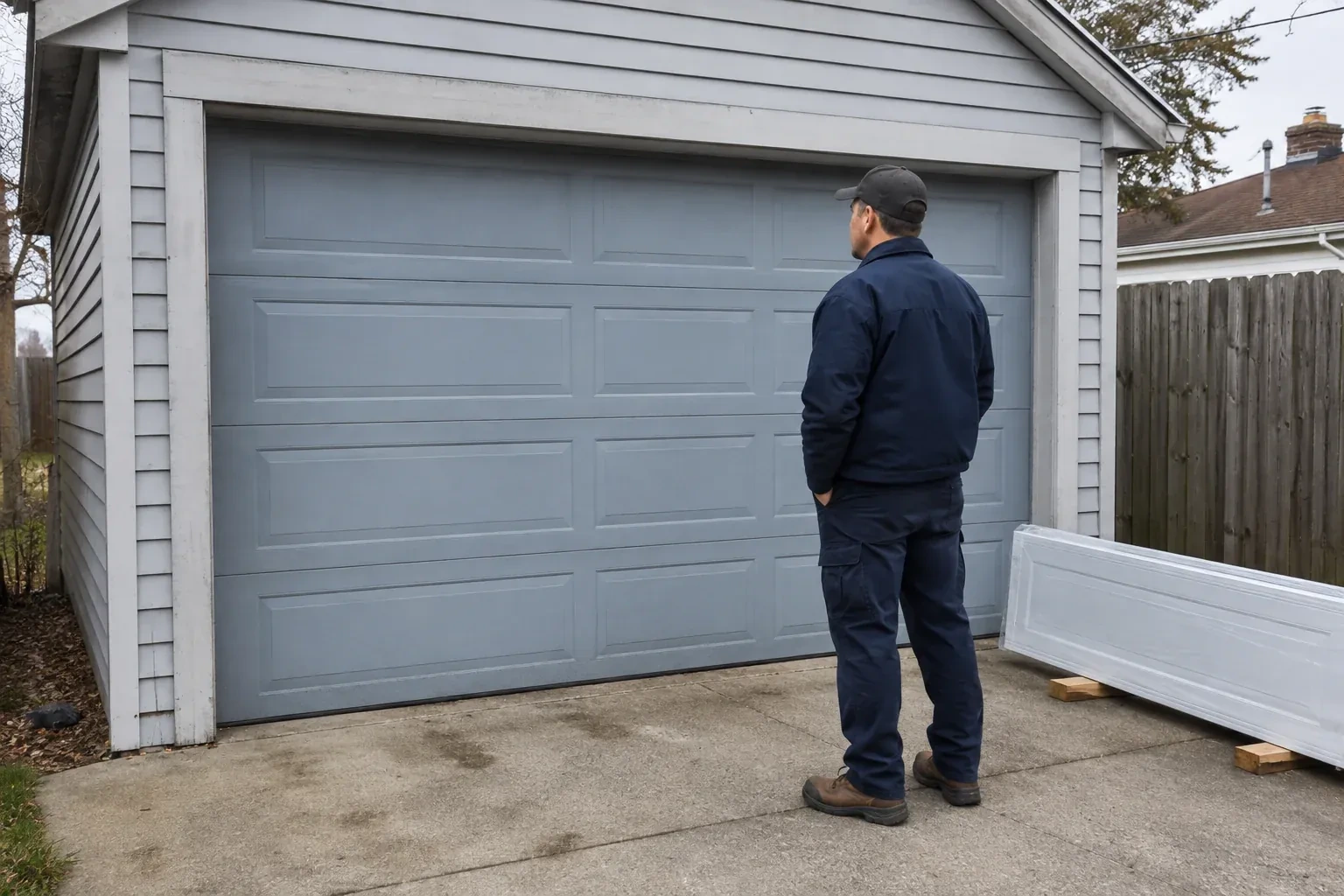
Can I choose a different colour and panel style?
Replacement is an opportunity to select the exterior design as part of the order. Panel profiles, factory colours, window patterns and decorative details vary by product line. Samples and current literature help compare them in the building's actual light. Mechanical details are then specified around the completed door rather than separately from its appearance.
What information should I receive at handover?
Keep the door and opener manuals, product identification, care instructions and a description of the installed hardware. The closeout should also note manual balance, full-cycle travel and applicable safety tests. Window, finish and seal details help with future care, while model and component records make later parts selection more accurate than relying on appearance alone.
Why keep the labels and installation documents?
They connect the visible door to its configuration, size, components, reinforcement, and attachment details. That record helps future technicians identify suitable replacement parts and understand why particular hardware is present. It also supports later renovation discussions by giving designers or building officials a reliable description of what was installed at the garage opening.
What information should I keep after the project?
Retain the door and opener instructions, product identifiers, colour or finish reference, glass selection, spring information and the final work record. Photographs of labels and the completed decorative layout can also help. This small file supports correct cleaning choices, makes later parts discussions more precise and gives future service technicians a clear account of the system originally installed.
What maintenance does a full-view door need?
Routine care combines gentle surface cleaning with observation of the moving system. Watch complete cycles, keep sensor paths clear, inspect seals and glazing gaskets, and note new rubbing or uneven movement. Use the operator manual for reversal checks. Springs, cables, drums and bottom brackets store substantial tension, so trained personnel handle adjustments involving those components.
How are high-tension parts handled during installation?
The door is secured against movement while trained installers mount the spring supports, lift cables and related hardware. Correct winding or tensioning tools are used for the specified counterbalance system, and cable routing is checked before the door is released for testing. Bottom brackets and spring attachments stay under controlled handling because they carry load. The area remains clear until balance and travel have been assessed through the full opening path.
How often should commercial door hardware be inspected?
The appropriate interval follows the door and operator manuals, operating cycles, environment and facility maintenance plan. A heavily used exterior bay may need attention more often than a lightly used interior opening. Staff can still observe cables, seals, sensors, sound and travel during normal operation, while tensioned components and adjustments remain part of a technician's planned inspection.
Will operations have to stop around the doorway?
The opening and its adjacent traffic area need to remain controlled during inspection, repair and test cycles. Facilities often route people, lift trucks and deliveries through another path while that work is active. Planning around shipping periods, stored goods and access to both faces of the door helps define a workable service window and equipment setup.
How is the door tested after conversion?
Testing starts with controlled manual travel. Technicians observe balance at several positions, level movement, roller engagement, cable seating, clearances and transition through the curves. After the mechanical system performs properly, powered cycles verify open and closed limits, operator behaviour, emergency release and applicable protective functions. Fasteners, supports and component records receive a final review before demonstration.