Openers · Springwater
Chain-Drive Opener Repair in Springwater
The chain hangs in a loop under the rail and slaps against it on every cycle.
In plain words
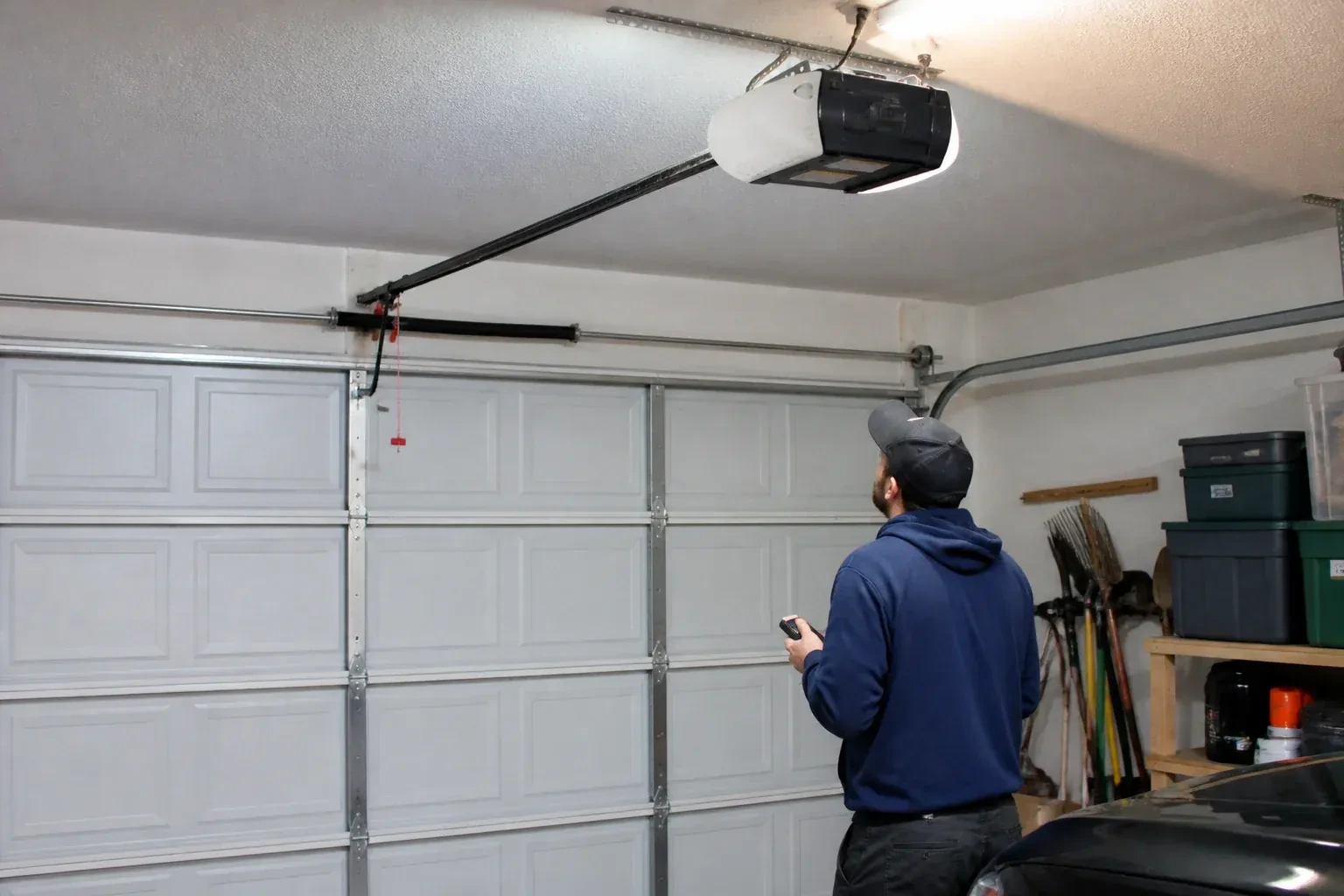
A chain drive is never silent, but it should be steady. New rattles, clanks and grinding each point somewhere specific. A chain slapping the rail is loose tension. A rhythmic clack at one spot is a worn or hooked sprocket tooth, or a stiff link passing over it. Grinding from the head is gear trouble. A rail that shakes has loose hangers or a header bracket working out of the wood. The technician runs the door by hand first to separate door noise from drive noise, then works through the drive from sprocket to trolley, tightening, tensioning or replacing what the sound identified.
How the visit goesThe chain hangs in a loop under the rail and slaps against it on every cycle. It used to sit snug. Now the whole house hears the door leave, and the sound has a metallic clatter it never had before.
Chain-Drive Opener Repair
How the visit goes
Rail, hangers and the bracket in the wall
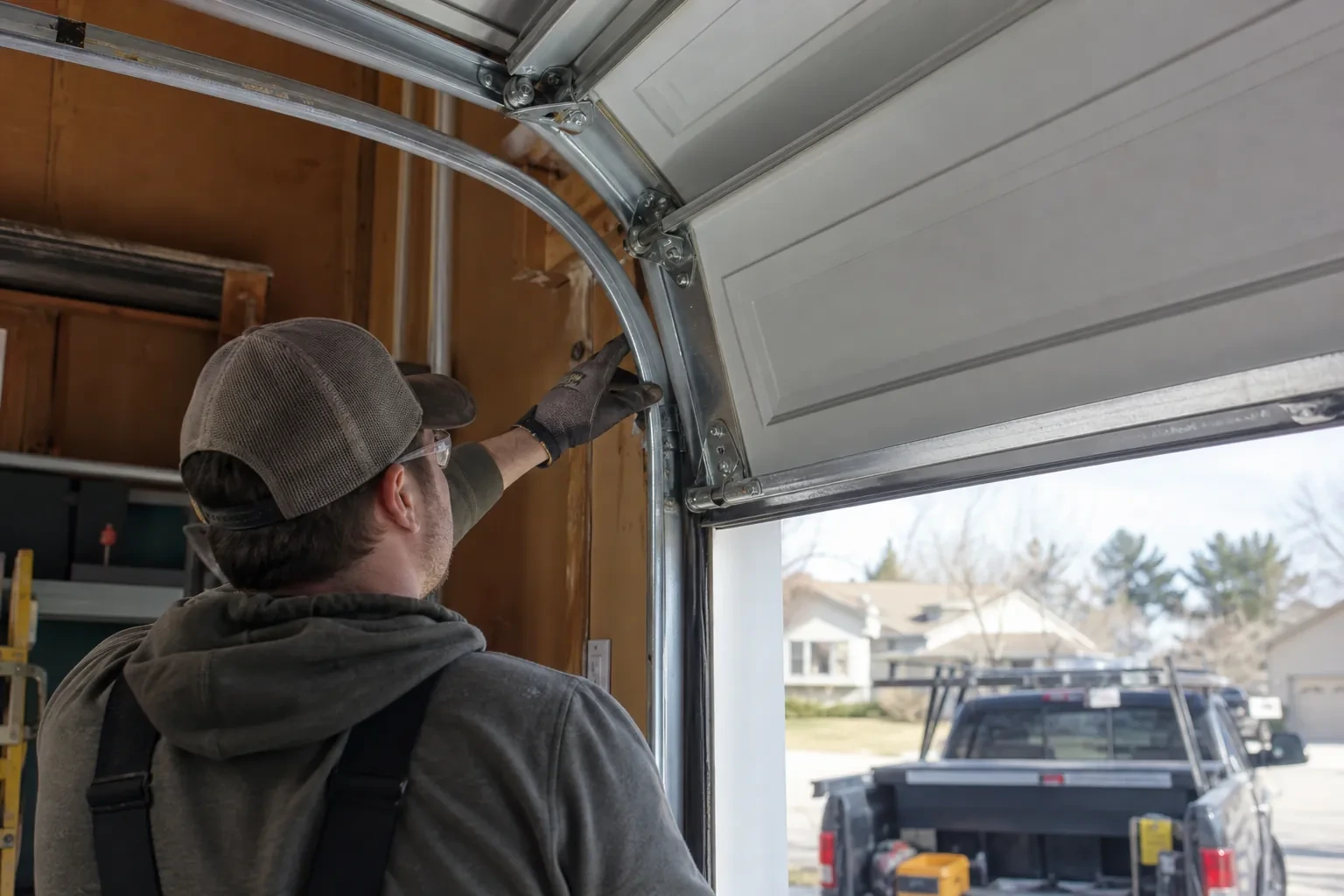
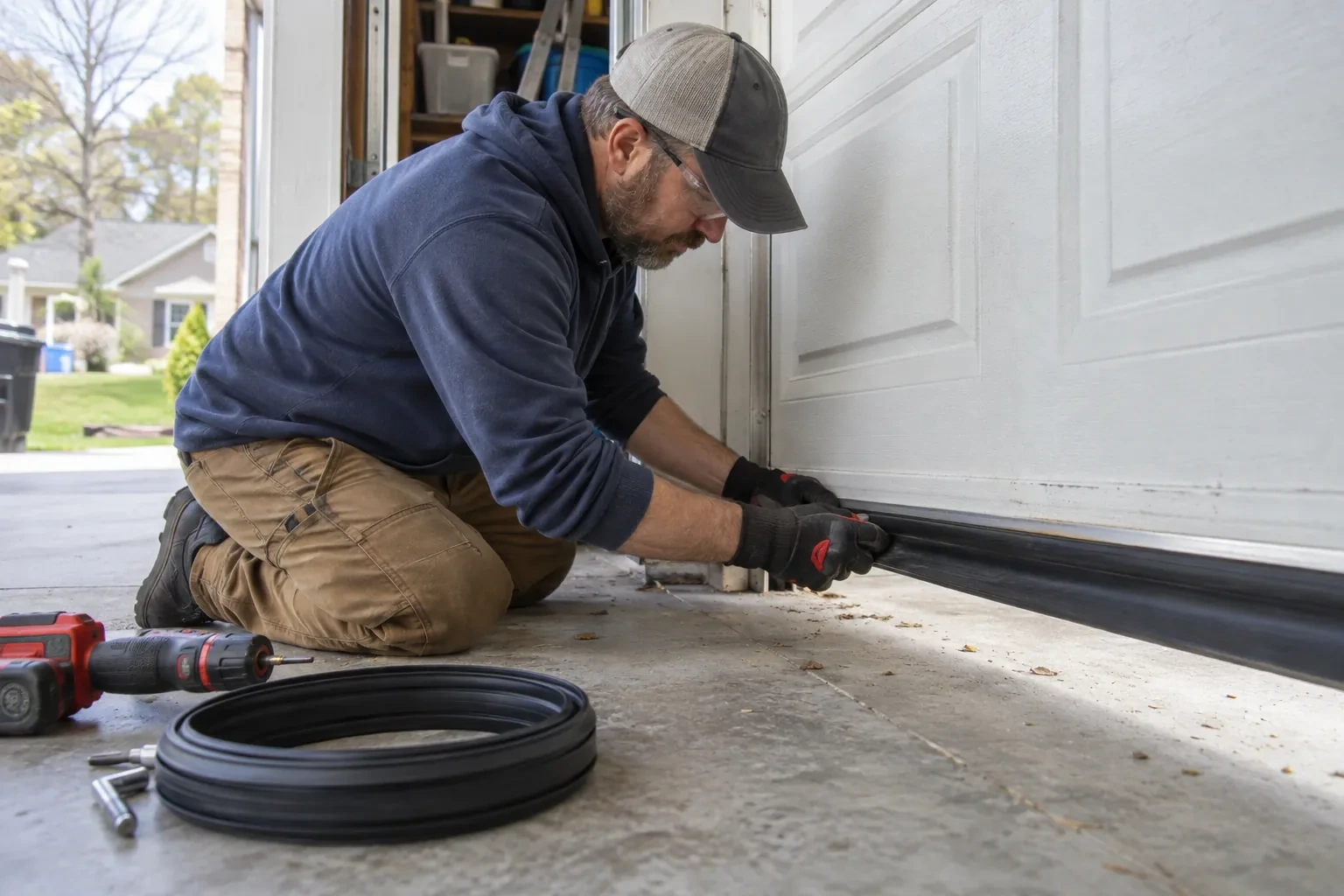
The rail is a structural part of the drive, and a chain cannot run true on a rail that moves. The technician checks that the perforated angle iron hanging the head from the joists is tight and stiff, that the rail is level along its length and angled slightly down away from the header, and that the splice plates at the rail joints are snug. The header bracket above the door is checked for lag screws that have loosened in the wood, which lets the whole rail lift a little on each cycle and shows as a rattle along the garage. Loose hardware is tightened or replaced before tension is set, since a flexing rail makes the measurement meaningless.
Setting the tension by the numbers
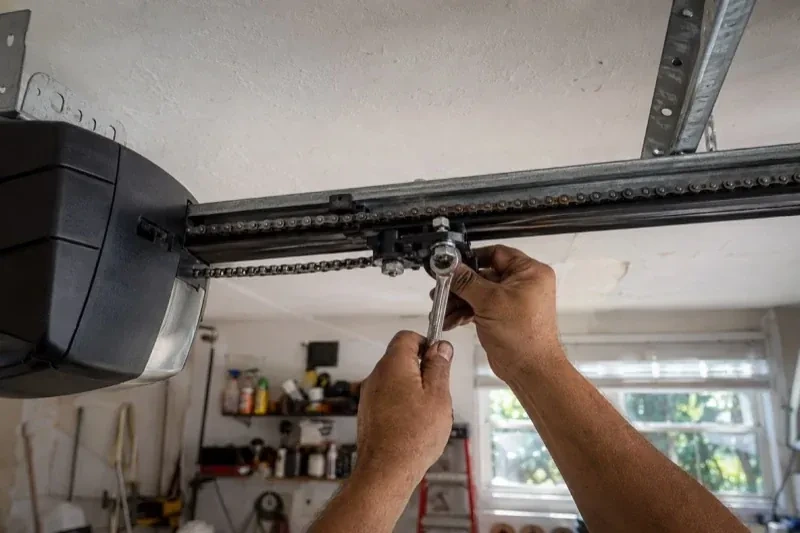
With the door closed and disconnected, the two nuts on the tensioner shaft at the trolley are used in order. The outer nut, nearest the door, is loosened until the chain droops below the rail, the inner nut is backed off to make room, and then the outer nut is turned to raise the chain until it sits at the height the opener's own manual calls for on that rail shape, measured at the rail's midpoint. The inner nut is tightened against it to lock the setting. Once the door is reconnected and closed some droop appears in the chain; that is normal provided the measurement returns with the door open.
Two tests once a month
The protection built into the operator only counts if it still works, and two short checks each month keep you sure of it. Lay a scrap of 2x4 flat on the floor under the middle of the door and close it from the wall button; the door should climb back to open the moment it touches the wood. Then, with the door closing again, pass a broom handle through the beam of the low sensors; the door should reverse just the same. If either test is failed, stop using the operator and book an adjustment. It is a setting, and a small one, but it is the one that matters most.
Chain-Drive Opener Repair
In the van
Inner and outer trolley
Cold-rated garage door lubricant
Sprocket and shaft assembly
Idler sprocket or pulley
Rail hangers and header bracket
Chain-Drive Opener Repair
What affects the quote
Two operators in one visit
A double garage with two chain drives, or a house and a detached workshop, share the travel and setup and are quoted as one visit with two repairs.
When the visit happens
An evening, weekend or holiday call costs the same amount as one on a weekday for a chain-drive repair. The exact figure is confirmed once the technician has looked at the chain, the rail and the gear kit in person.
Rail shape and door height
A T-rail and a square rail take different chains and tension figures, and an 8 ft door runs a longer rail and chain than a 7 ft door, so the length of chain on the quote follows the rail.
What to have ready
- Does the door stop short, reverse at the floor, or open only partway?
- With the red cord pulled, does the door lift by hand and stay about a metre up?
- Is the noise a rattle along the rail, a clack at one spot, or a grinding from the head?
Chain-Drive Opener Repair: questions
QuestionsMy garage is detached and unheated. Does that change the repair?
It shapes it. Cold thickens grease and stiffens a chain with any rust on it, so the technician cleans and regreases the rail and gears, replaces a rust-bound chain rather than tensioning it, and sets force so the door moves at low temperature without the operator being oversensitive. Salt corrosion on the chain and bottom hardware from vehicles is checked. The advice afterwards leans on keeping the threshold clear so the seal does not freeze to the slab.
How and how often is the rail lubricated?
On the interval the opener's own manual calls for, often every two to three years. With the power off, the old grease is wiped from the rail along the path the trolley travels, and a thin layer of white lithium grease is applied in its place. The door is then run a few times so the trolley spreads it. The door's own tracks, where the rollers run, are never greased; they stay clean and dry, and the rollers, hinges and bearings take a garage door lubricant once a year instead.
Should I oil the chain?
Follow the opener's manual, and lean toward less. Many makers ask for the chain to be left dry or given only a very light treatment, because a heavily oiled chain collects grit that grinds the sprocket and drips onto the car. The grease that matters is white lithium on the rail where the trolley runs, renewed every two or three years, and on the gears inside the head, which the technician packs during a repair. Penetrating sprays are kept away from the whole drive.
Related services
- Belt-Drive Opener RepairThe door used to glide up with a soft hum.
- Garage Door Opener ReplacementSince the storm the door behaves oddly: it reverses halfway down for no reason, the light flickers, and the travel limits drift so it either slams or stops short.
- Photo-Eye Sensor Alignment or ReplacementThe door will only go down while a finger stays on the wall button; let go and it stops or reverses.