Repairs · Springwater
Garage Door Perimeter Weatherstrip
The vinyl strip around the door used to be soft and white.
In plain words
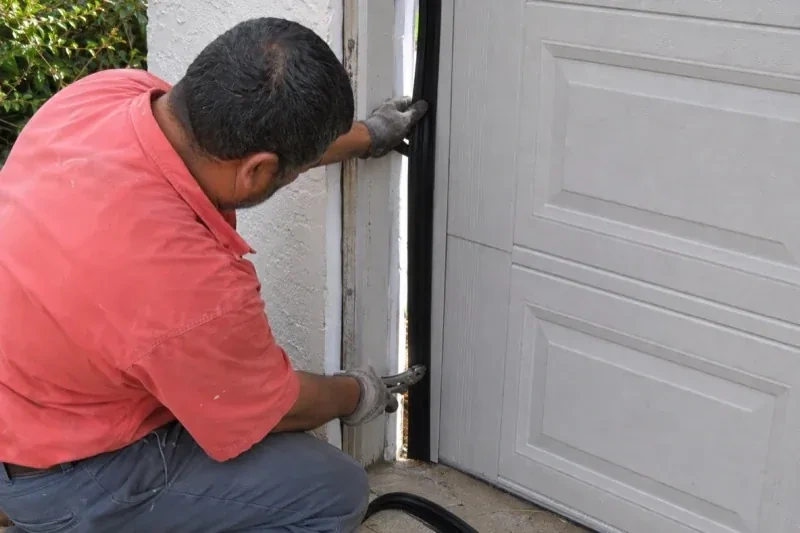
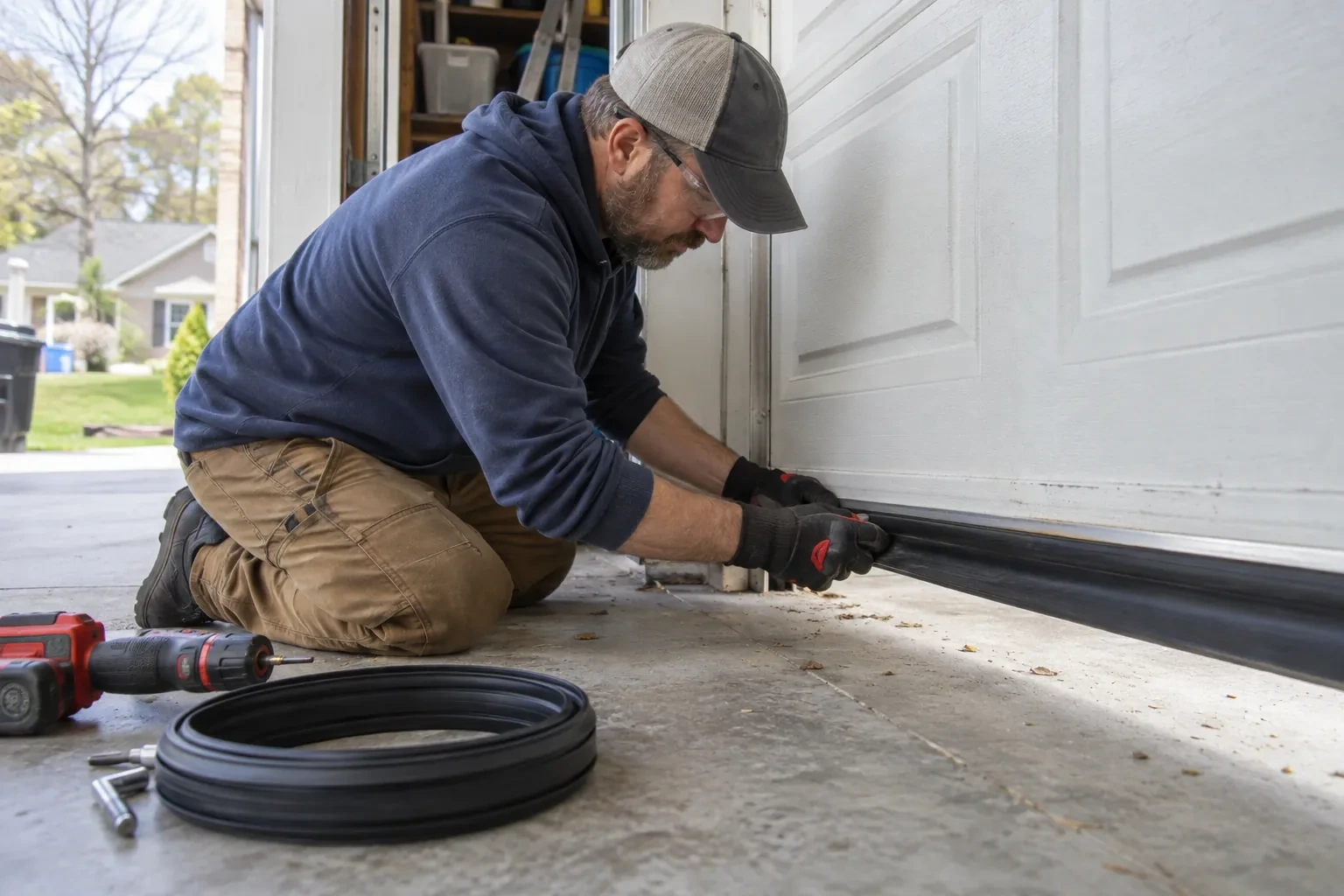
The skill in this job is in the position of the fin. It should touch the door with a small, even deflection, so that it seals when the door is closed and springs clear as the door lifts. Set too far off, it leaves a standing gap; pushed too hard, it drags, folds under and tears within a season. The header piece goes on first, fastened from the centre outward so it stays straight, and the sides are fitted tight beneath it so the fins overlap at the corners. Fasteners are spaced evenly in sound wood, and any joint where water could get behind the stop is caulked.
How the visit goesThe bedroom over the garage is always the cold room, and standing in the garage you can feel why: a steady draft along the door edges that moves the cobwebs on the wall. The seal around the opening has flattened to nothing.
Garage Door Perimeter Weatherstrip
How the visit goes
How the door sits in the opening
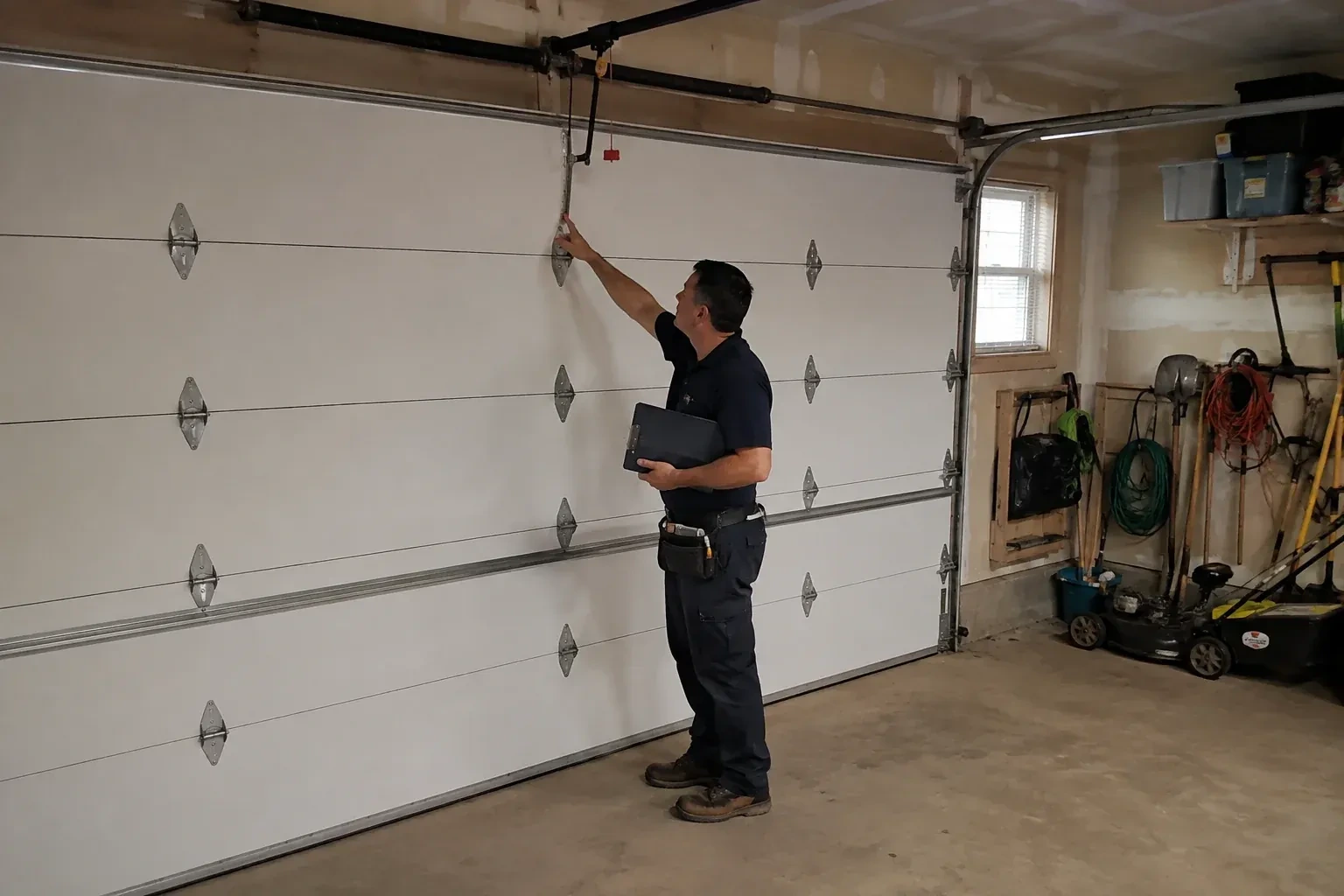
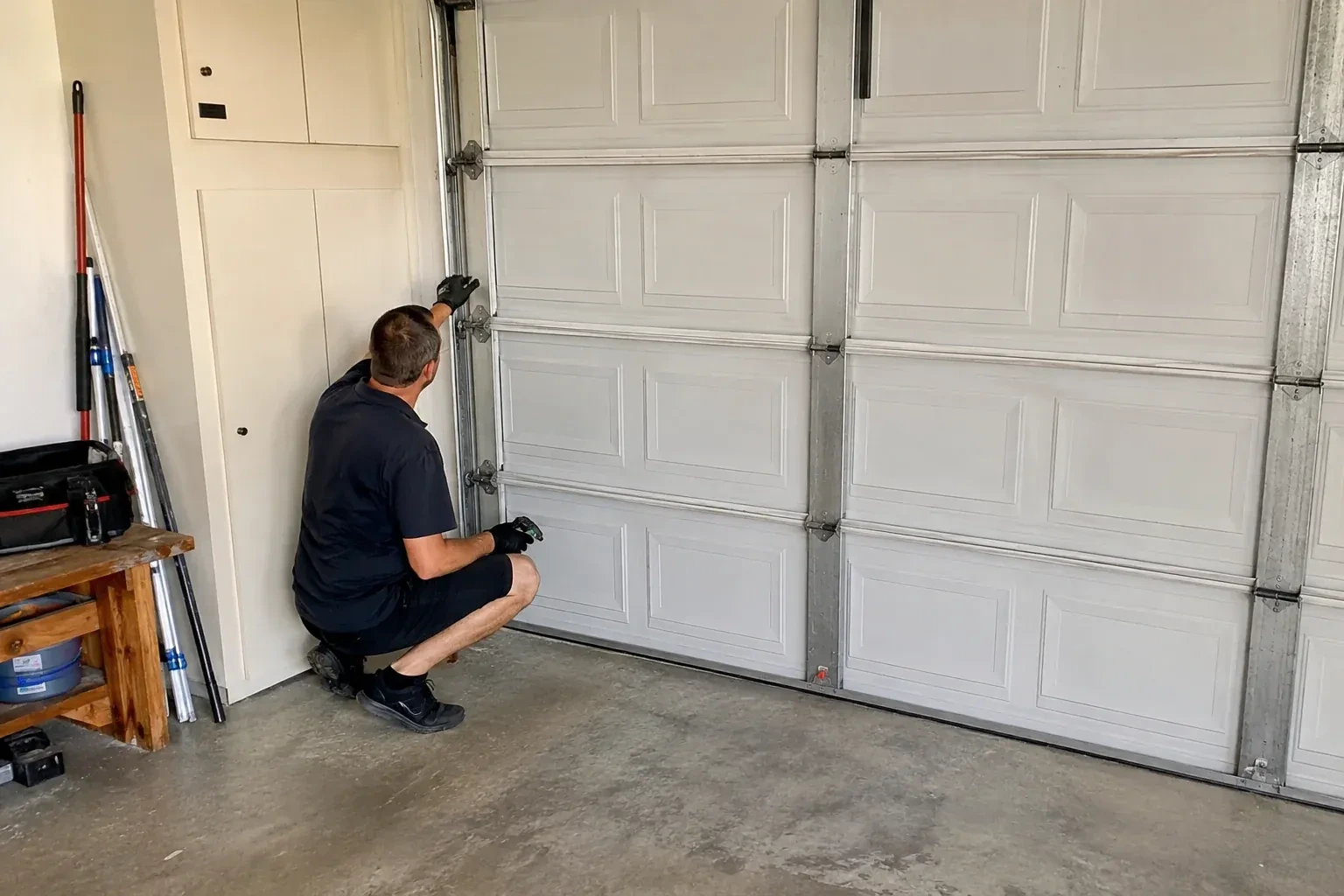
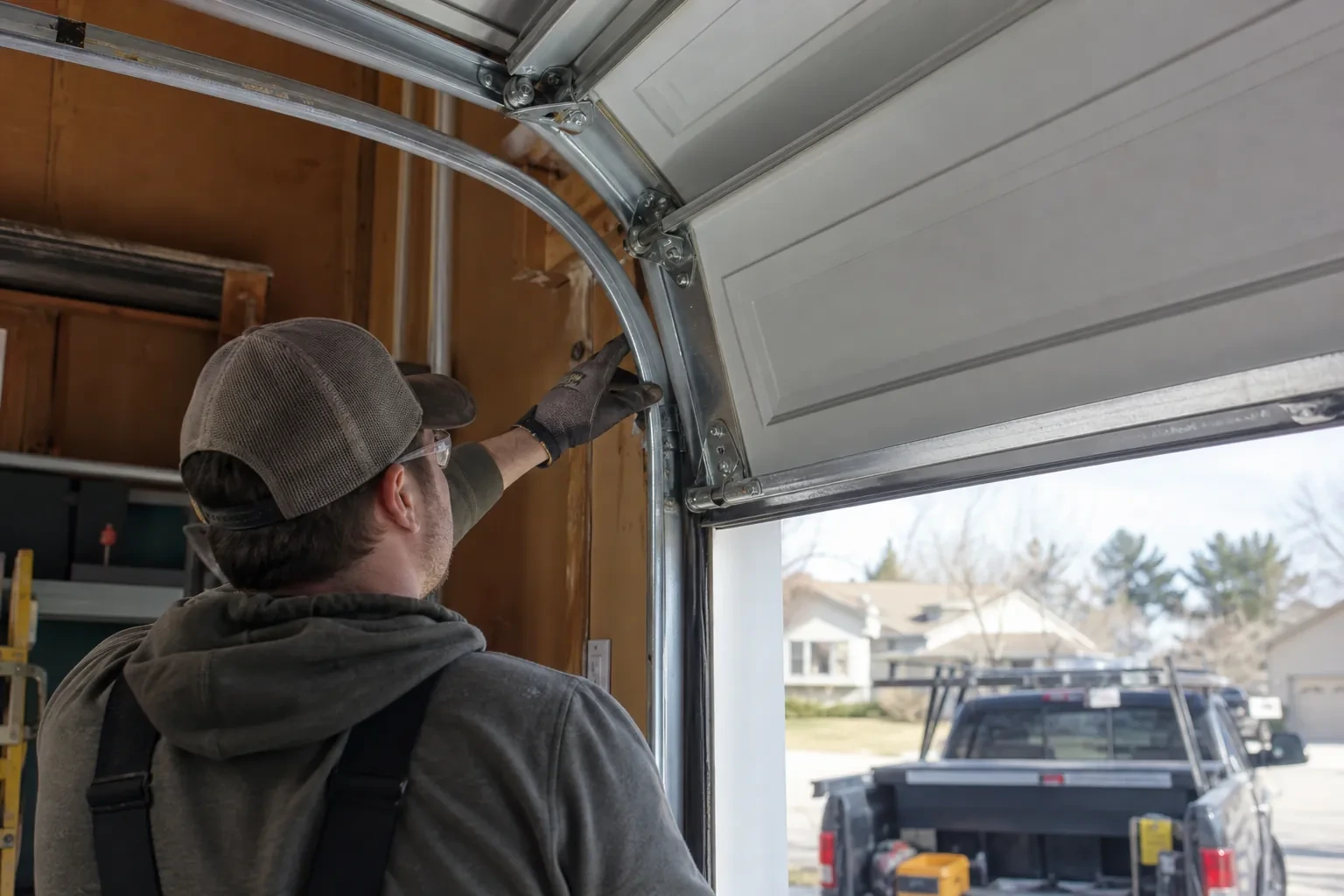
A perimeter seal can only follow a door that sits where the frame expects it, so the door is checked before any strip is ordered or cut. Each edge is checked for plumb, the gap to both jambs is compared, and the top section is watched as it meets the header to see whether it bows away or leans in. Rollers, hinges and the spacing of the vertical tracks are looked at because any of them can shift the door face toward one jamb and away from the other. Small corrections, such as re-setting a track bracket, are noted so the new seal is fitted to a door that closes square and stays that way.
Replacing the wood stop with a one-piece vinyl stop
When the old wood stop is cracked, rotten or buried in paint, it is replaced rather than covered. The one-piece stop, a rigid vinyl moulding with the flexible fin formed along one edge, is cut on a mitre saw to header and side lengths and fitted the same way, header first. It needs no paint, does not rot, and its fin and stop are one part, so the seal cannot peel away from the moulding. Corners are either mitred or the sides butted tight under the header with the fins overlapped. The result looks like fresh trim and works as a seal.
A look round each season
The simplest care is a glance four times a year. Close the door, switch off the lights and look along both sides and the header for daylight. Then step outside and check that no length has lifted, that the corners are still tucked together and that the fin is still soft when you press it with a thumb. Cracks, a hard grey surface or a piece that has shrunk back from the door are the early signs. Manufacturers suggest wiping the seal down with a damp cloth a few times a year, and that also lets you feel any change in it.
Garage Door Perimeter Weatherstrip
In the van
Utility knife and mitre saw
Exterior screws and weatherproof staples
Epoxy consolidant and exterior primer
Aluminum retainer and rubber insert
Exterior caulking and gun
Garage Door Perimeter Weatherstrip
What affects the quote
Commercial or oversized openings
Wider and taller commercial doors often carry an aluminum retainer with a rubber insert or a brush seal, and the material and fitting time differ from a residential vinyl seal.
Fin on the existing stop or a one-piece vinyl stop
Nailing a new fin to a sound wood stop uses less material than replacing the stop with a one-piece vinyl moulding, which costs more as a part but needs no paint and does not rot.
Weather on the day
Cold weather means keeping vinyl warm between the van and the opening and fitting each length with extra care, so a winter visit can run a little longer than one in mild weather.
What to have ready
- Is anything stored against the jambs, or a car parked close to the opening?
- Is it a single or double door, and roughly how wide and tall?
- Is the existing seal a flexible strip on a wood stop, or a one-piece vinyl moulding?
Garage Door Perimeter Weatherstrip: questions
QuestionsWhat should I do before the technician arrives?
Move the car out of the garage or well back from the door, and clear anything stored against the jambs inside and any bins, planters or snow piled against them outside. Leave the door closed so the gaps can be seen as they are. If you have noticed where the daylight, drafts or snow come in, or where the mice appear, be ready to point it out.
How do I stop the seal freezing to the door in an ice storm?
Wipe the fin with a silicone spray or a silicone lubricant on a cloth in late autumn and once or twice through the winter. The film cuts the odds of meltwater bonding the fin to the cold door face, though a hard freeze can still catch it. Avoid oil-based products, which soften vinyl. If the door does freeze to the seal, let the sun or a little warm water free it, dry the spot afterwards, and avoid forcing the opener.
Can I paint the new seal to match my trim?
Paint the rigid parts only. A wood stop can be painted before the fin is fitted or with the fin masked, and a vinyl stop needs no paint at all. The flexible fin is left bare, because paint fills it and stiffens it, and a stiff fin cracks well before its time once cold weather sets in. Seals come in a range of colours so the fin can match the trim without a brush.