Repairs · Minesing
Garage Door Tune-Up in Minesing
Twice this week the door started closing, stopped a metre from the floor and reopened on its own.
In plain words
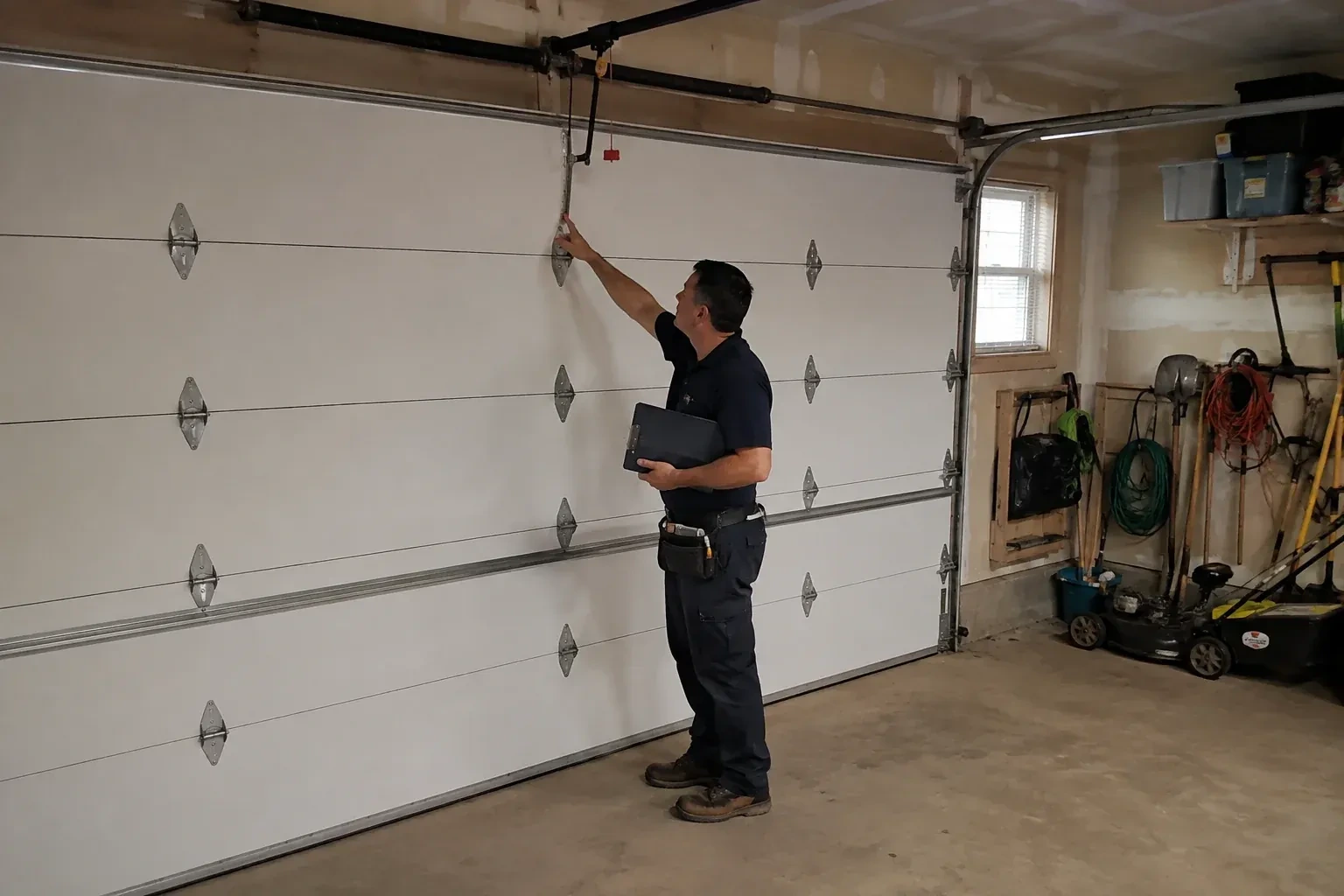
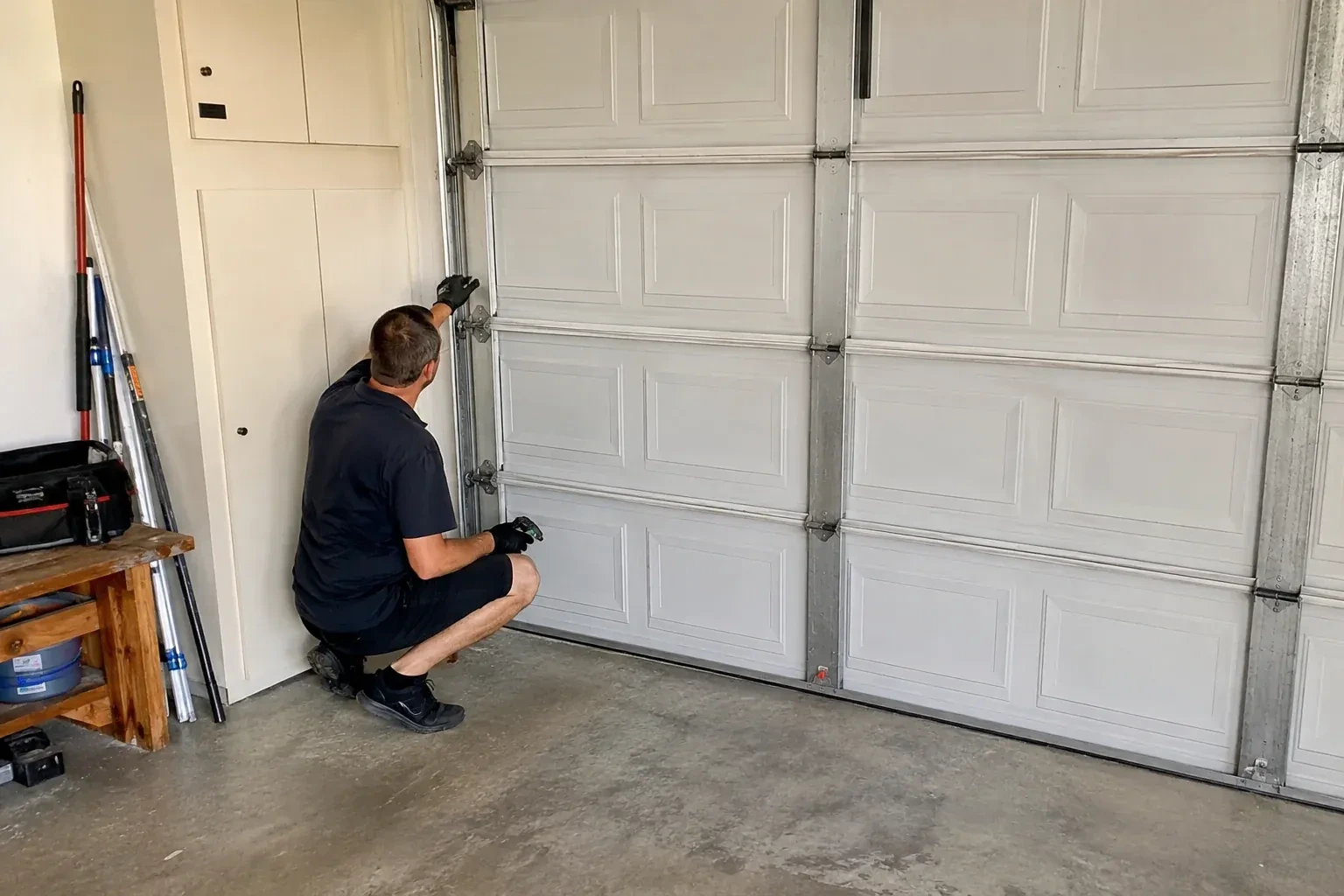
The visit follows a set order. First the technician watches a full cycle, up and down, from a safe distance, noting where the noise, shaking or hesitation lives. Then the door is closed and inspected hardware by hardware, from the bottom brackets to the torsion shaft. The manual release is pulled and the door is lifted by hand to feel the balance. Only then does the work start: fasteners, lubrication, opener adjustments and sensor alignment. A second cycle and the reversal tests close the visit, and the difference between the first run and the last is the measure of the tune-up.
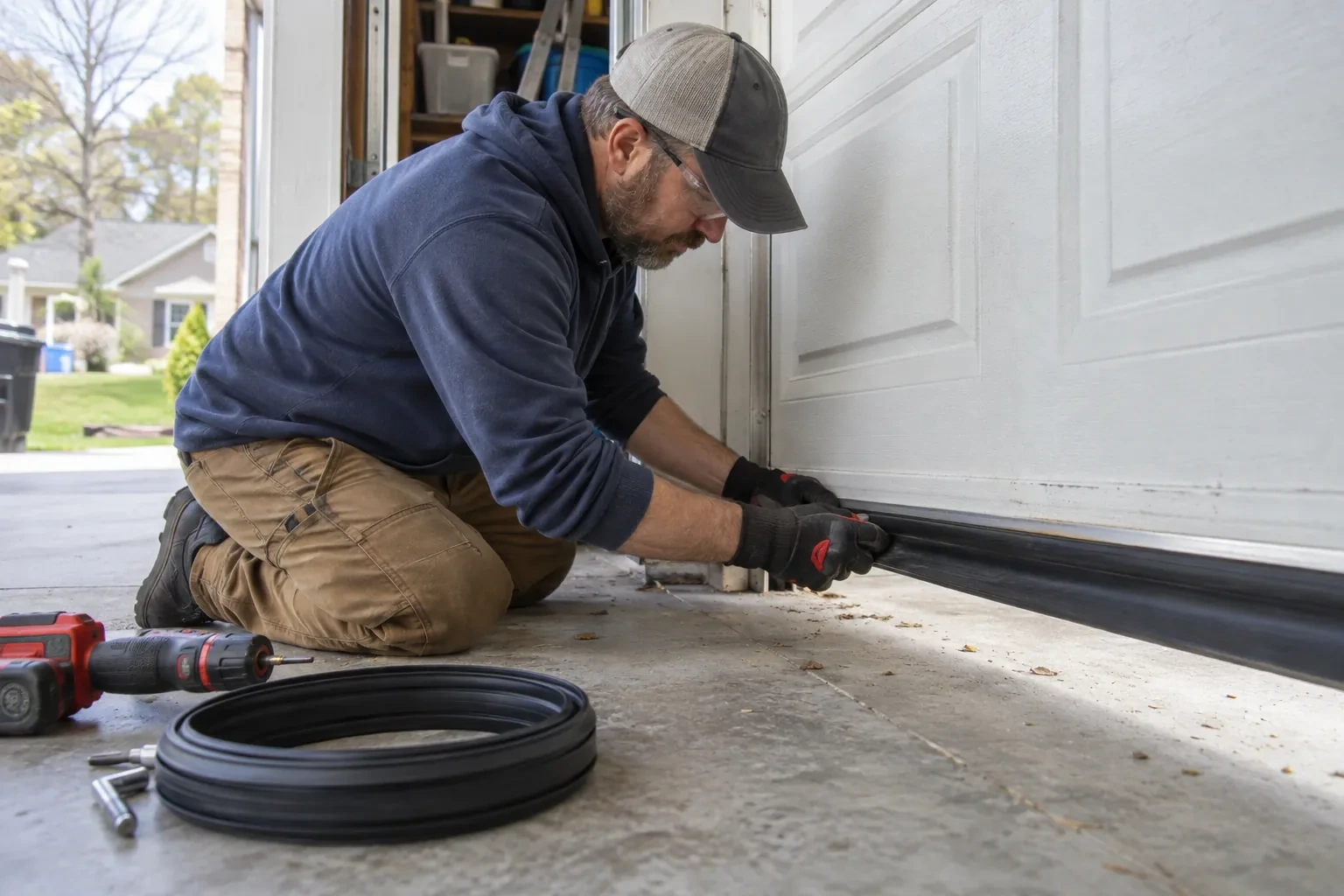
How the visit goesOn windy nights the door rattles in its frame, there is a line of daylight along one side, and the bottom seal has gone hard and flat. Leaves and fine snow drift in underneath and the garage never seems to hold its temperature.
Garage Door Tune-Up
How the visit goes
The opener's connections and safety devices
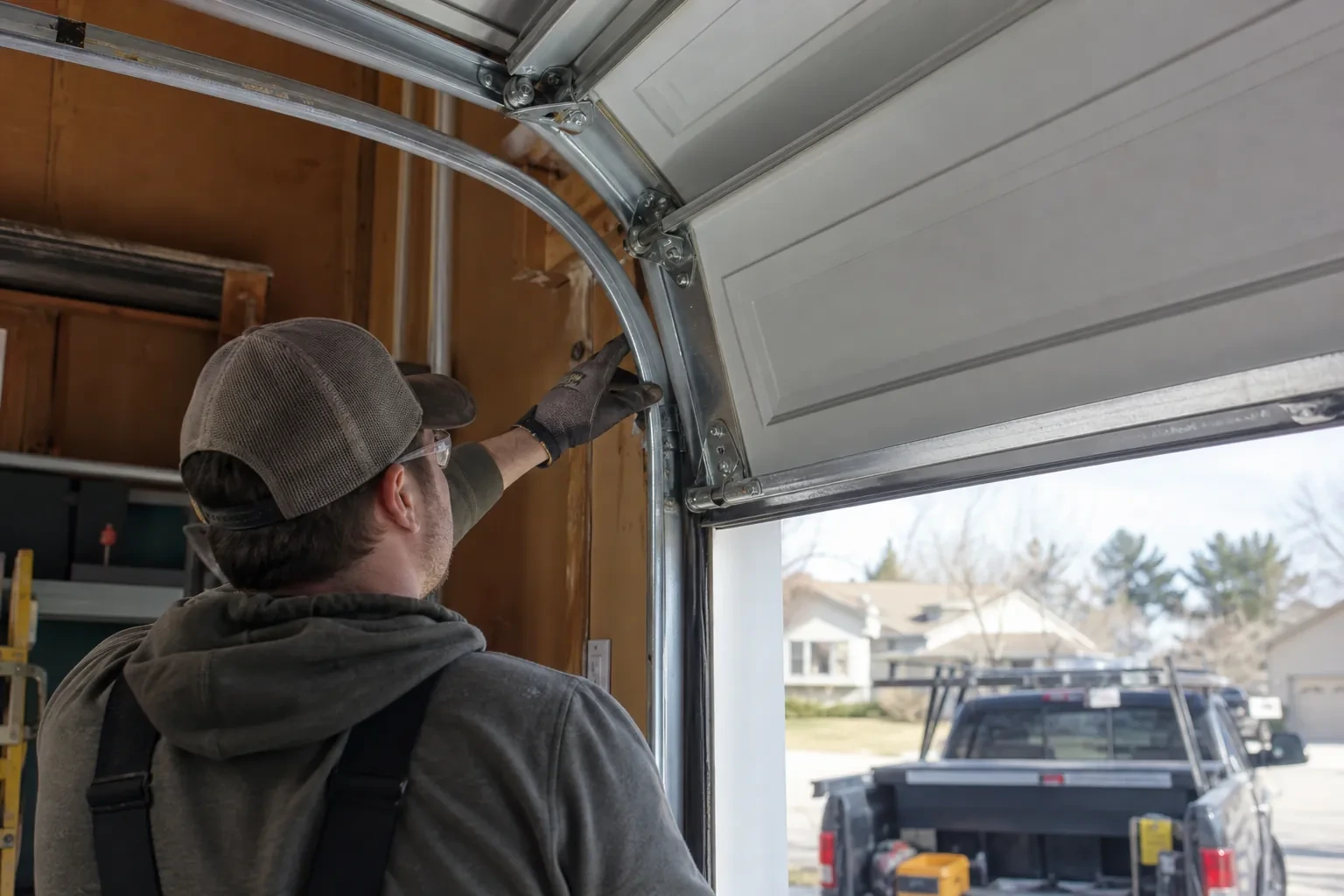
The opener is inspected as part of the door system, not as a separate appliance. The technician checks that the rail is firmly attached at the header and the ceiling hangers, that the chain or belt has the right sag, that the trolley and door arm are not worn or bent, and that the arm sits at the angle the manufacturer intends when the door is closed. Photo-eyes are located and their height measured, since the beam belongs no higher than about 15 centimetres off the floor. Indicator lights are read: steady means aligned, blinking means the pair are not seeing each other. The wall control and the red manual release are confirmed present and reachable.
Lubricating the right points and skipping the wrong ones
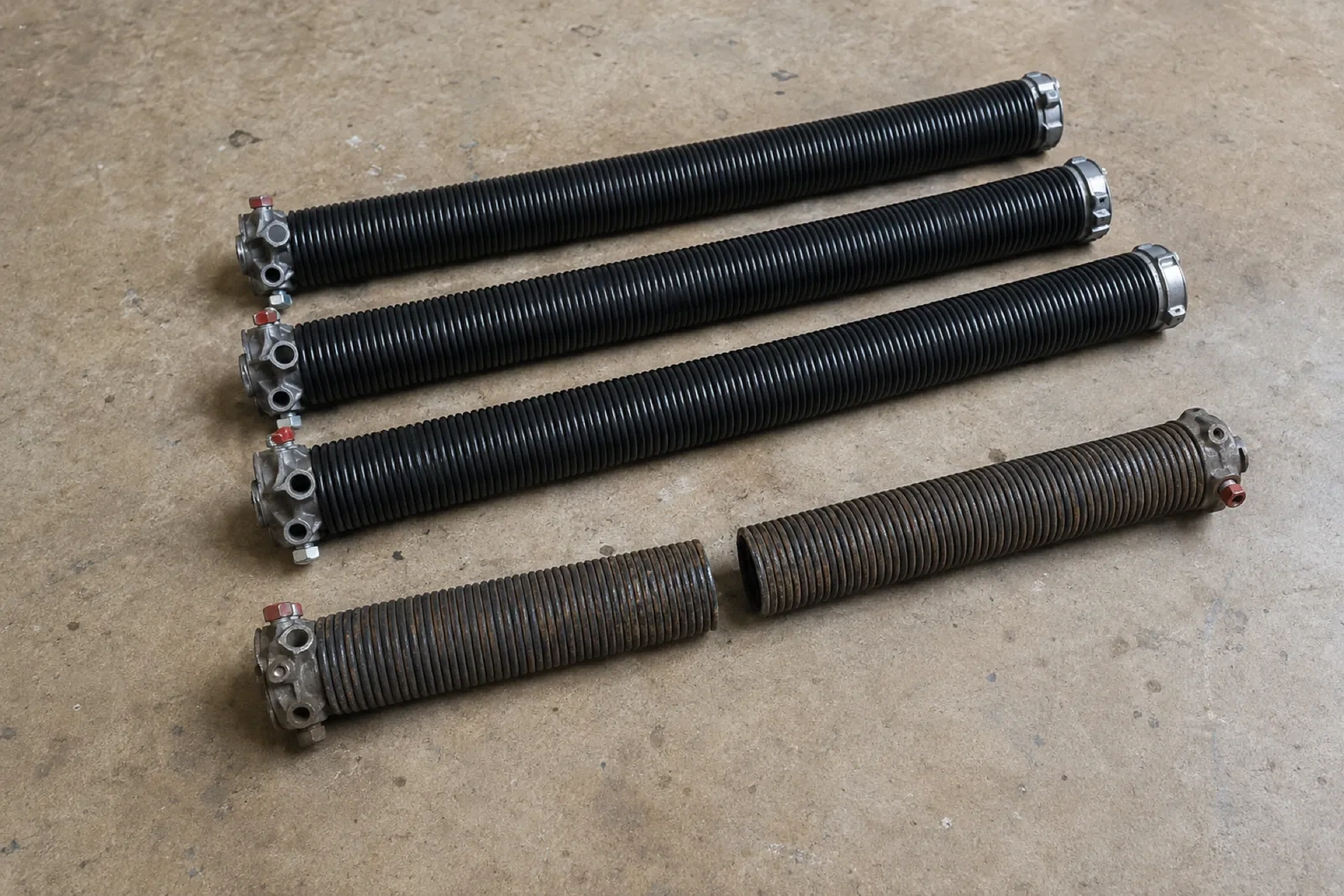
Each moving joint gets a small amount of silicone- or lithium-based lubricant: hinge pins, steel roller bearings, spring coils, the bearing plates at the torsion shaft ends, the centre bearing and the lock. The technician works the door a few centimetres by hand so the lubricant spreads into the bearings. What is not lubricated matters just as much: track surfaces are wiped clean and left dry so rollers roll rather than slide on a film that gathers grit. Nylon tires are left untreated, though an exposed nylon-roller bearing gets lubricant where its maker calls for it. The chain or belt is handled only as the opener maker directs, and excess is wiped off so it never drips onto a vehicle.
Ready for the cold months
After a fall tune-up the door is set up for the season that tests it hardest. The lubricant on the moving parts stays fluid in the cold rather than thickening into a drag on the opener. The bottom seal and jamb weatherstrip have been treated so they stay flexible below freezing and release from the slab instead of tearing. If the seal ever freezes down on a bad morning, free the ice and dry the area before running the door rather than letting the opener force it; that habit protects the top section better than any force setting. You have been shown the threshold spot where water pools, and clearing snow and ice there becomes part of shovelling the driveway.
Garage Door Tune-Up
In the van
Locking pliers or C-clamps
Lag screws for brackets and header
2x4 test block and tape measure
Photo-eye brackets and wire
Hinge screws and track bolts
Garage Door Tune-Up
What affects the quote
Door construction and weight
A heavy wood or insulated steel door works its hardware harder than a light aluminum one, and the balance check and fastener work take a little longer on the heavier door.
Upgrades you choose on the day
Quieter nylon rollers, a new bottom seal profile, a keypad or a battery backup for the opener are options some customers add while the technician is there, each priced as a separate line.
Time since the last service
A door serviced last year needs a lighter touch than one that has never been looked at, where every fastener may want attention and the sensors and limits are far from where they should be.
What to have ready
- What brand is the opener, and is it a chain, belt, screw or wall-mounted unit?
- What have you noticed: noise, shaking, hesitation, slamming, or reversing on its own?
- Do both sensor lights near the floor glow steady, or does one blink?
Garage Door Tune-Up: questions
QuestionsCan a tune-up make my noisy door quieter?
Usually, yes, and often dramatically. Most garage door noise comes from dry hinge pins, dry roller bearings and hardware that vibration has loosened, and those three are exactly what a tune-up addresses. Some noise comes from parts that have worn, such as a roller gone out of round or a chain that has stretched, and the technician tells you which sounds were settled by maintenance and which point to a part worth replacing, with a separate quote for that.
How do I test the safety reversal at home?
Two tests, once a month. With the door open, press close and wave a broom handle through the photo-eye beam near the floor: the door should stop and go back up. Next, set a 2x4 flat on the concrete in the middle of the opening and press close: the door must reverse when it meets the board. If it stops on the board without reversing, the down travel or force setting needs adjustment, and if it fails after that, book a visit.
What is the difference between a tune-up and a safety inspection?
An inspection looks and reports; a tune-up looks, reports and then does the maintenance. Both begin with an observed cycle and a check of hardware, balance, sensors and reversal. A tune-up goes on to tighten fasteners, lubricate the moving points, adjust the opener and align the photo-eyes, and it may swap a worn roller or a bottom seal on the spot. If you want the door serviced rather than assessed, the tune-up is the one to book.
Related services
- Off-Track Garage Door ResetThere was a loud bang from the garage, then silence.
- Garage Door Panel ReplacementYears of slap shots have peppered the lower two sections with dents.
- Garage Door Bottom Seal ReplacementEvery mild afternoon the snow melts off the car, runs to the door, and by morning the rubber strip along the bottom is frozen to the concrete.