Springs · Springwater
Garage Door Hinge Replacement
Watching from inside as the door opens, you can see the gap between the second and third panels open up on one side as they turn the corner into the ceiling, then close again.
In plain words
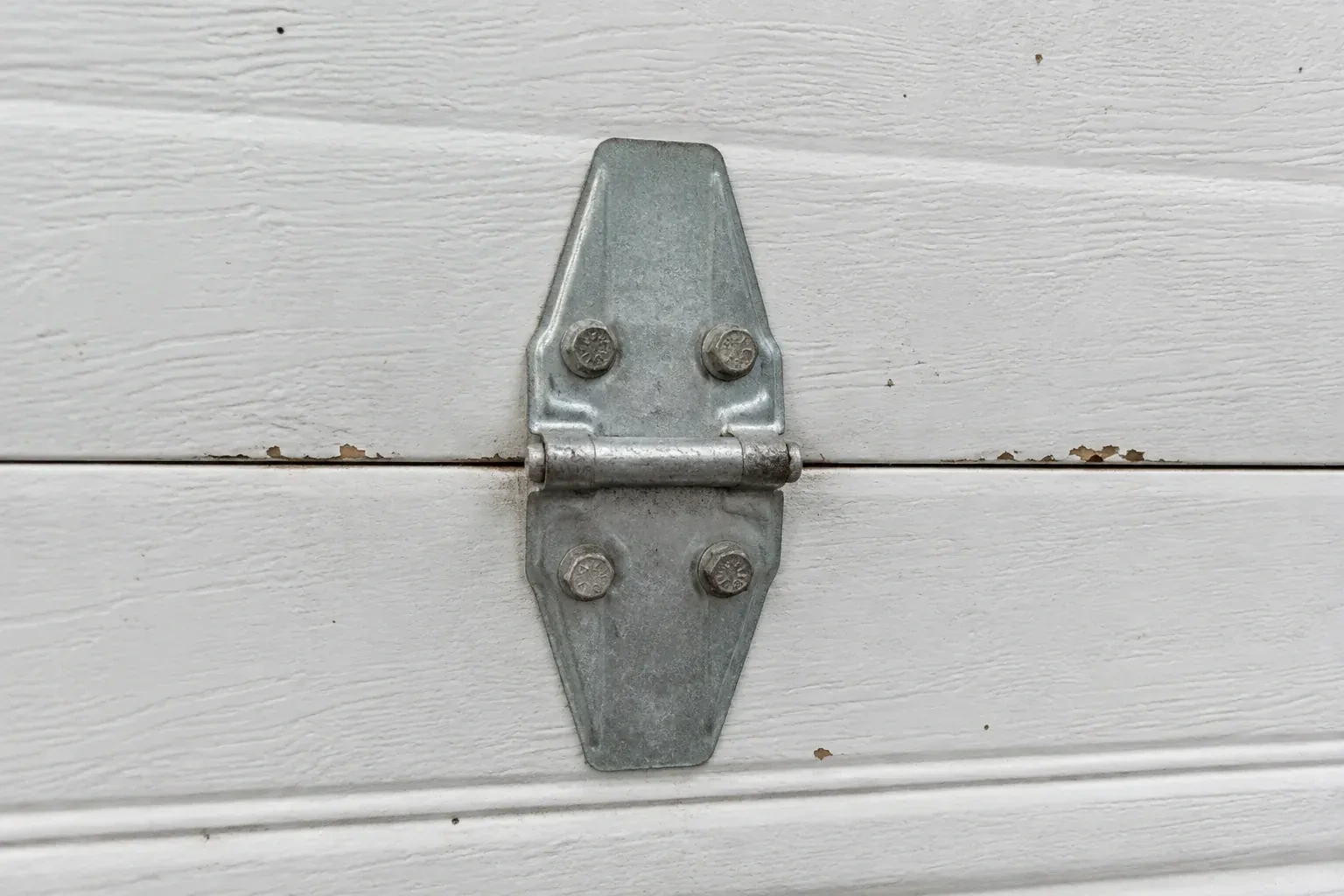
Not every hinge on the door is the same part. The edge hinges are numbered: 1 at the joint above the bottom panel, then 2, 3 and sometimes 4 or 5 going up. Each number stands the roller a little further off the door face, which is what lets the door lean snugly against the jambs when closed even though the tracks angle away from it. Centre hinges carry no roller and share the geometry of a 1. Reading the stamped number on the old hinge, or counting the joint from the floor, is how the replacement is chosen so the door keeps sealing evenly along both sides.
How the visit goesThe roller at the top of the second panel is leaning outward and only half of the wheel is still in the track. Behind it, the hinge that should hold it flat against the door has a screw missing and another hanging by a thread.
Garage Door Hinge Replacement
How the visit goes
The holes and the stile behind them
A hinge only holds if its fasteners do. The technician tests each screw for grip and looks at the stile it threads into: the folded steel channel at the panel edge on a steel door, the hinge support plate behind the skin where one is fitted, or the solid timber of a wood door. Holes that have stretched, rusted or torn are noted, because a new hinge on a stripped hole rocks just like the old one. Where the metal is thin or the wood is soft, the plan changes from screws to a through-bolt with a nut and washer, or a backer plate that spreads the load across fresh material.
Travel, fit, balance and the opener
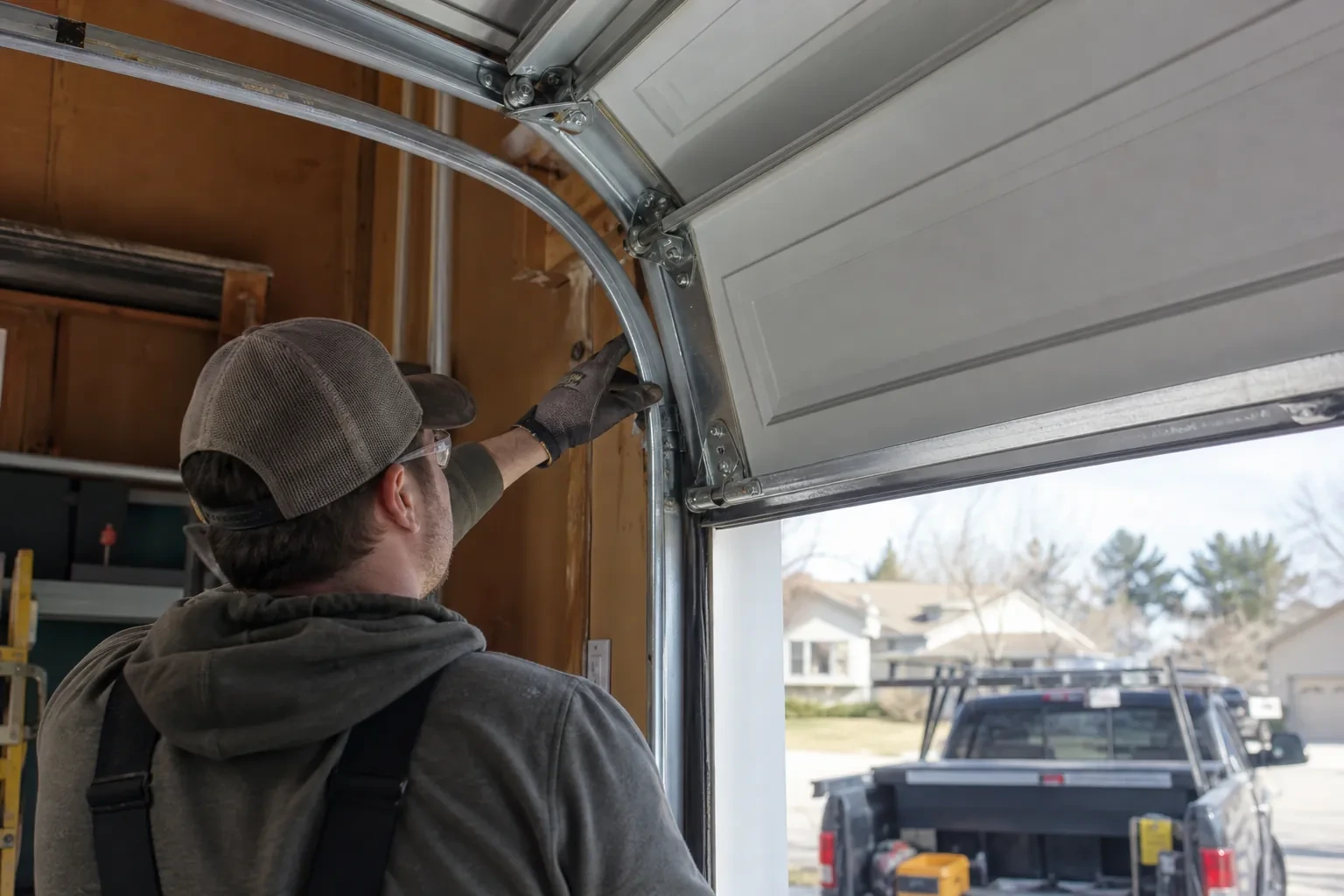
Once every hinge is on, the door is run by hand. The technician watches each joint turn the curve, listening for the pop that started the call and looking for a gap opening between panels. The door is closed and checked for an even fit against both jambs, then raised to waist height and let go: a balanced door stays put, which confirms the hinge work has not disturbed the springs' job. Rollers are watched for staying flat in the track. Then the opener is reconnected, its travel limits confirmed, and the reversing test and photo-eye check carried out while you watch.
Keeping salt off the low hinges
The two lowest joints live in the wettest part of the garage. Through winter, push slush away from the inside of the door rather than letting it sit against the bottom panels, and when a mild day comes wipe the road salt off the lower hinges, brackets and rollers with a damp cloth followed by a dry one. A light mist of silicone on the low knuckles in late autumn helps meltwater run off. Clear the ridge of ice that forms at the threshold before running the door, so the opener is never pulling against a panel frozen to the slab. These habits protect exactly the hinges that fail first here.
Garage Door Hinge Replacement
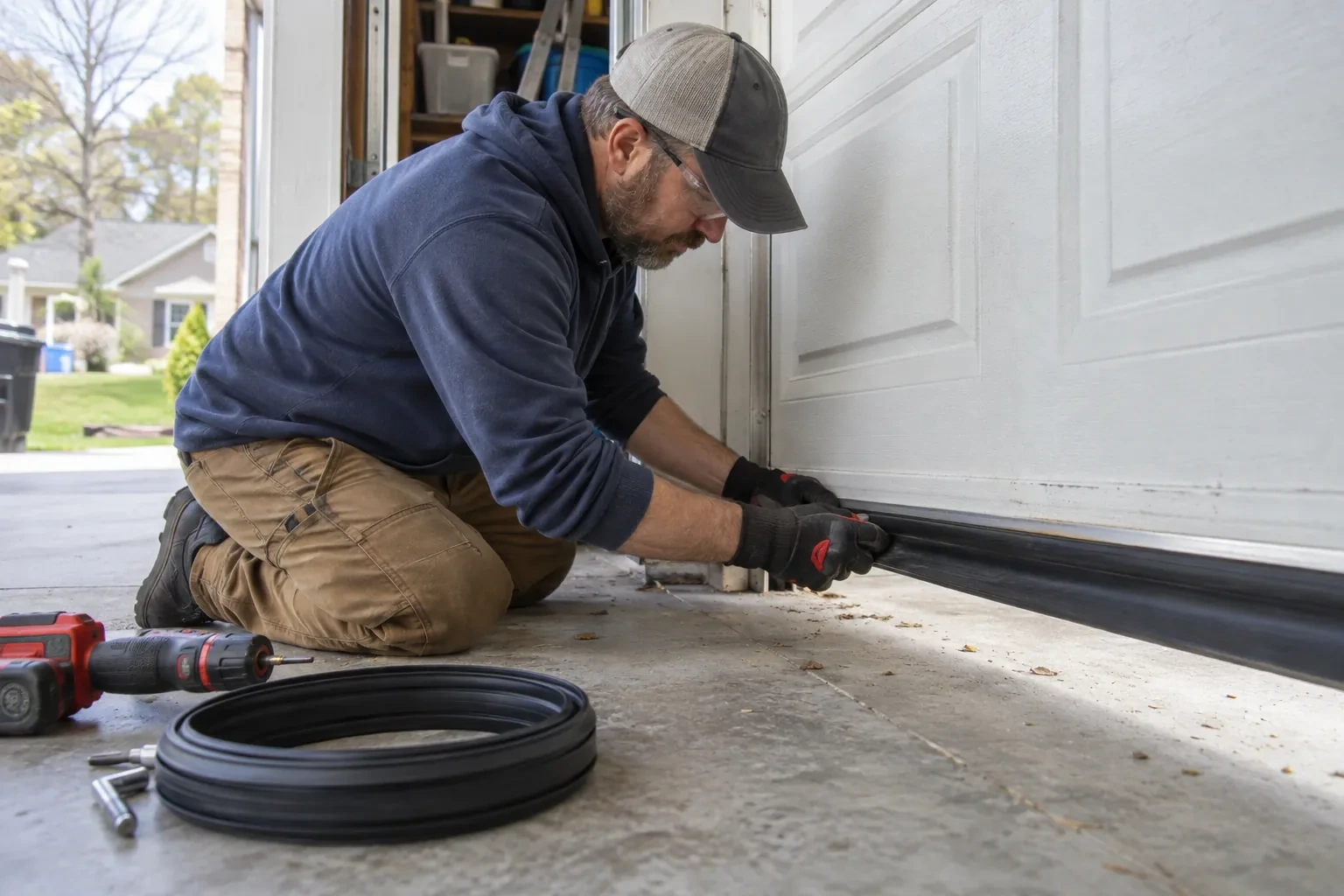
In the van
Heavy-gauge hinges for heavy doors
Numbered galvanized edge hinges
Socket set and impact driver
Hinge support plates
Carriage bolts, nuts and washers
Garage Door Hinge Replacement
What affects the quote
How many hinges are changed
One cracked centre hinge is the smallest job. Several worn hinges across two or three joints, which is common on an older door, means more parts and more time, and the quote lists each.
Supporting the panel while hinges are changed
A heavy insulated panel needs to be braced while its hinges are off, so it does not sag or twist out of place mid-repair. Lighter steel or wood panels usually need no extra support, and the technician decides which applies once the panel is in front of them.
Track or balance problems found
If the inspection shows a track out of line or a door out of balance behind the hinge failure, correcting it is explained and priced on its own alongside the hinge work.
What to have ready
- Is the loose or broken hinge at the edge of the door or in the middle?
- Is the door closed, open or stuck partway right now?
- Is anything stored against the door or under the track we should know about?
Garage Door Hinge Replacement: questions
QuestionsCan any hinge go in any position?
Edge hinges belong to their own joint. Put a 3 where a 2 belongs and the roller sits at the wrong reach, so the door binds, gaps at the curve or fails to press against the jamb when closed. Centre hinges are the exception, since they all share the geometry of a 1. The technician reads the stamp on the old hinge or counts the joint from the floor before choosing the part.
Do the rollers get replaced with the hinges?
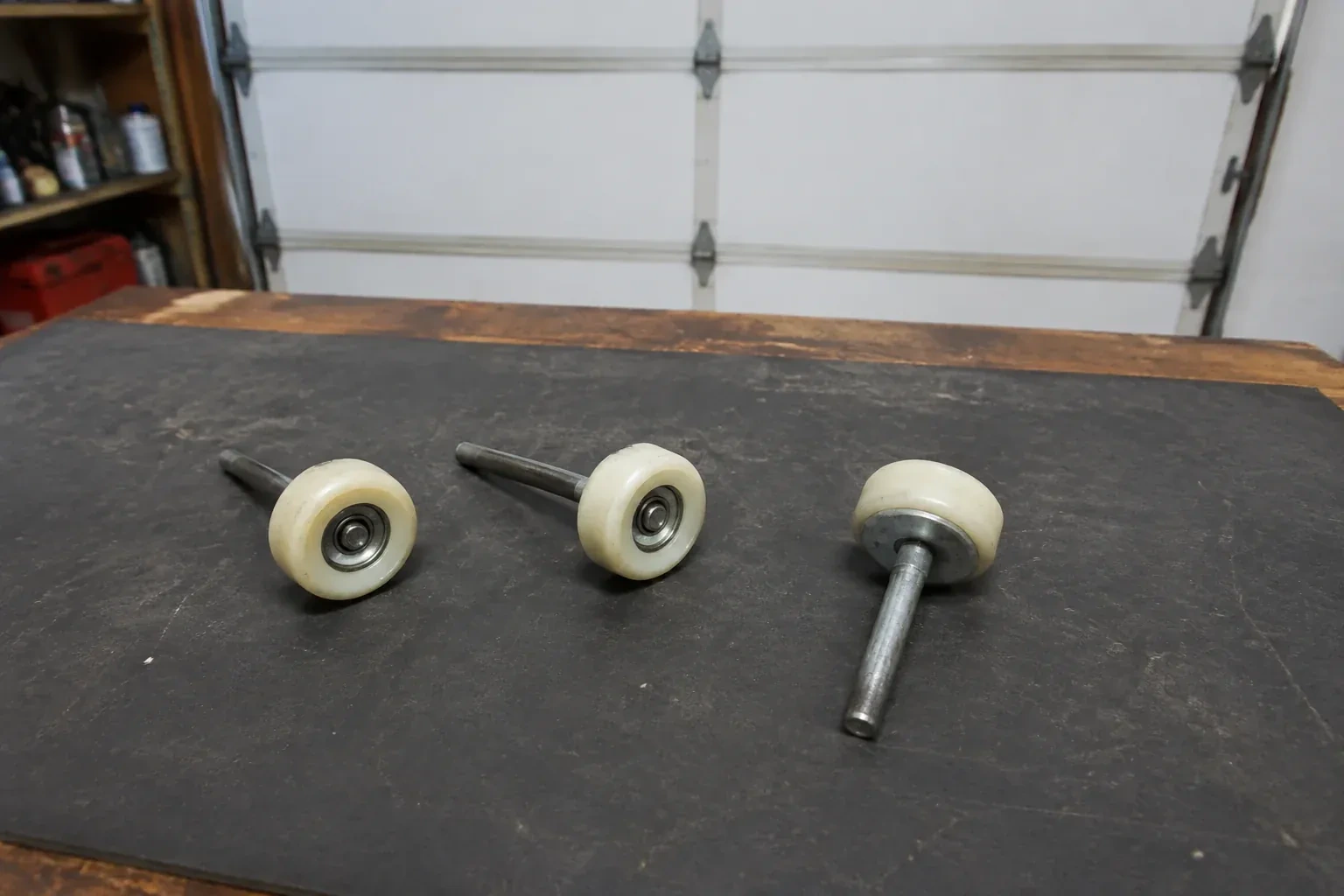
They are checked every time and replaced when they need it. The roller stem sits in a tube on the edge hinge, so when that hinge comes off the roller is already in hand, and fitting a new one adds a minute. A wheel that is cracked, flat-spotted or grinding on its bearing is the sort of thing that strained the hinge, so leaving it would ask the new hinge to carry the same load.
Can I keep using the door until the hinge is replaced?
It is better to leave the door closed and use another way in and out. A joint with a failed hinge flexes more on every trip, which strains the neighbouring hinges, can pull a roller out of the track and can crease the panel itself. If the door is already open or stuck partway, leave it where it is rather than running the opener again. A closed, still door is what the technician hopes to find.
Related services
- Garage Door Track Repair or ReplacementHalfway up, the door lurches and one roller rides onto the lip of the channel.
- Garage Door Cable ReplacementSomeone left the snow shovel leaning in the opening and the door came down on it.
- Torsion Spring ReplacementYou heard a sharp bang from the garage, and now the opener hums for a second and gives up.