Repairs · Springwater
Garage Door Bottom Seal Replacement
Every mild afternoon the snow melts off the car, runs to the door, and by morning the rubber strip along the bottom is frozen to the concrete.
In plain words
In this climate the bottom seal lives a hard life. Meltwater from the car pools at the threshold and freezes the seal to the slab, and the next press of the remote tears it or drags it out of its channel. Road salt stiffens the vinyl and eats the aluminum retainer; deep cold turns a supple strip rigid. Replacement puts a cold-rated profile on a sound retainer, sized to meet the floor without over-compressing, and the technician shows how a wipe of silicone each autumn and a clear threshold keep the new strip from bonding to the ice. The door closes softly onto rubber again, not onto a frozen ridge.
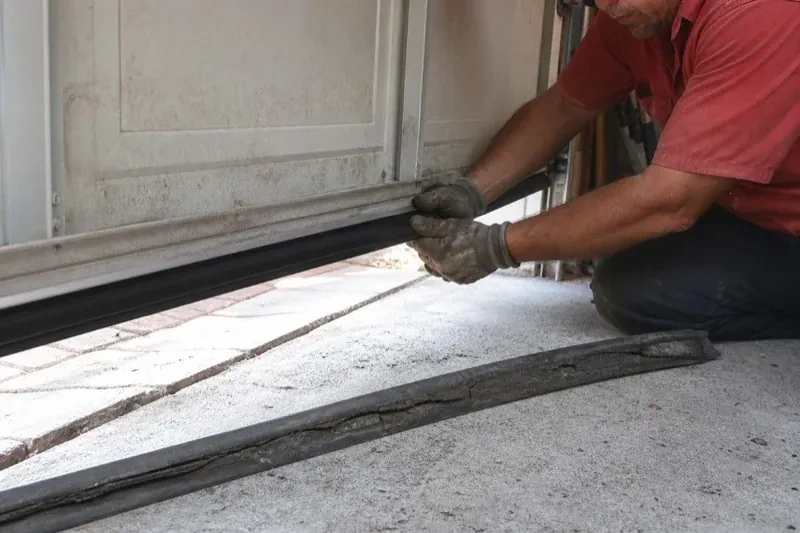
How the visit goesOne end of the bottom seal has slipped out of its channel and hangs down like a loose shoelace. Each time the door closes it folds under, each time it opens it flaps, and the gap beside it keeps growing.
Garage Door Bottom Seal Replacement
How the visit goes
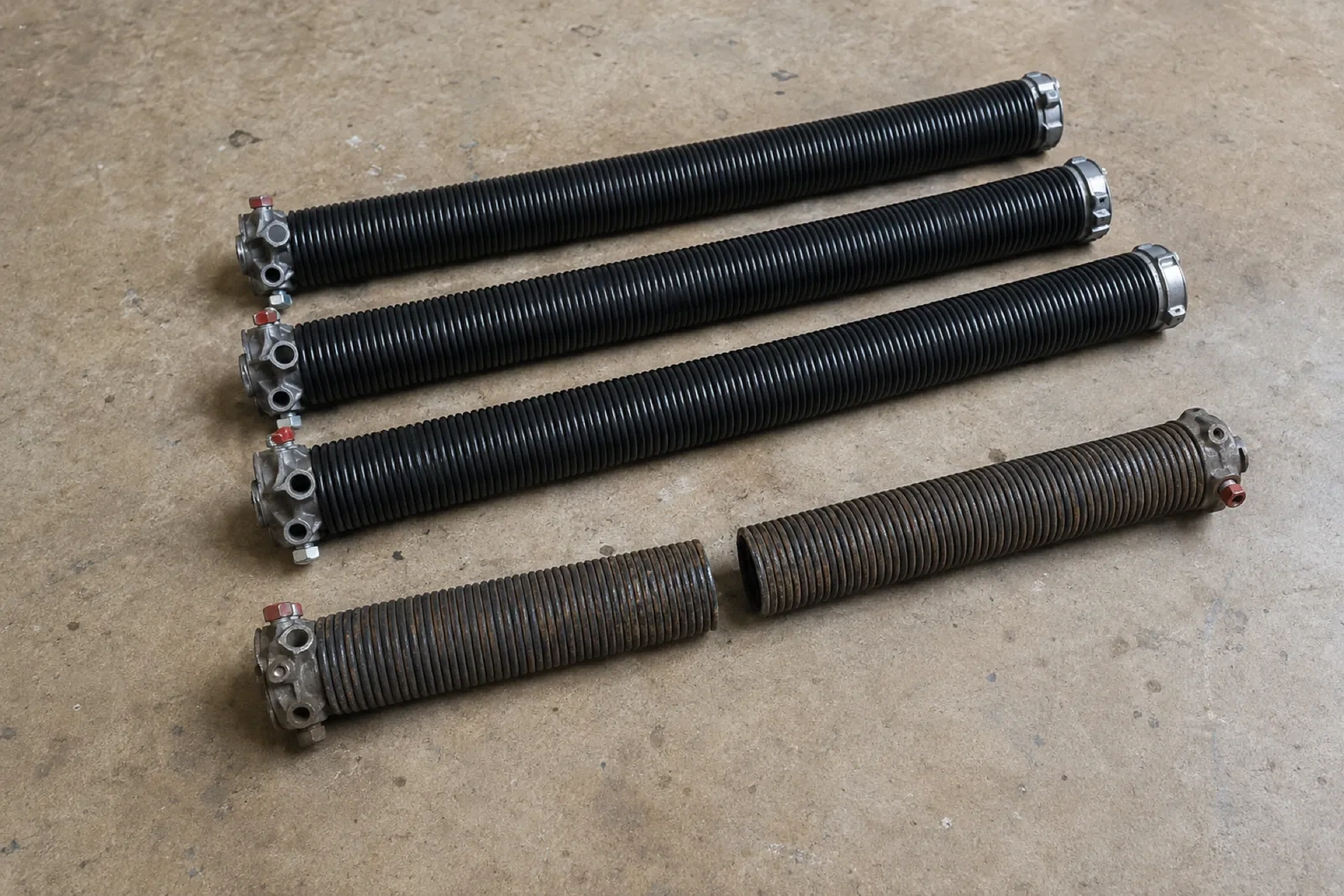
Reading the gap with the door closed
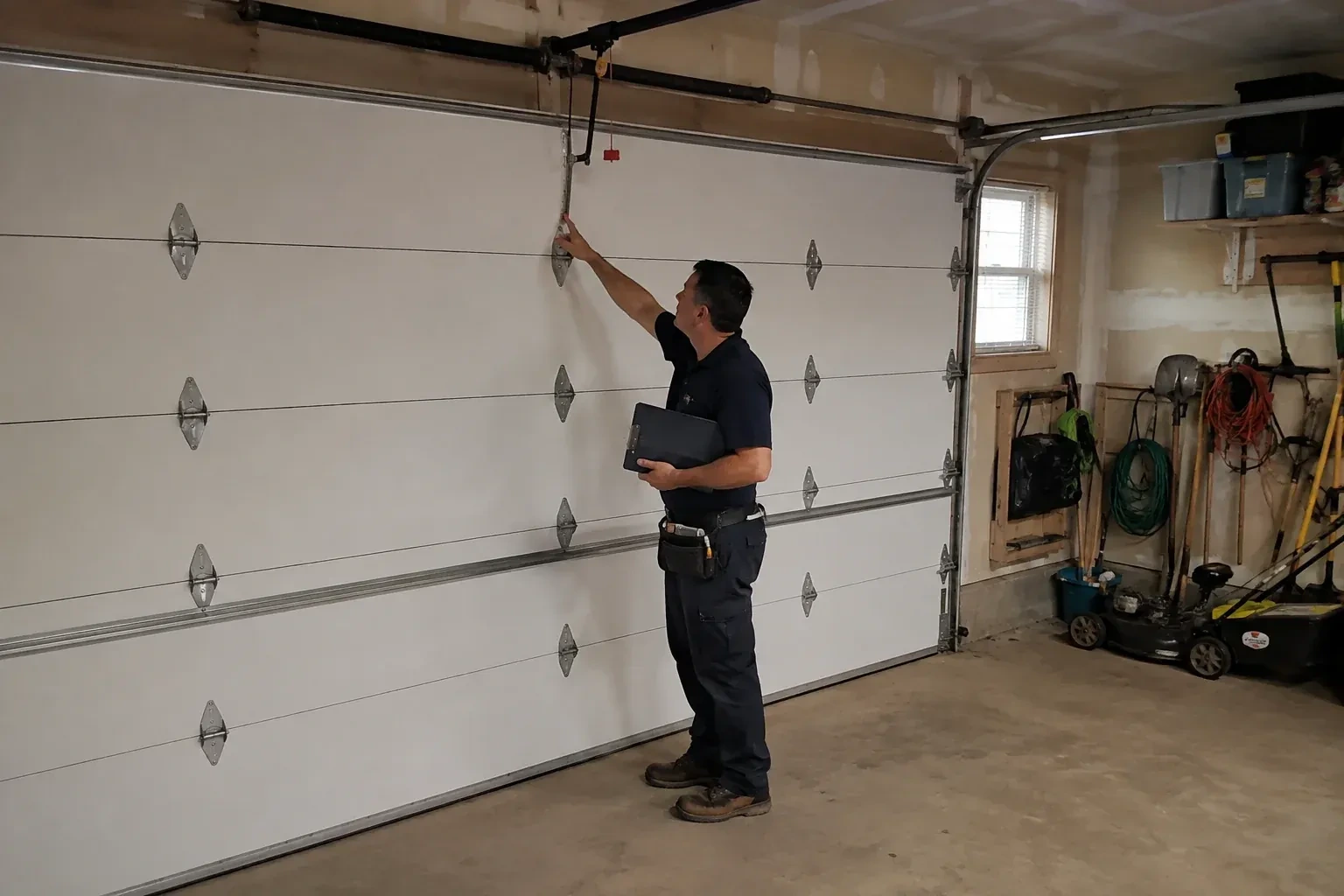
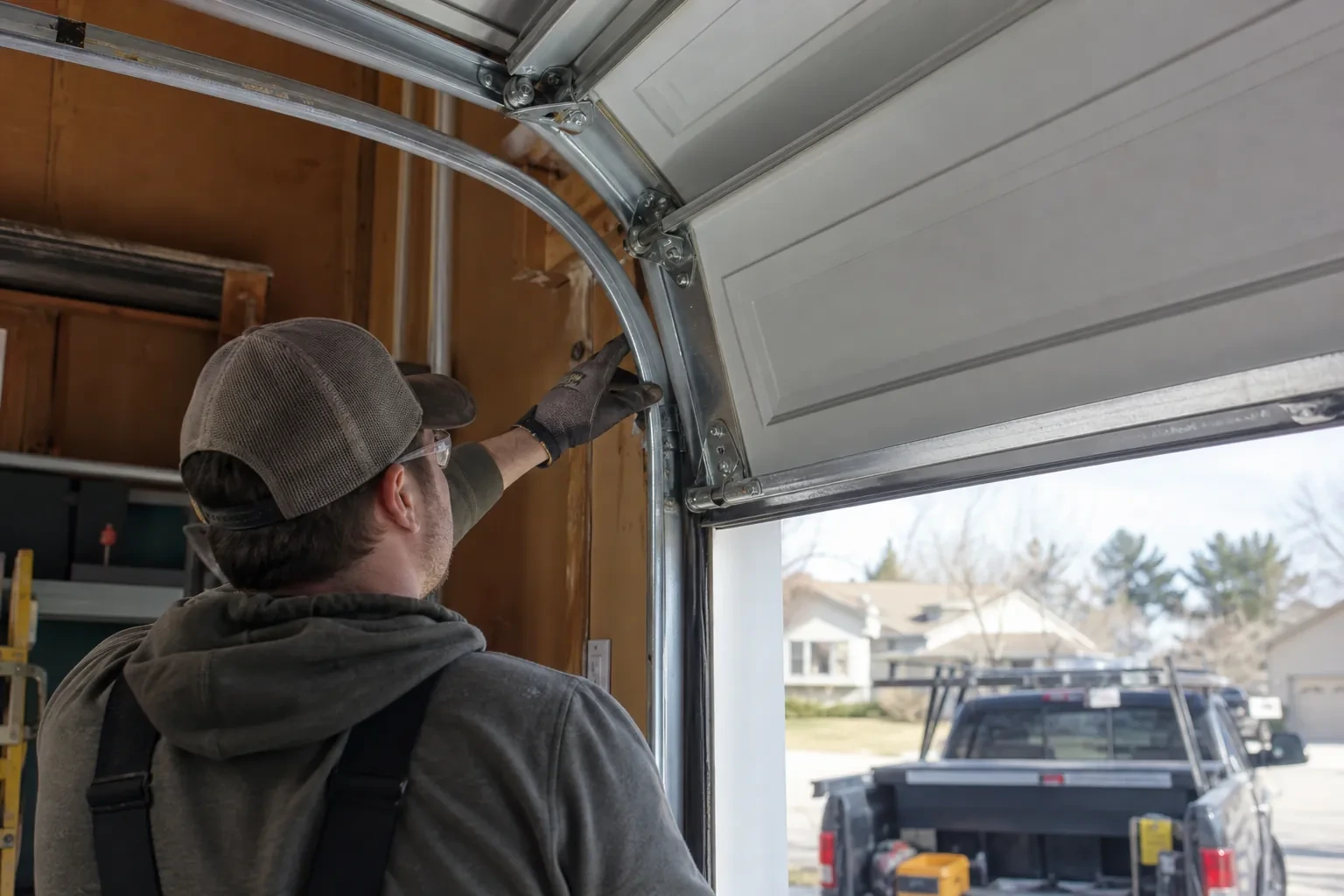
The assessment starts with the lights off and the door down. From inside, the technician looks along the floor line for daylight and notes where it shows: a thin line the full width, a wedge at one corner, or a patch in the middle. A straightedge laid across the threshold shows whether the slab is flat or dished, and a hand run along the seal feels where it touches and where it hovers. Photographs of the worst spots are taken so you can see what is being fixed. This map of the gap tells the technician how tall the new seal needs to be and whether anything other than the seal is contributing.
Securing the door before work begins
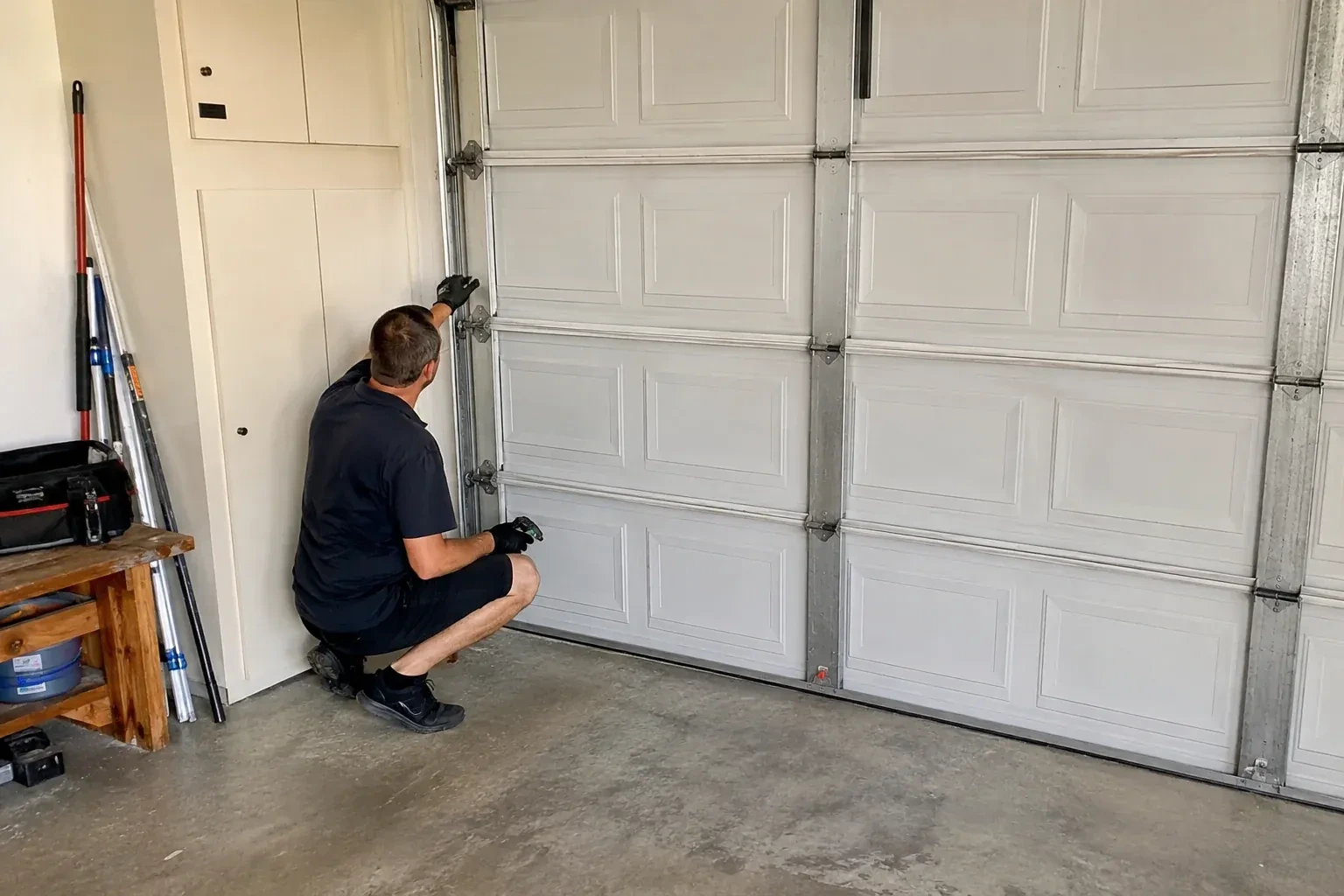
The opener's release cord is pulled so the motor is out of the picture, and the door is raised by hand to a height where the bottom rail sits at a comfortable working level, usually around chest height. A clamp goes on each vertical track just below a roller so the door cannot drift down while the retainer is exposed. The bottom brackets in each corner stay untouched throughout, because they carry cable tension whenever the springs are wound. With the door held and the floor in front clear, the seal and retainer can be handled like any other piece of hardware.
A record of the profile and size
Before leaving, the technician tells you what went on the door: the seal profile, whether T, bead or bulb, its width and height, the material, the door width it was cut for, and whether the retainer was renewed. Write this on a card by the opener or inside the manual. Bottom seals wear out on a schedule of years rather than decades, and knowing the profile means the next one can be ordered and fitted without measuring from scratch. If a threshold seal was added, its length and type belong on the same card.
Garage Door Bottom Seal Replacement
In the van
Threshold seal and adhesive
Track clamps
Nail-on vinyl strip for wood doors
Self-drilling retainer screws
Aluminum bottom seal retainer
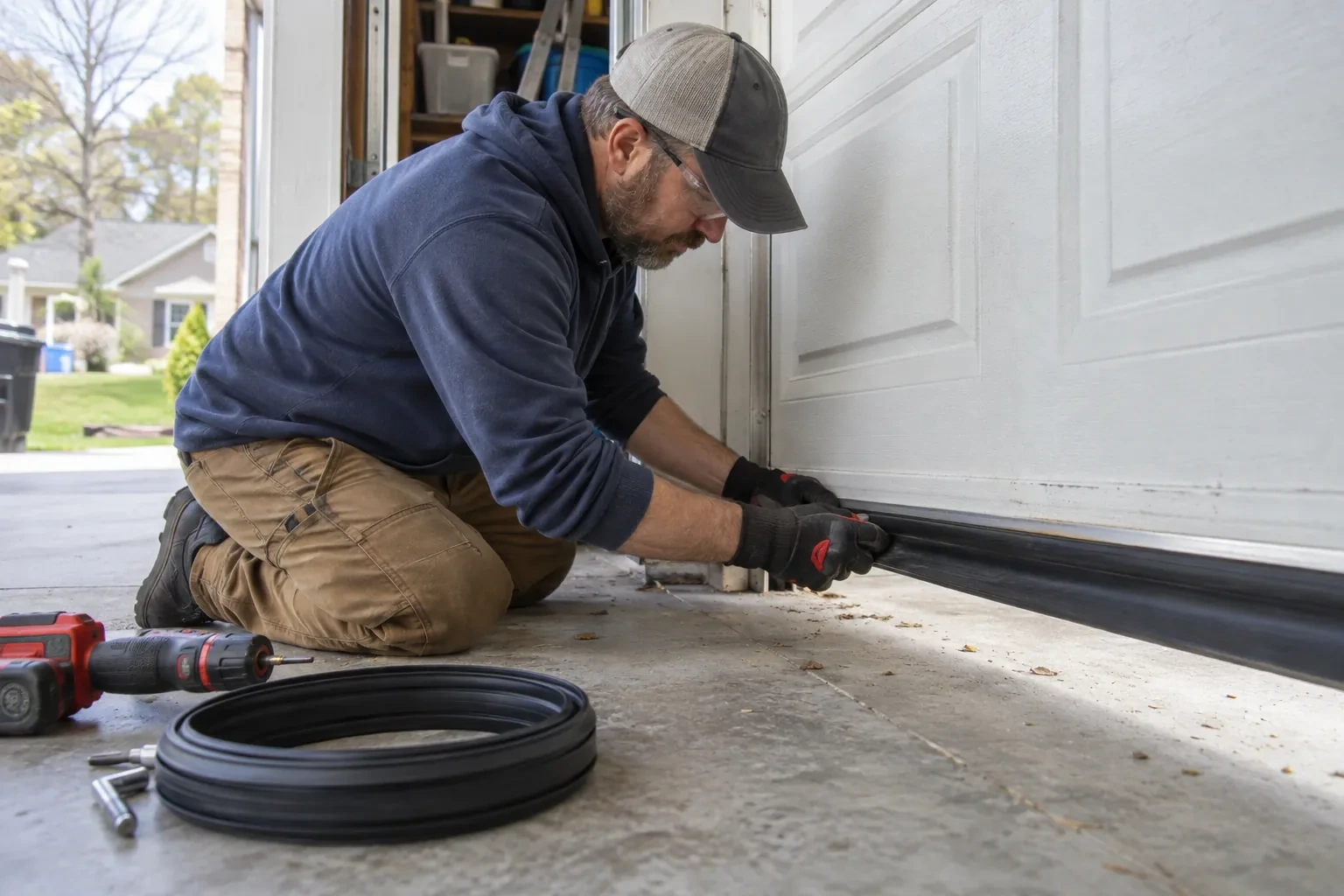
Garage Door Bottom Seal Replacement
What affects the quote
Door width
A single door takes a shorter length of seal than a double, and the widest doors need more time to feed the strip evenly across. The quote starts from the width measured on the day.
Season and conditions
A seal frozen to the slab, ice at the threshold or working in deep cold adds time for freeing the old strip, clearing the line and keeping the new roll warm enough to feed.
Floor and threshold shape
A dished, sloped or heaved slab may call for a taller bulb profile or a threshold seal on the floor, each of which is quoted as a separate choice you can accept or leave.
What to have ready
- Are the side and top weather strips also worn or torn?
- Has the seal frozen to the floor this winter?
- Is the door steel, wood, or insulated with a plastic bottom cap?
Garage Door Bottom Seal Replacement: questions
QuestionsCan mice get past a garage door bottom seal?
A worn, hardened or chewed seal is one of their favourite routes, and even a small gap at a corner is enough. A fresh, continuous seal sized to the floor removes that route. For a garage with repeated trouble, seals with a stainless mesh embedded in the vinyl are available and resist chewing. Keeping the jamb seals sound at floor level matters just as much, since a gap beside the door serves them equally well.
How can I tell that the bottom seal needs replacing?
Close the door, turn off the lights and look along the floor from inside. Daylight showing, a strip that feels hard or cracks when pressed, a bulb that has flattened and stays flat, an end hanging out of its channel, chew marks or missing pieces are all signs. So are leaves, snow or a puddle inside the door after weather. Any one of these means the seal has stopped doing its job.
How do I look after the new seal?
Wipe it clean of salt and grit a few times a year, and give it a light coat of silicone spray each autumn so meltwater has nothing to bond to. Keep petroleum products and solvents away from it, since they soften vinyl. Clear ice and packed snow from the threshold before running the door in winter. Once a season, look under the closed door for daylight. That is the whole routine.