Openers · Springwater
Garage Door Opener Replacement
Since the storm the door behaves oddly: it reverses halfway down for no reason, the light flickers, and the travel limits drift so it either slams or stops short.
In plain words
How do you tell whether an opener has reached its end or simply needs a part? A snapped gear or a worn trolley on an otherwise sound, recent unit is a repair. Replacement makes sense when the operator predates photo-eye sensors, when the board or motor has failed and is no longer made, when the same fault keeps returning, when the door has become heavier, or when you want features it was never built for, such as battery backup or phone control. The technician lays both paths side by side so the choice is yours, and a new operator brings the door up to today's safety standard.
How the visit goesThe bedroom above the garage shakes every morning at six when the chain drive fires up. Everyone in the house knows the moment someone leaves for work. The door itself is fine; the racket comes from the operator and its steel chain.
Garage Door Opener Replacement
How the visit goes
How your household uses the door
A few questions decide which operator and accessories suit you. How many vehicles need remotes, and do any of them have built-in transmitter buttons? Do children come home to an empty house and need a keypad? Is there a bedroom or home office above or beside the garage, which points toward a belt drive and a DC motor? Do you want to check the door from your phone, or have it close on a timer? Has a power outage ever left you stuck outside? The answers steer the technician toward a chain, belt or wall-mount unit and the right set of controls, so the recommendation fits how you actually live.
Building and hanging the new rail
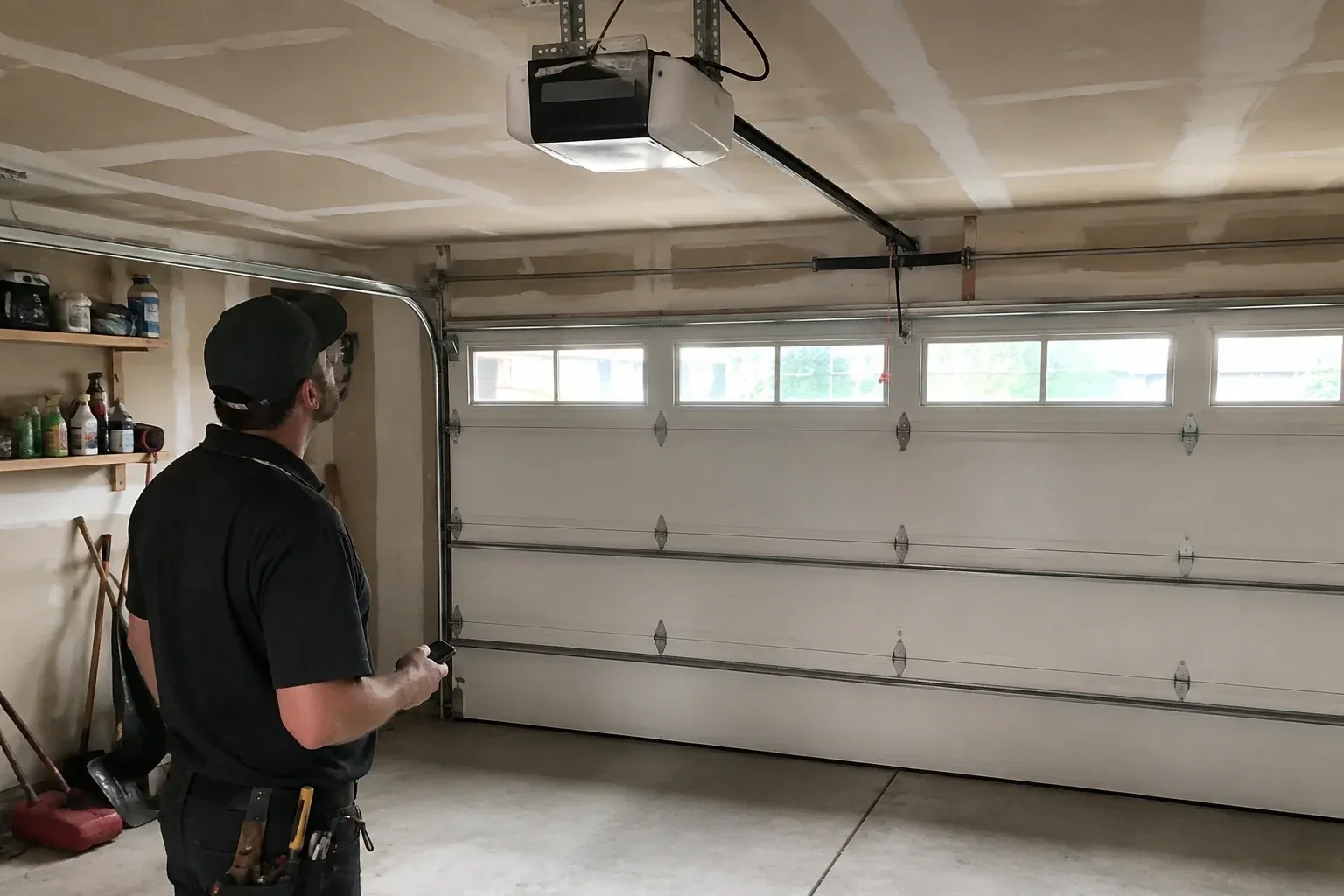
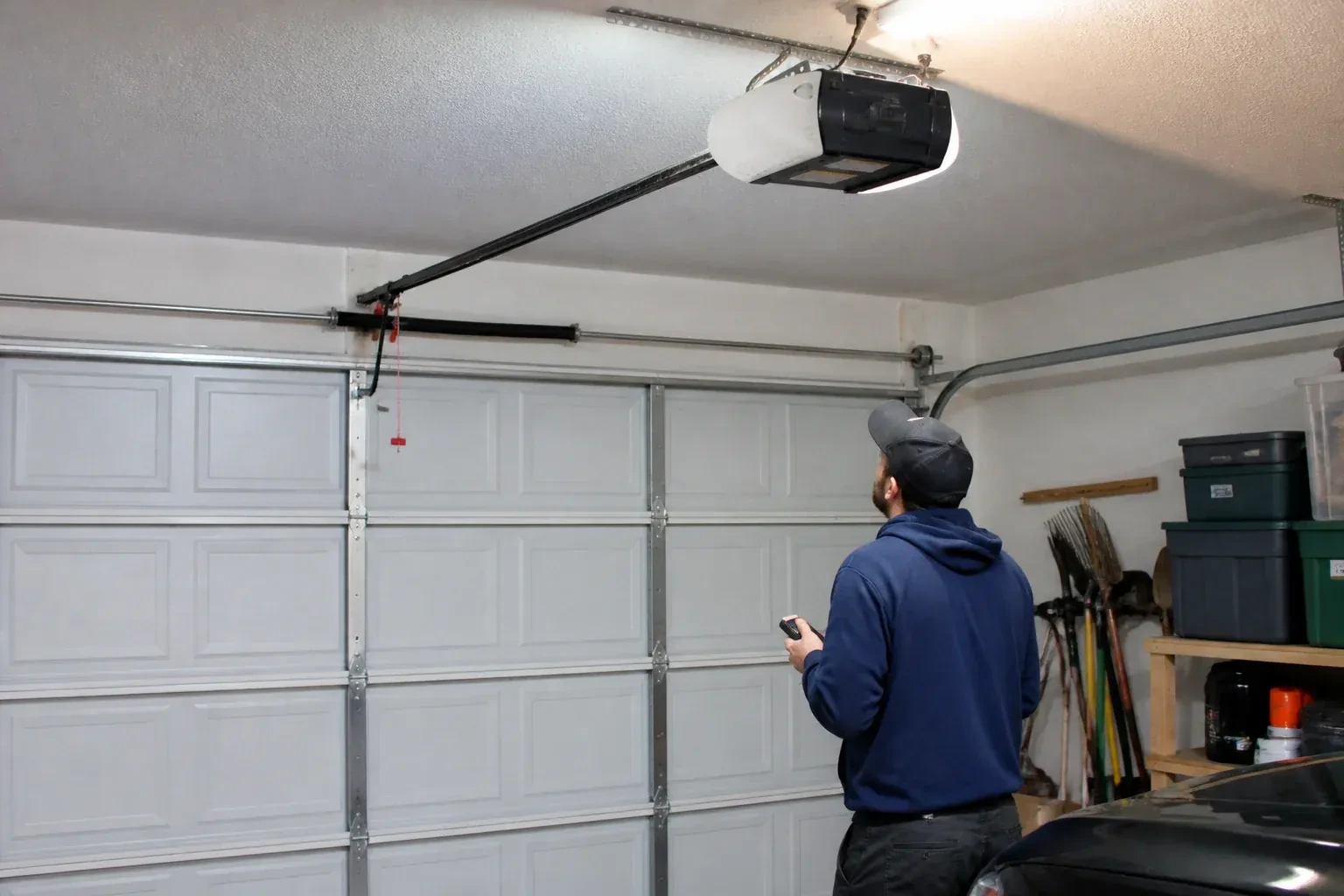
The rail sections are joined on the floor, the trolley is threaded on and the chain or belt is fitted and tensioned to the maker's setting before the assembly is bolted to the head. The header bracket is fastened with lag screws into solid framing centred above the door, high enough to clear the top section at the highest point of its travel. The head is then raised, hung from the ceiling joists with perforated angle iron cut to length, and adjusted until the rail runs level and in line with the door's centre. A rail that is true to the door keeps the trolley from binding and keeps the drive quiet for its whole life.
A door that stops for anything in its way
What you have when the technician leaves is a door that reverses on its own if it touches something or if the beam near the floor is broken. That protection is only as good as the last test, so keep a monthly habit: lay a 2x4 flat where the door meets the floor and run it down from the console, then separately swing a broom handle through the photo-eye beam while it closes. In both cases the door should return to fully open. If it ever hesitates or keeps closing, stop using the operator and have it looked at, since the cause can be a setting, the opener, or the door itself.
Garage Door Opener Replacement
In the van
Remotes and wireless keypad
Perforated angle iron hangers
Backup battery
Door arm and door bracket
Wall control console
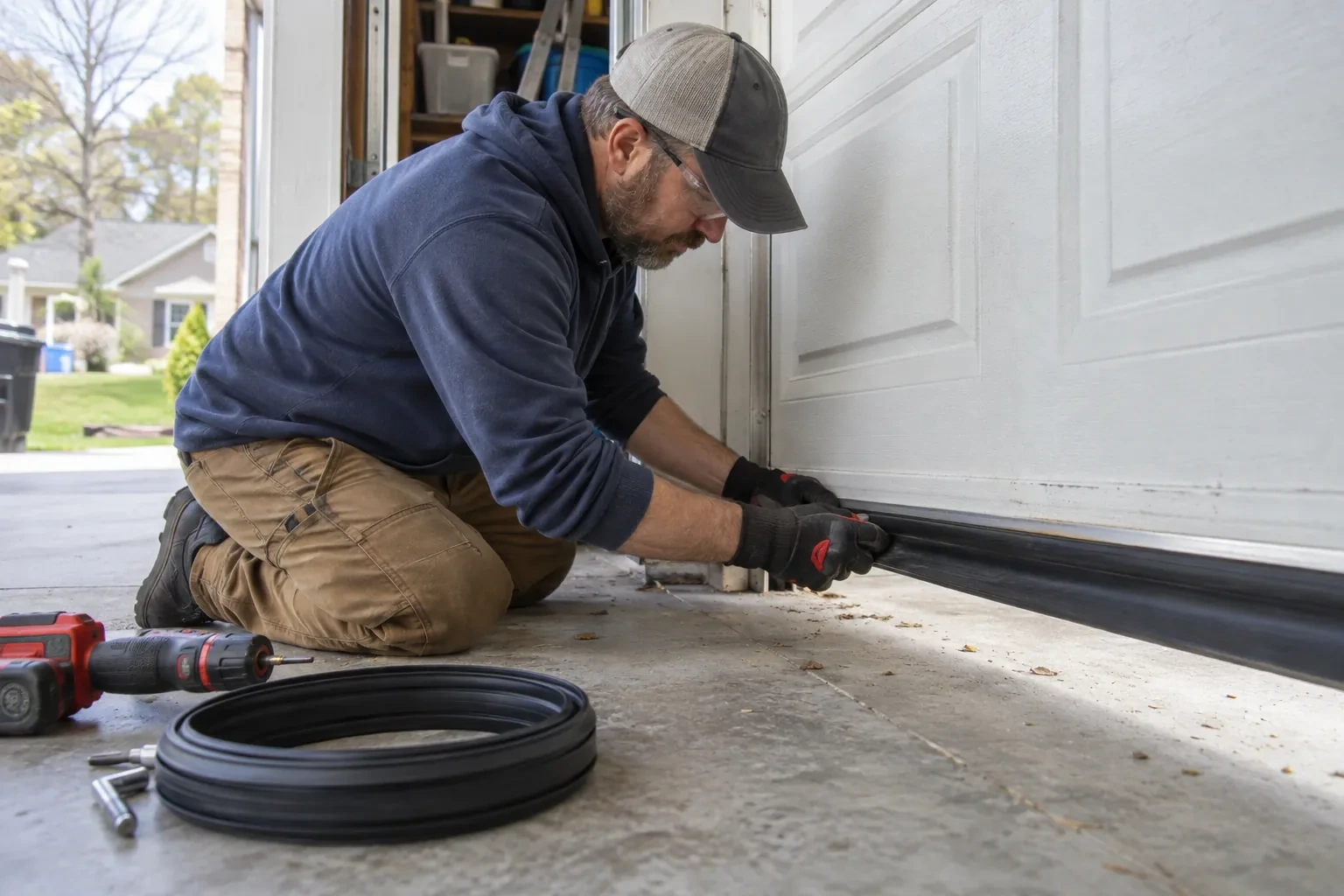
Garage Door Opener Replacement
What affects the quote
Top-section reinforcement
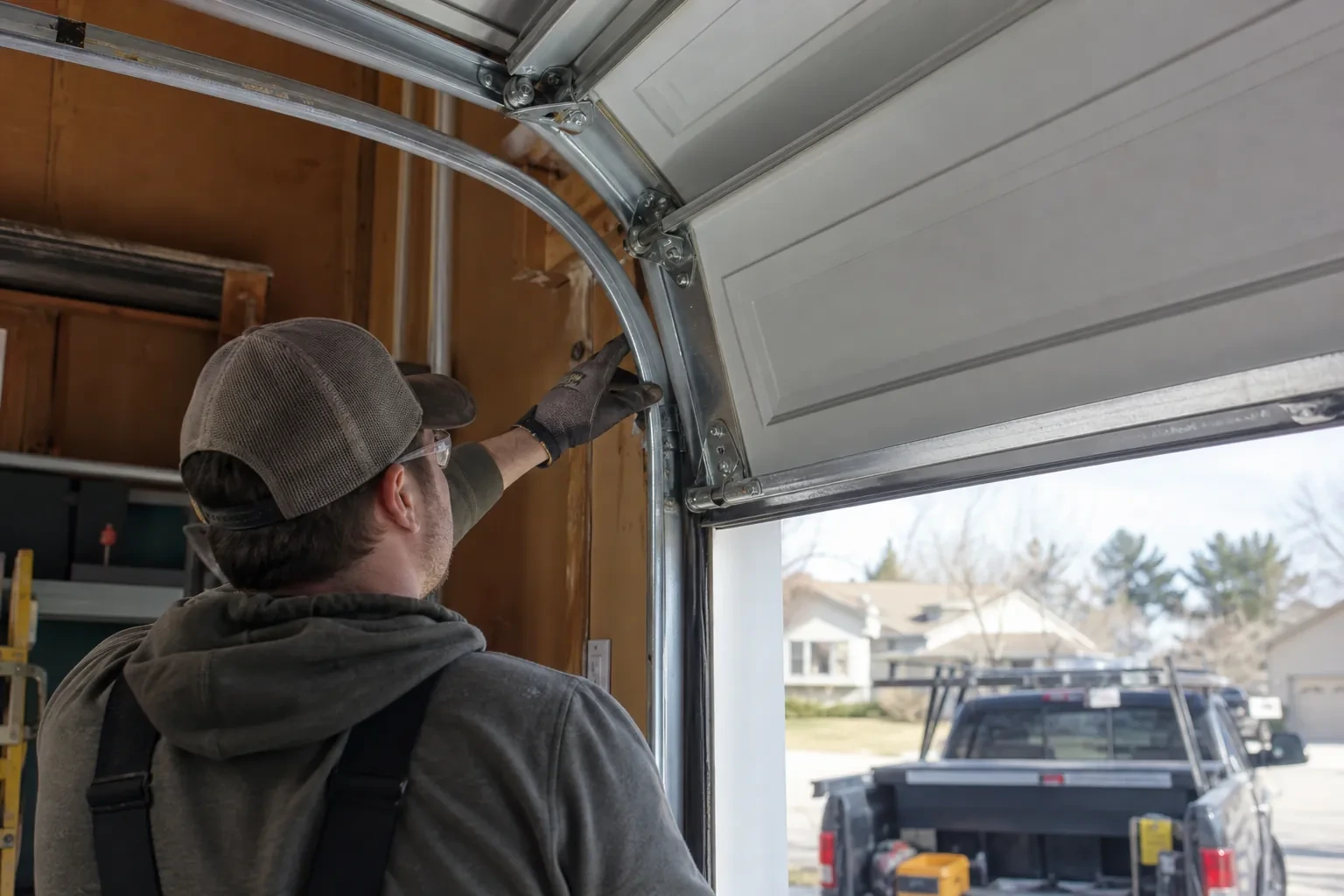
Lightweight steel, glazed and wide doors need a strut or operator bracket across the top section before the arm is attached, so the pull is spread across the door rather than concentrated at one point.
Door height and rail length
A standard rail suits a 7 ft door. An 8 ft door or a taller custom door needs a rail extension, and a very low ceiling may call for a low-headroom arrangement, each an item on its own.
Drive type
A chain drive, a belt drive, a direct-drive unit and a wall-mount operator sit at different points on the equipment list, and the choice is shaped by noise, ceiling space and door weight.
What to have ready
- How wide and how tall is the door, and is it a single or a double?
- How many remotes do you need, and do any vehicles have built-in opener buttons?
- Is there a grounded receptacle in the ceiling near the opener, or is it running from an extension cord?
Garage Door Opener Replacement: questions
QuestionsHow many remotes and keypads can be added?
Capacity depends on the model: current operators hold anywhere from about eight to forty remote codes, so most households can pair every driver, a keypad, in-car buttons and a phone with room to spare. Remotes are added by holding the learn button on the head unit and pressing the remote; the console guide shows the steps and the technician leaves them written down. If a remote is lost later, clearing the memory and re-teaching the others takes only a few minutes.
The door is frozen to the floor. Why does the opener reverse?
Because the operator is protecting the door. Its force setting is tuned to the small effort a balanced door needs, so a seal glued to the concrete by ice registers as an obstruction and the door heads back up rather than ripping the rubber or bowing the top panel. Loosen the seal with a plastic scraper or a hair dryer along the sill, then try again; a shovelled threshold before a cold night keeps it from recurring.
Chain or belt: which should I choose?
Both move the same doors, so the choice is about sound and setting. Chain is the sturdy, simple workhorse and a fine fit for a detached garage or a workshop where a little noise is nobody's concern. Belt is the pick when a bedroom, nursery or office shares a wall or floor with the garage, because it starts and stops softly and hums rather than rattles. If the ceiling is crowded, a wall-mounted unit beside the spring shaft removes the rail altogether.
Related services
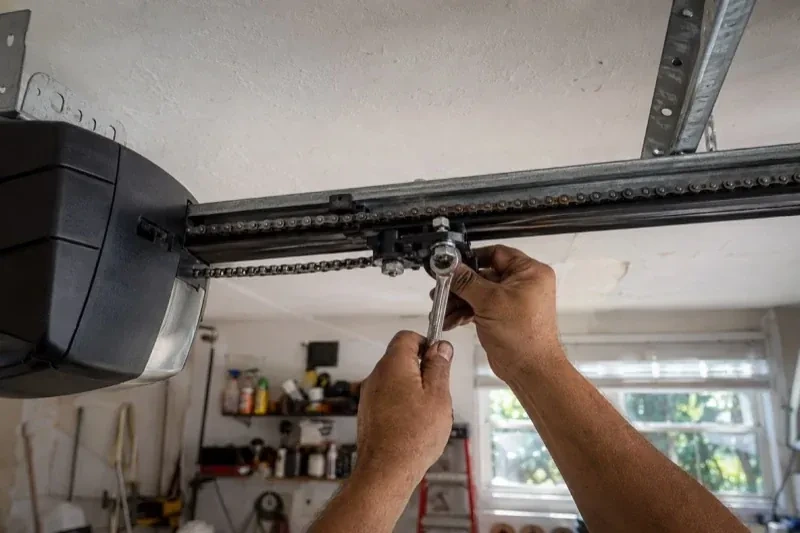
- Chain-Drive Opener RepairThe chain hangs in a loop under the rail and slaps against it on every cycle.
- Belt-Drive Opener RepairThe door used to glide up with a soft hum.
- Photo-Eye Sensor Alignment or ReplacementThe door will only go down while a finger stays on the wall button; let go and it stops or reverses.