Openers · Springwater
Garage Door Opener Diagnosis and Repair
The door stops partway up for no reason, or opens fine and then refuses the next time.
In plain words
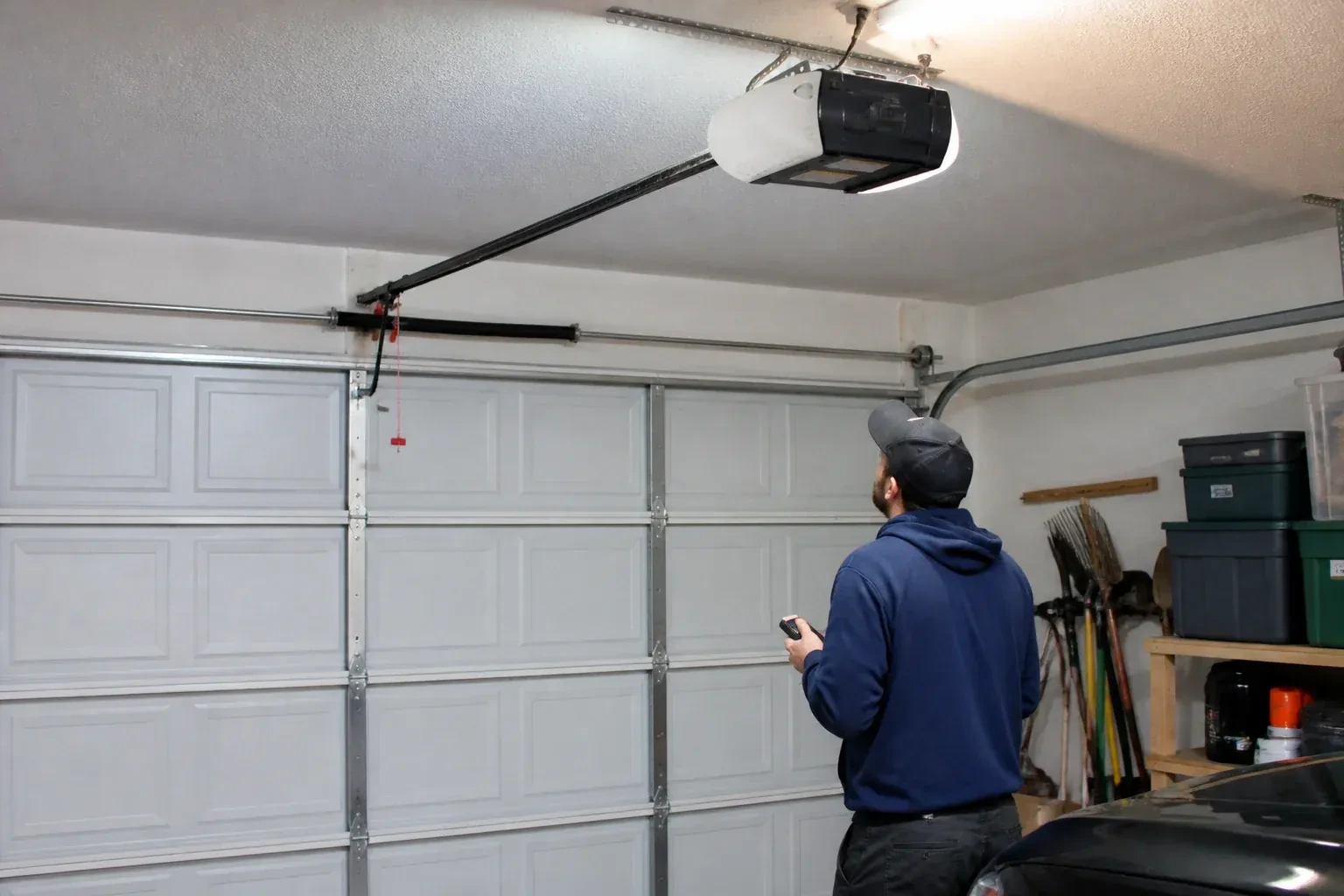
Think of a command travelling through the system. Your thumb presses a button; the radio signal reaches the receiver; the logic board decides to move; the motor turns; a gear drives a chain, belt or screw; the trolley pulls the arm; the arm moves the door. A fault at any link produces the same result from where you stand: nothing happens. Diagnosis walks that chain in order and finds the broken link, whether it is a flat remote battery at the start or a stripped gear in the middle. Working from one end keeps the fix small and the explanation simple.
How the visit goesYou press the remote from the driveway and hear the motor hum overhead, a steady drone with no movement behind it. The door stays shut. Press again and the hum returns, then quits, as if the machine is trying and cannot get a grip on anything.
Garage Door Opener Diagnosis and Repair
How the visit goes
The two small eyes near the floor
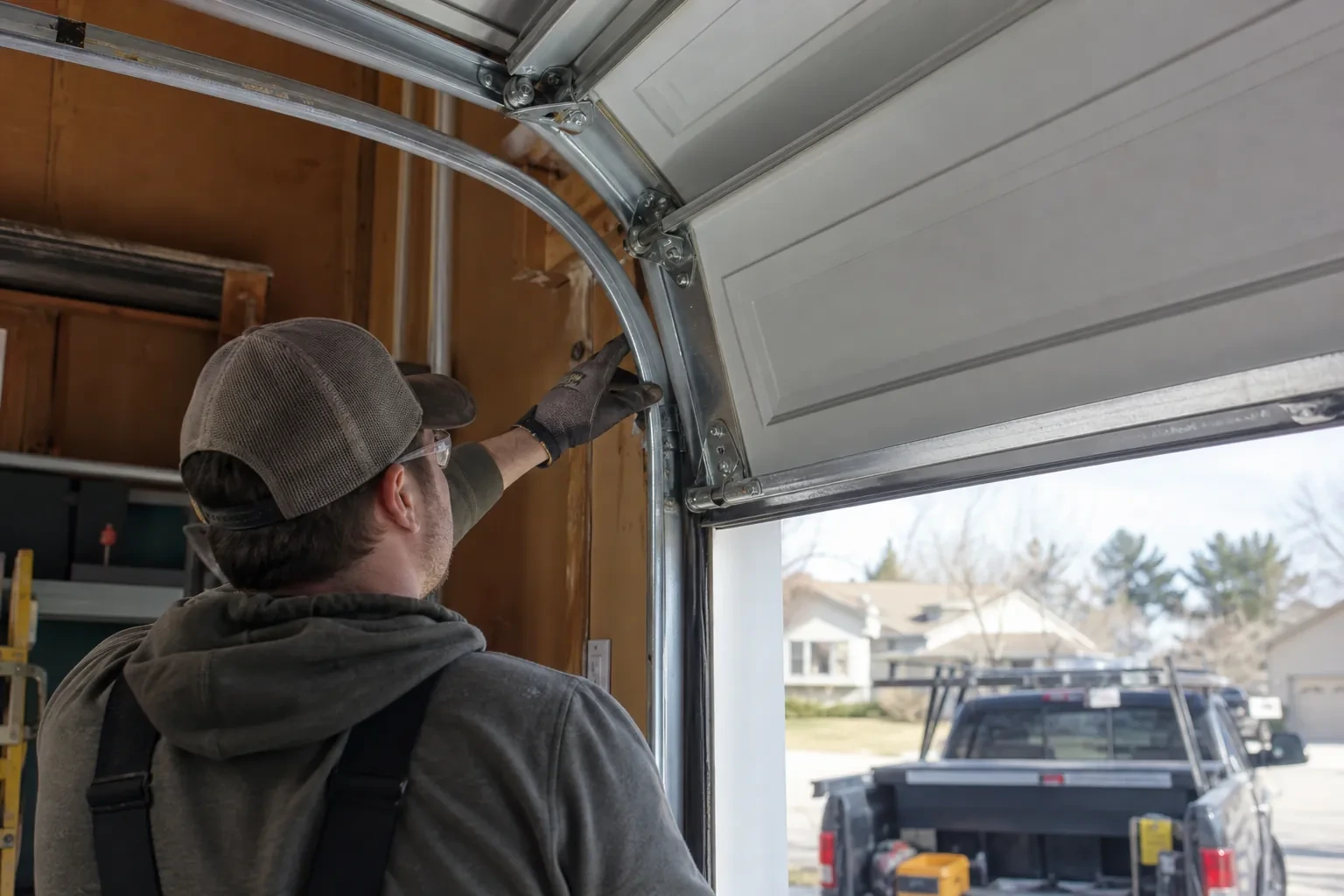
The photo-eye sensors are inspected together with their wiring. Each sensor carries a small indicator; a steady light on both means the beam is aligned, while a flicker, a dark light or one that goes out when the bracket is nudged points to misalignment, a loose mount or a damaged wire. The technician sights along the beam, looks for obstructions, cobwebs, frost and low sun on the receiving lens, checks that the sensors sit no higher than about fifteen centimetres off the floor, and traces the wire back to the head unit for staples, kinks and chew marks. Sensor faults are the single commonest reason a door refuses to close.
Capacitor and motor work
On an AC opener that hums and clicks but never turns, the start capacitor is the first suspect. It is discharged, tested and replaced with one of the same rating, a routine job that returns a dead-sounding opener to normal in many cases. If the motor still fails to turn with a good capacitor, the technician checks for a seized shaft, burnt windings or a failed thermal cut-out, and confirms the motor is not simply being stalled by a locked or bound door. A motor replacement is weighed against the age of the unit and the availability of the part, and that judgement is explained before any decision.
The monthly test you can do yourself
You leave knowing a short check that catches most opener trouble early. Once a month, with the door open, lay a piece of 2x4 flat on the floor under the middle of the door and press close; the door should touch it and go straight back up. Then close the door again and pass a broom handle through the sensor beam near the floor; the door should stop and reverse. Watch the sensor lights stay steady. If either test fails, stop using the opener and book a visit. These are the same tests the technician just performed, and they are all the standard asks of a working unit.
Garage Door Opener Diagnosis and Repair
In the van
Chain or belt
Start capacitor
Remote batteries (coin and cylinder cells)
Wall control
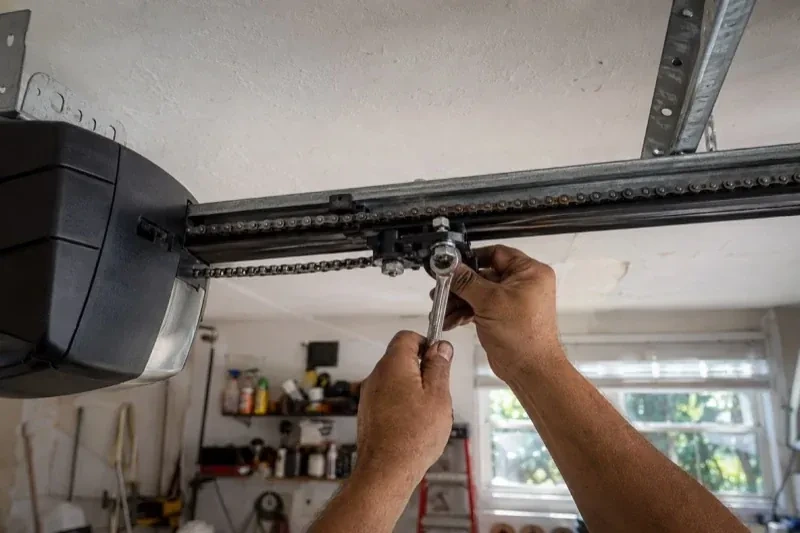
Drive gear and sprocket kit
Garage Door Opener Diagnosis and Repair
What affects the quote
Repair or replacement
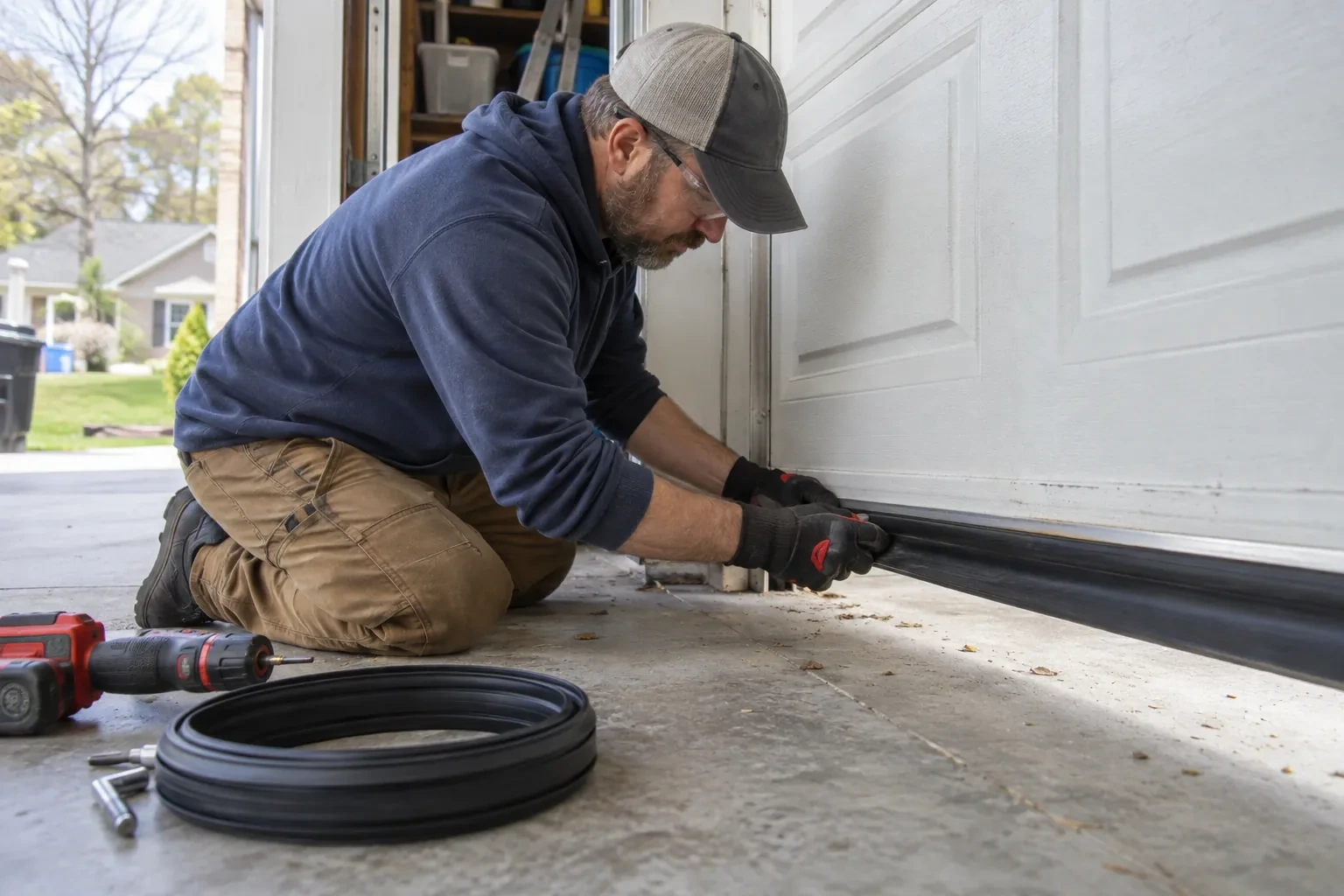
When diagnosis points to replacement, the quote changes shape entirely: a new head unit, rail and sensors with installation, plus removal of the old opener, rather than a single part and labour.
Type of drive
Chain, belt, screw, direct-drive and wall-mounted jackshaft openers each have their own parts and their own labour; a gear kit on a chain unit is a different job from a coupler on a screw drive.
Time of the call
A weekday daytime visit and an evening, weekend or holiday call cost the same amount for an opener diagnosis. The technician confirms the exact figure once the drive, the sensors and the wiring have been checked in person.
What to have ready
- Has anyone pulled the red emergency release cord recently?
- Roughly how old is the opener, and is the model label readable?
- Did anything happen just before: a power outage, a storm, new bulbs, a bump?
Garage Door Opener Diagnosis and Repair: questions
QuestionsWill the repair happen during the same visit?
When the cause is a common part carried on the truck, yes: capacitors, gear kits, sensor pairs, trolleys, wall controls, remotes and wiring are typical. When the part is specific to an older model and has to be ordered, or when the diagnosis finds a spring or cable problem that needs its own appointment, the door is left safe and the next step is agreed with you before the technician leaves.
The wall button works but none of my remotes do. What happened?
Three things account for most of these. The wall control has been put into lock mode, sometimes by a child or a visitor, which blocks all remotes until it is released. The opener's memory was cleared, usually by someone pressing the learn button while trying to program a new remote, so every remote needs programming again. Or the receiver in the head unit has failed. The first two are simple settings; the third is a part.
What does an opener diagnosis actually involve?
A fixed sequence of checks, done in order so nothing is assumed. Power at the receptacle. Each control tried on its own. The photo eyes and their indicator lights. The head unit's flash code, if it has one. The drive train from motor to trolley. Then the door itself, disconnected and lifted by hand to test its balance. Only after that is a part named and, where it is a small one, replaced during the same visit.
Related services
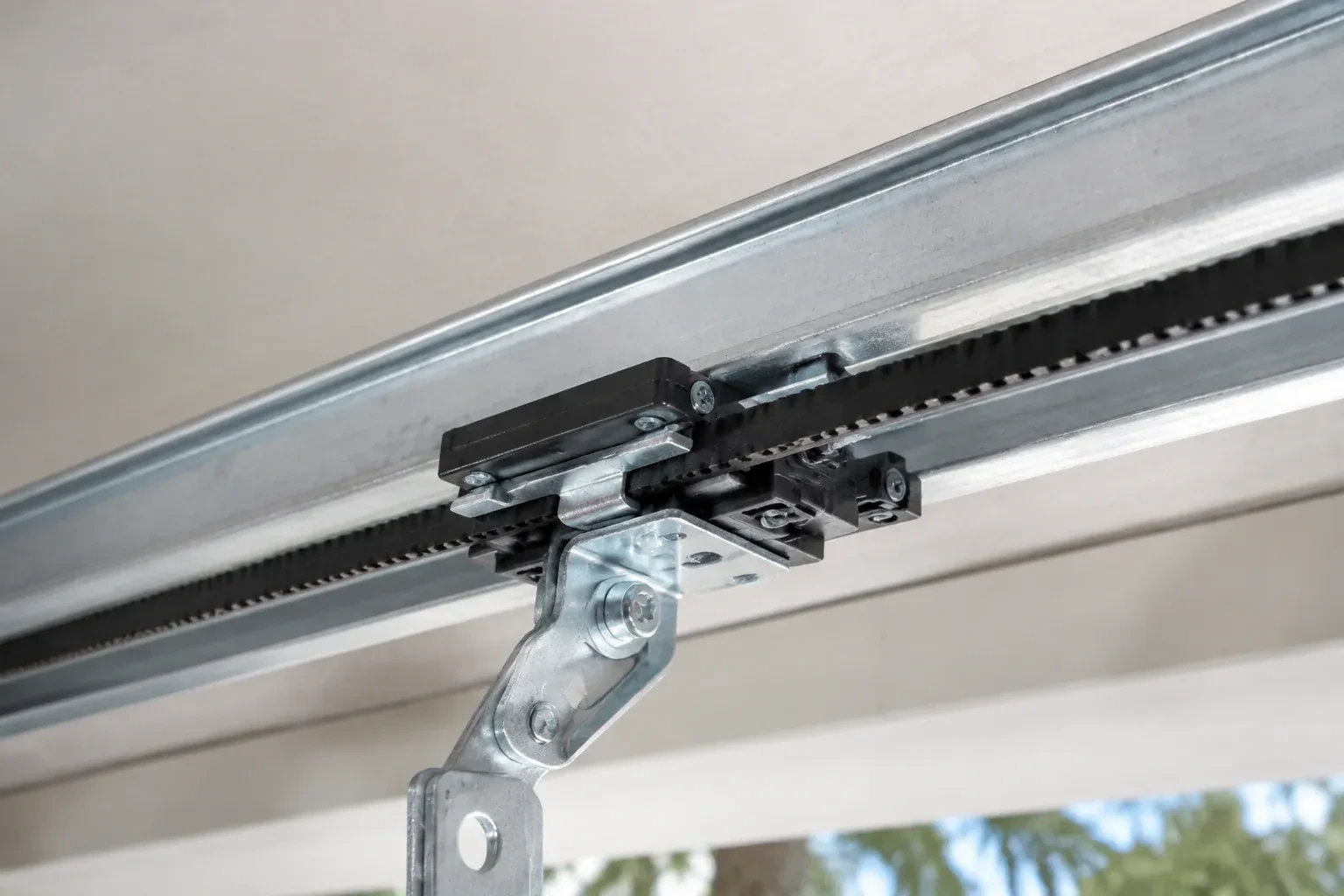
- Belt-Drive Opener RepairThe door used to glide up with a soft hum.
- Garage Door Opener ReplacementSince the storm the door behaves oddly: it reverses halfway down for no reason, the light flickers, and the travel limits drift so it either slams or stops short.
- Photo-Eye Sensor Alignment or ReplacementThe door will only go down while a finger stays on the wall button; let go and it stops or reverses.