Springs · Phelpston
Garage Door Track Repair or Replacement in Phelpston
Halfway up, the door lurches and one roller rides onto the lip of the channel.
In plain words
What you get back is a door that runs its full height without a catch, hesitation or bang, with every roller seated in its channel and both sides rising together. The track sits plumb and firm on the jambs, the horizontal runs hold level from solid hangers, and the door seals along the stop when closed. Because the track was set to the door and the springs re-tensioned to it, the door balances by hand and the opener works lightly. You also leave with a note of the track profile, radius and lift type, which makes any later part a simple match.
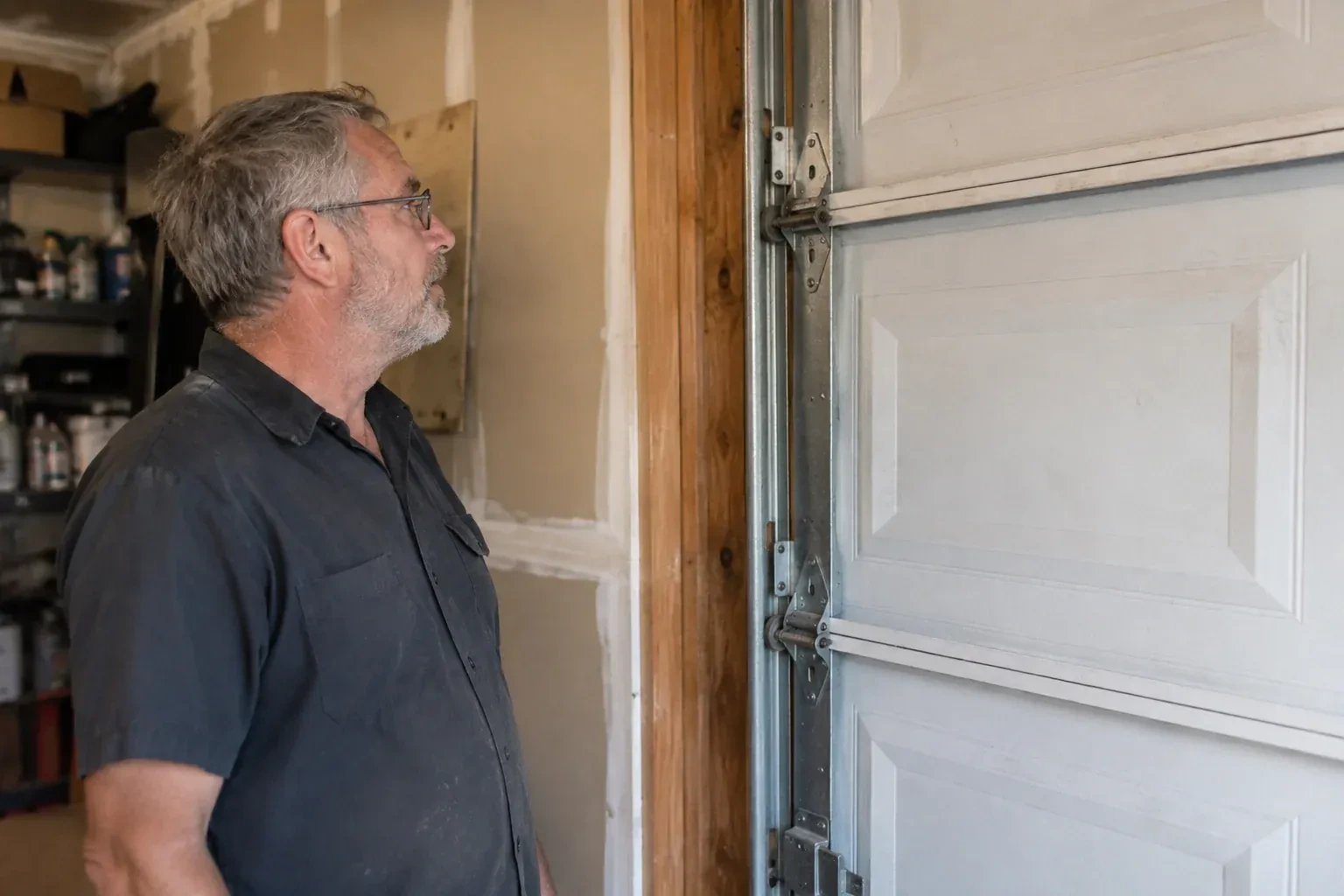
How the visit goesYou bought the house with a door that sticks near the top of its travel. The vertical track was screwed tight against the jamb, so the door drags along its stop moulding on every trip instead of swinging clear.
Garage Door Track Repair or Replacement
How the visit goes
The curve and the flag bracket
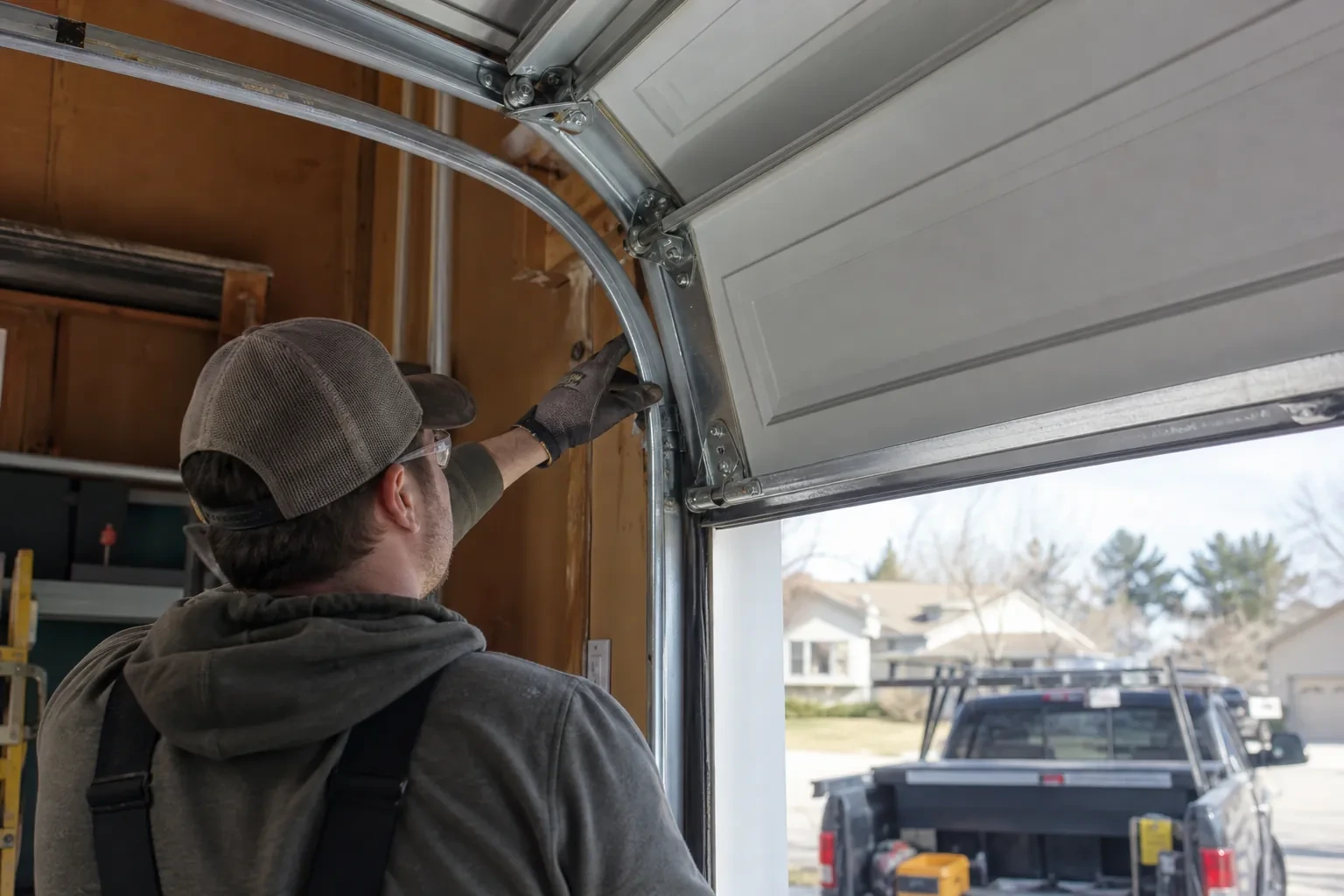
The curved piece where vertical meets horizontal takes the door's weight at the moment its direction changes, and it is the part least forgiving of a bend. The technician checks the curve for flattening, a twist or a kink, and confirms both sides share the same radius. Above it sits the flag bracket, the L-shaped angle that ties vertical track, horizontal track and, on a torsion door, the end bearing plate together. A loose or bent flag bracket shifts everything it holds, so its fasteners and squareness are checked with particular care, and the technician notes that the springs will be unloaded before that bracket is moved.
Dressing a dent back to profile
A shallow crease in the vertical run, clear of the curve, is repaired in place. With the door clamped and the nearest roller moved out of the way, the technician works the steel back to shape with track pliers, or with a hardwood block held inside the channel and a dead-blow hammer on the outside, taking small bites rather than one heavy blow so the metal returns without stretching. A spare roller is passed through the repaired length as a gauge: it should run freely with no tight spot and no rattle. If the crease has cracked the steel or left a ridge the roller still feels, the piece is scheduled for replacement instead.
Protecting the bottom of the track from salt and slush
The lowest foot of vertical track and the bracket beside it are where winter does its damage, so a little attention there pays off. Push slush away from the inside edge of the door rather than letting it pool against the track, and when a mild day comes, rinse or wipe the road salt off the bottom brackets and the channel. A dab of silicone spray on the jamb bracket fasteners in late autumn helps them shed meltwater. Keep the threshold clear of packed ice so the door meets the floor, not a ridge, and the opener never pulls against a stuck door. Those habits are what keep replacement track from meeting the fate of the last set.
Garage Door Track Repair or Replacement
In the van
Winding bars and track clamps
Perforated angle back hangs
Lag screws and track bolts
Jamb lumber and construction screws
Jamb brackets or continuous angle
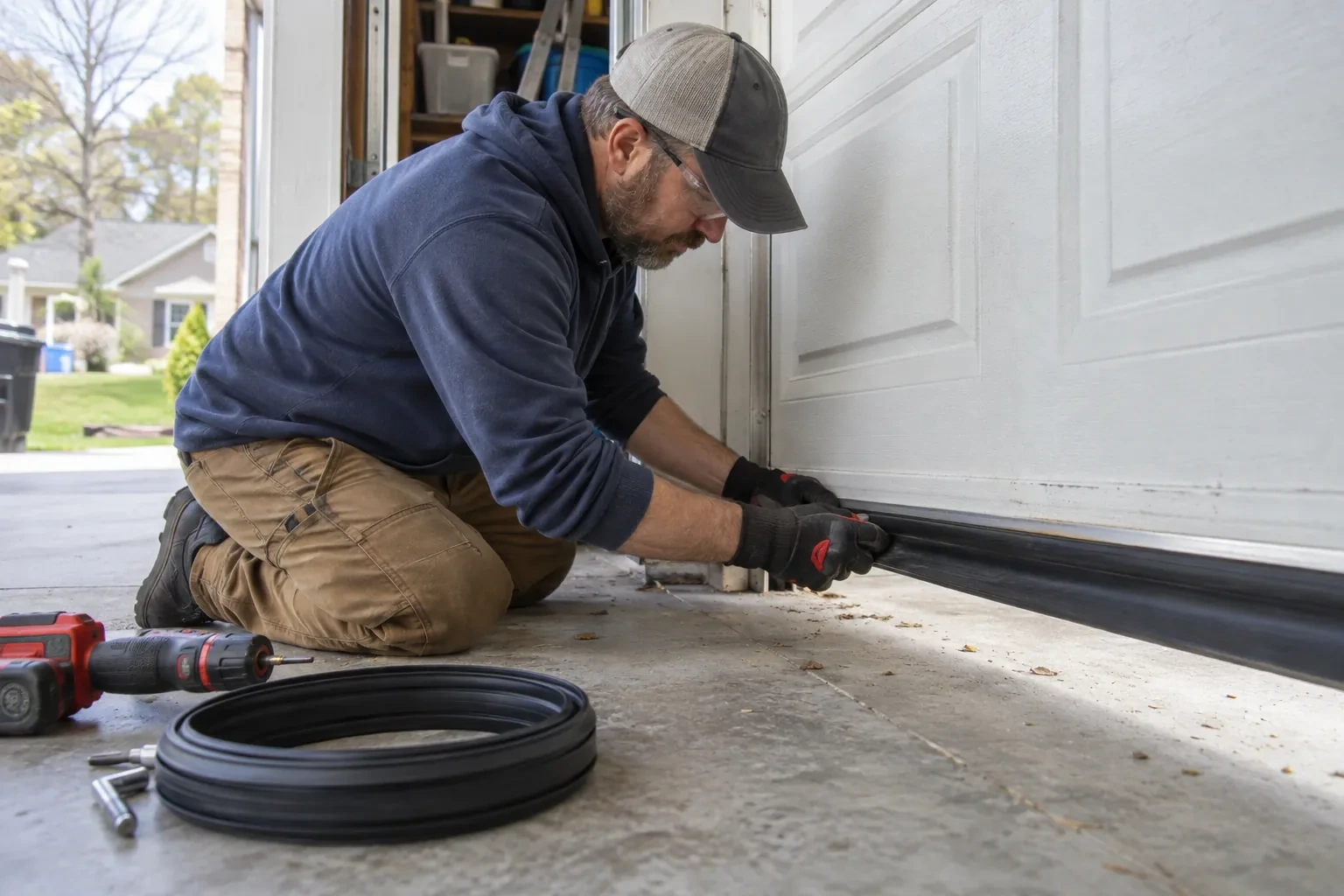
Garage Door Track Repair or Replacement
What affects the quote
Access and storage around the track
Shelving, a workbench or a ceiling full of stored goods around the horizontal run slows the work. Clearing the area beforehand changes the time quoted.
Straighten or replace, piece by piece
A dent dressed in place is labour only, while a kinked, cracked or rusted length means a new piece of track. The quote lists which pieces get which treatment.
How the door is sitting
A door resting closed is straightforward. One jammed partway on a bent section, or with rollers out of the channel, has to be supported and freed before the track can be measured.
What to have ready
- Do you have the door's manual or a label with its model?
- Has any roller come out of the channel?
- Where is the damage: near the floor, at the curve, or on the overhead run?
Garage Door Track Repair or Replacement: questions
QuestionsHow often should the track and its fasteners be checked?
A glance each month from inside the garage, with the door closed, is enough to catch a bracket standing off the jamb or a hanger starting to lean. Twice a year, snug the bracket bolts and lag screws, wipe out the channel, and watch the door make a full trip to confirm every roller stays in the track. The industry guidance also suggests an annual visit by a trained door technician, who checks the track with the rest of the system.
My door rubs the frame on one side. Is that a track problem?
Often, yes. The vertical track is meant to stand a fraction further from the jamb at the top than the bottom, so the closed door seals on its stop and swings clear as it rises. If a bracket has loosened or the track was set flat to the wood, the door drags along the stop moulding every trip. Resetting the spacing and taper, and tightening the brackets into sound wood, usually ends the rub.
What does track radius mean, and does it matter for a replacement piece?
The radius is the size of the curve where the track turns from vertical to horizontal, typically 12 or 15 inches on two-inch residential track. It fixes how high the door climbs before it turns and how much headroom is needed, and the cable drums and spring setup are chosen around it. A replacement curve has to match the other side, otherwise the door meets the horizontal run at different heights and twists as it opens.
Related services
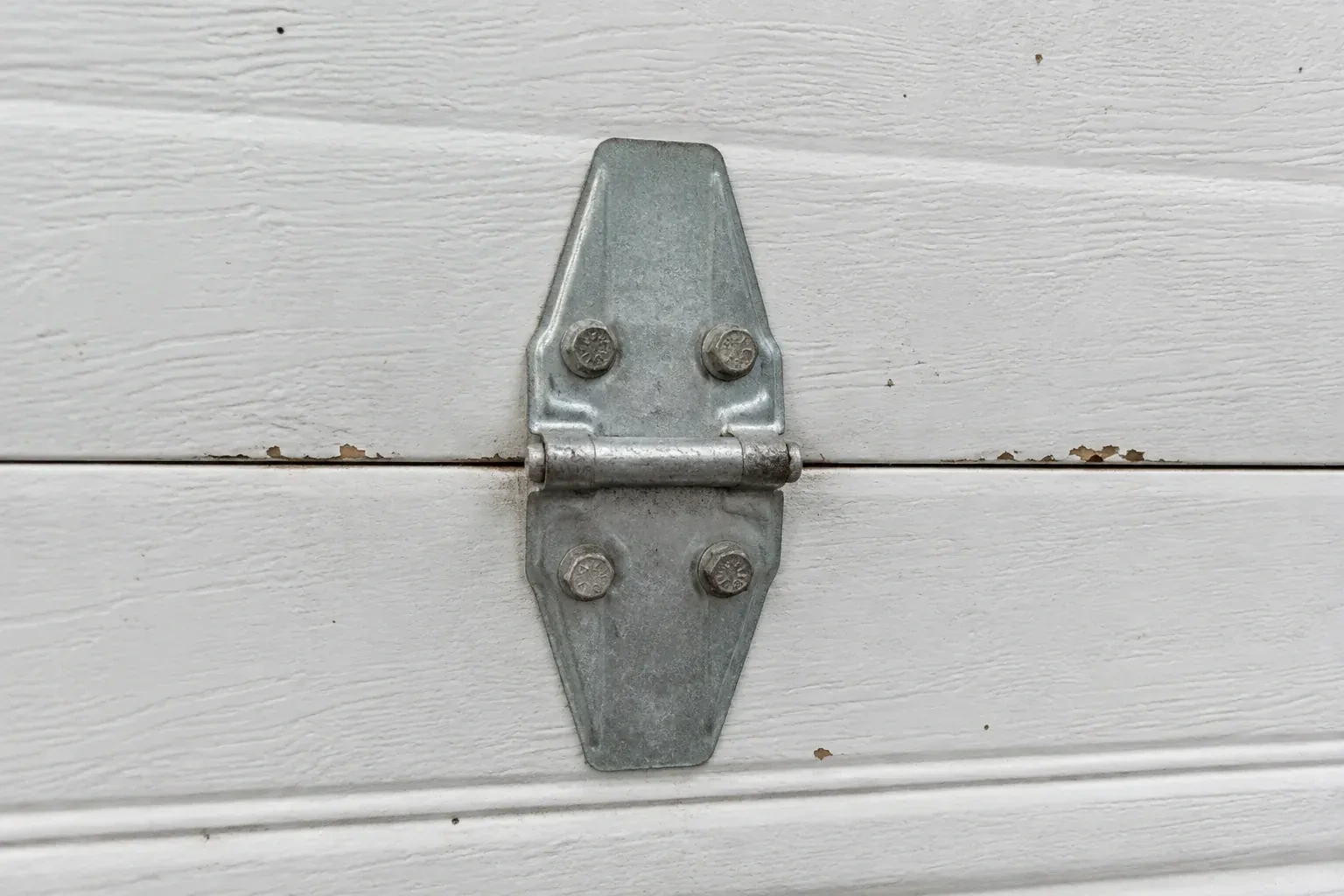
- Garage Door Hinge ReplacementWatching from inside as the door opens, you can see the gap between the second and third panels open up on one side as they turn the corner into the ceiling, then close again.
- Garage Door Cable ReplacementSomeone left the snow shovel leaning in the opening and the door came down on it.
- Torsion Spring ReplacementYou heard a sharp bang from the garage, and now the opener hums for a second and gives up.