Repairs · Elmvale
Garage Door Panel Replacement in Elmvale
Years of slap shots have peppered the lower two sections with dents.
In plain words
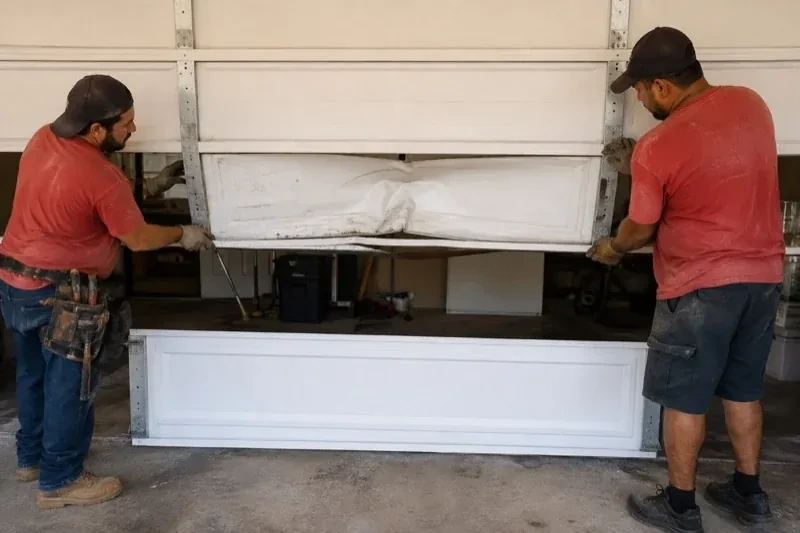
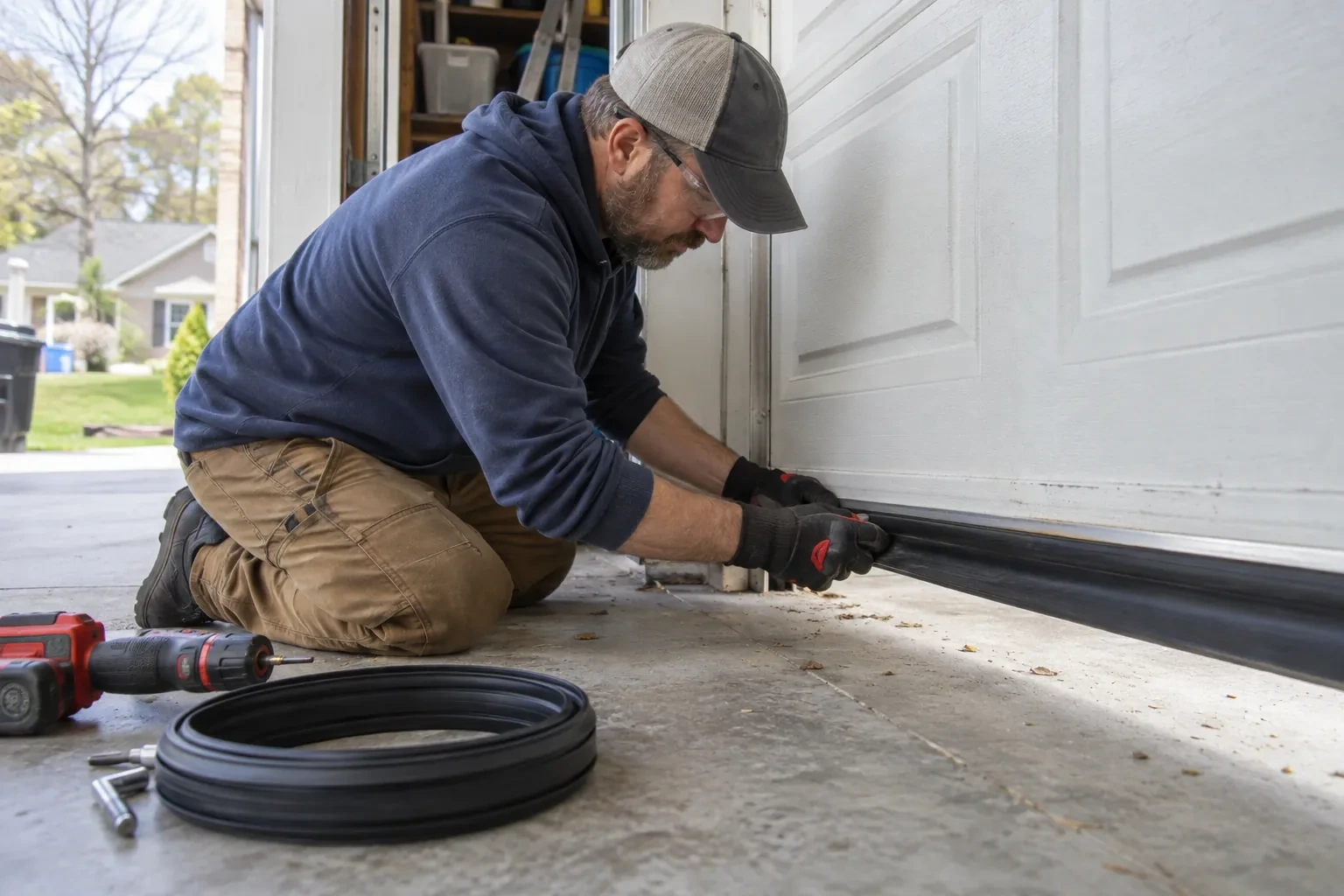
Winter is hard on the bottom section. Meltwater collects under the seal and freezes the door to the slab; the opener then pulls on a door that is anchored at the floor, and the bottom section bows or a hinge tears out of its stile. Road salt and slush finish the job by rusting the lower edge. Replacing that section restores a flat, sealed bottom edge and gives the door a new set of bottom brackets and seal retainer. Because the lift cables attach at the bottom, the springs are unloaded first, then reloaded and balanced once the new section is in, so the door runs as it should.
How the visit goesThe inside face of one section has started to bow outward and the outer skin has a soft, wavy look. Tap it and it sounds hollow in places. The door is insulated, and the foam core seems to have parted from the steel.
Garage Door Panel Replacement
How the visit goes
Mapping the damage on the section
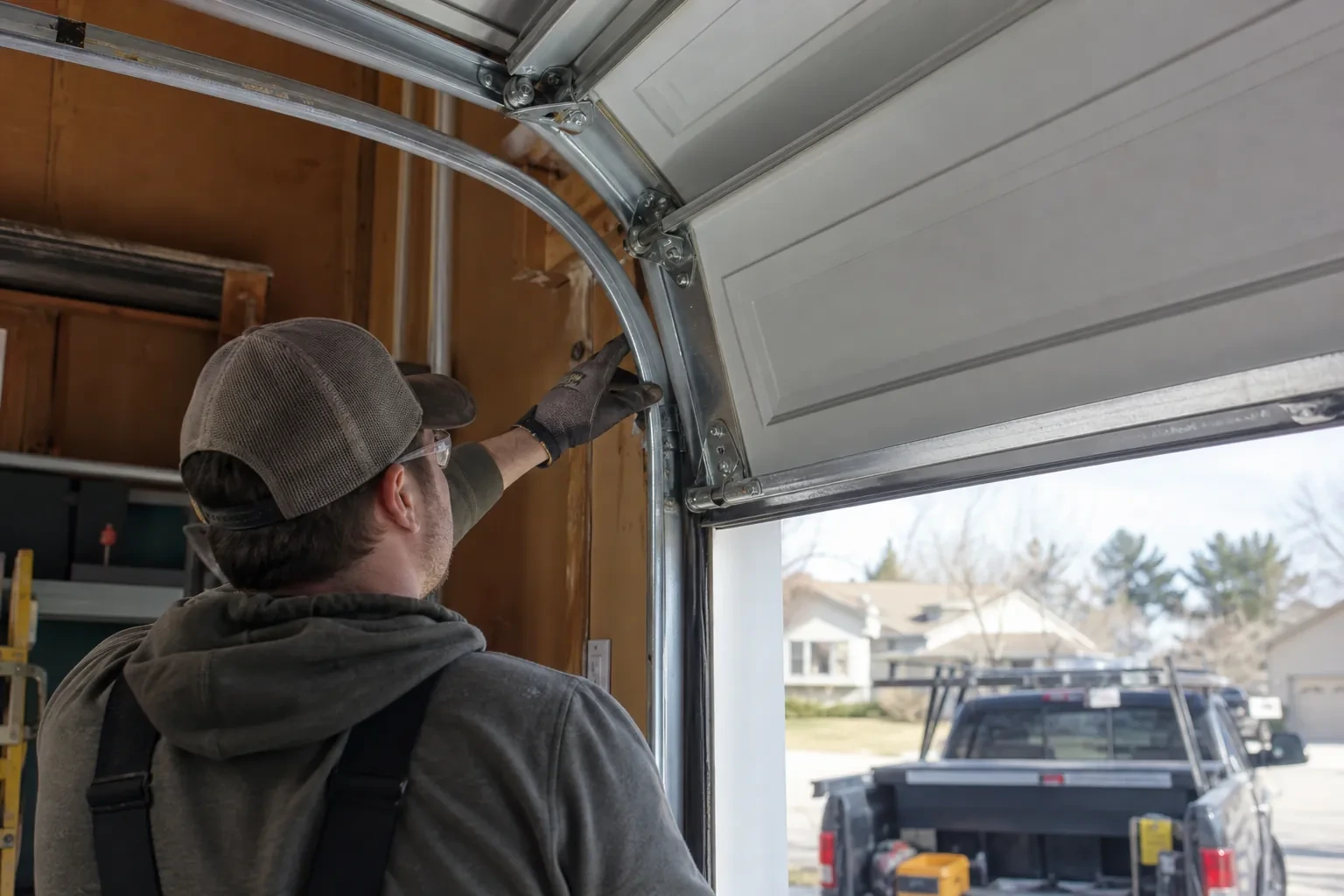
Where a dent sits matters as much as its size. A shallow dish in the middle of the skin is one thing; a crease that runs to the joint, a fold at an end stile, or a bend through a hinge point is another, because those areas carry the door's load as it moves. The technician records the depth of the damage, whether the inner skin or backer is affected, whether a strut has kinked and whether the section still lies flat when the door is closed. That map decides between working the dent out, replacing the single section, or looking harder at the rest of the door.
Releasing tension for a bottom section
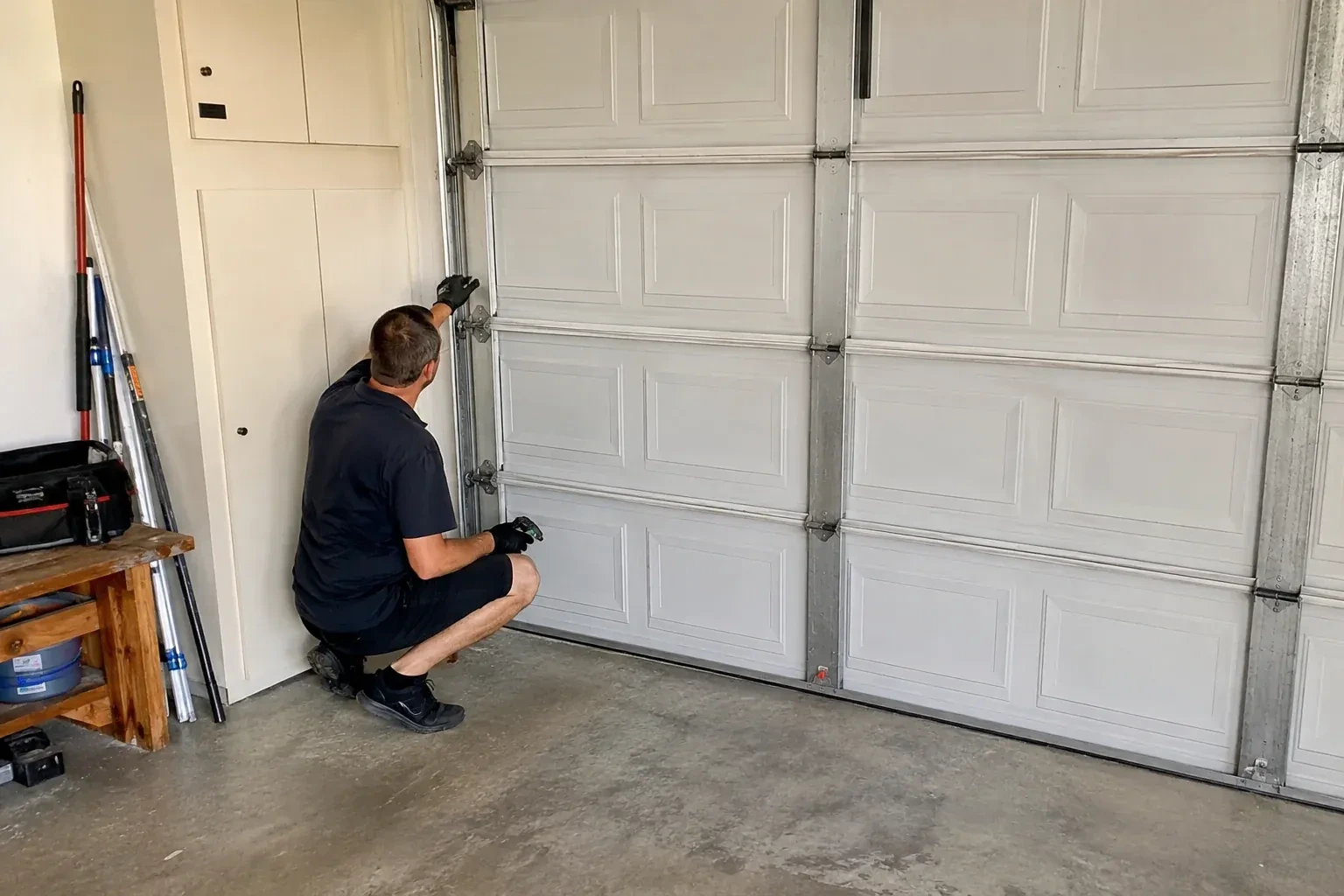
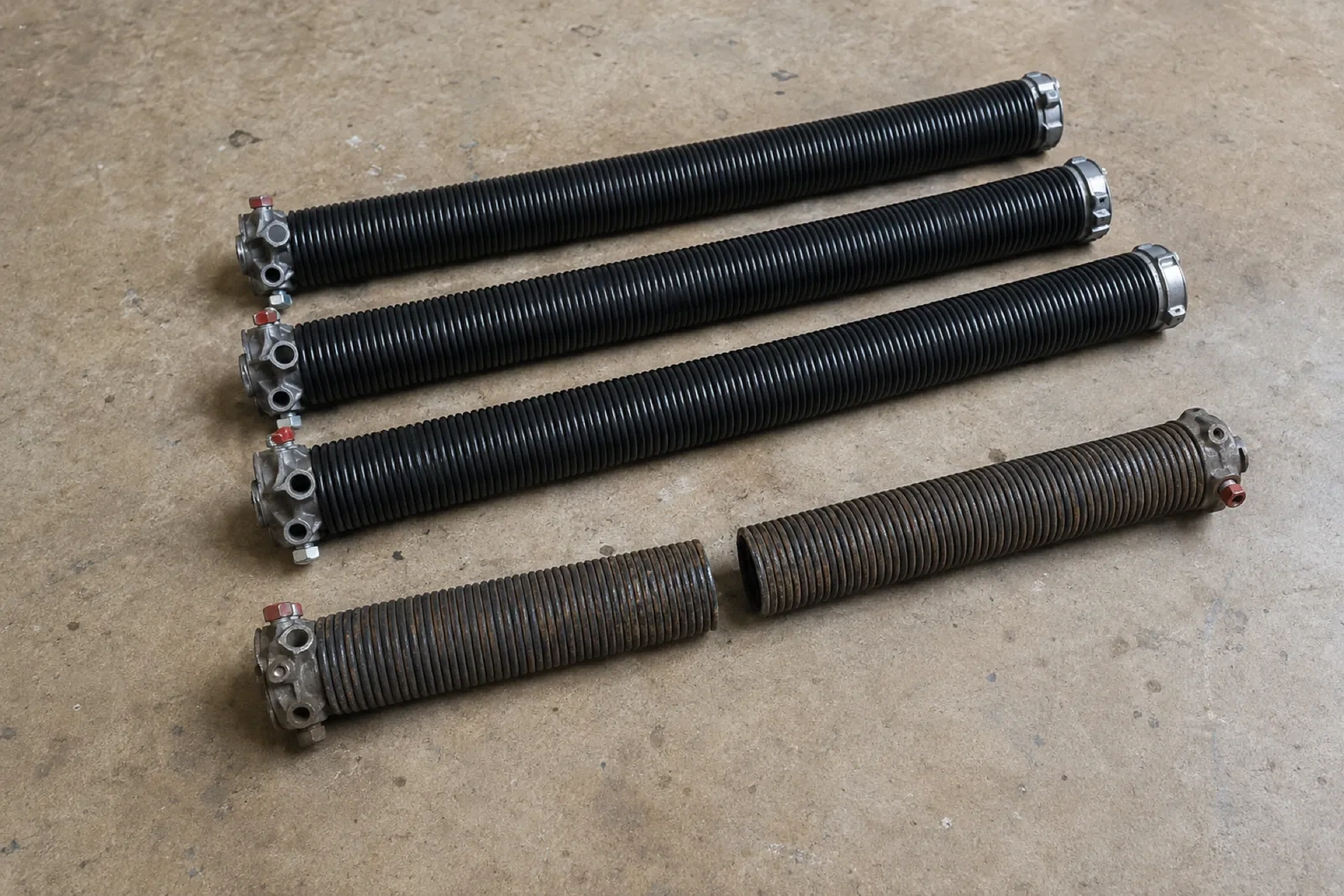
The bottom section is the one place where the lift cables attach, and those cables are held taut by the springs. Before its brackets are unbolted, the technician takes the energy out of the system. On a torsion door that means fitting winding bars into the cone and unwinding the spring turn by turn while the set screws are loosened; on an extension-spring door it means propping the door open and unhooking the springs. With the cables slack, the bottom brackets, the seal retainer and the section itself can be removed safely. The same steps are reversed at the end, and the door's balance is set fresh.
Checking balance and reversal yourself
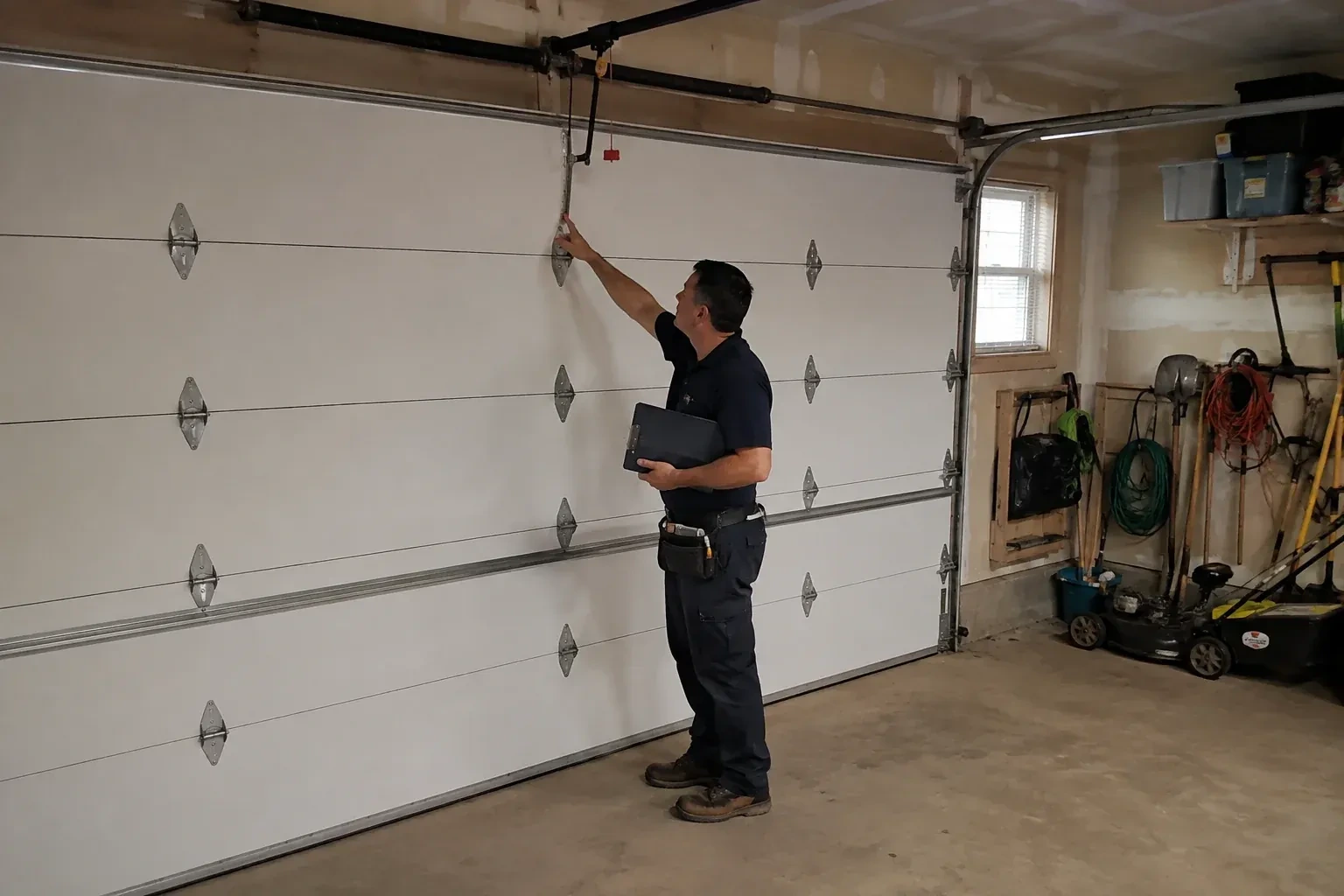
Two simple checks tell you the door is still healthy after the repair. With the door closed, pull the release cord and lift it by hand; it should rise smoothly and stay put around waist height. A little slow drift is normal, but a door that rises or sinks on its own, or feels heavy, is asking for a spring adjustment before anything wears. Reconnect the opener, then lay a piece of wood flat on the floor under the door and close it; the opener should touch the wood and reverse. Pass a carton through the photo-eye beam while standing clear of the door as it closes, and watch it stop and return. Trade associations recommend running these checks monthly.
Garage Door Panel Replacement
In the van
Bottom seal retainer and astragal
Numbered section hinges
Horizontal reinforcement strut
Window frame insert and glazing
Self-tapping stile screws
Garage Door Panel Replacement
What affects the quote
Condition of tracks and cables
An impact often nudges a track bracket or nicks a cable where it wraps the drum. Straightening or resetting track and replacing a cable are itemised so the section quote stays clear.
How many sections are affected
One section is the base case. Two adjacent sections add a second unit and its hardware but share the setup; three or more usually prompts a comparison with a complete door so you can weigh both.
Door width and section size
A section for a double door is nearly twice the length of one for a single door, with more steel, more hinges and a heavier lift. Section height and thickness feed into the same line.
What to have ready
- What colour and panel design is the door?
- Does the door still open and close, by opener or by hand?
- Roughly how old is the door, and has any section been replaced before?
Garage Door Panel Replacement: questions
QuestionsThe car has just hit the door. What should I do before you arrive?
Stop using the door and leave it where it is, whether open or closed, unless leaving it open is unsafe. Pull the opener's plug so nobody presses a remote out of habit. Keep people and pets clear, especially if the door hangs unevenly or a cable looks loose, since the springs are still under tension. Take a few photographs, find the manufacturer's label if you can, and tell the technician exactly what happened and how hard the contact was.
How much room do you need in the garage on the day?
Enough to bring the new section in, lay it flat, and work at both tracks and the spring shaft. Moving vehicles out of the garage and clearing a metre or two along the walls where the tracks run makes the job smoother, as does clear access to the opener and the ceiling around the spring. Sections are handled by two people and are wider than the door opening, so a clear path from the driveway helps.
Why do bottom sections get damaged so often in winter?
Meltwater runs under the bottom seal during a thaw and freezes the door to the slab overnight. When the opener starts in the morning, it pulls on a door that is anchored at the bottom, and something yields: the section bows, a hinge tears from its stile or a cable jumps. Salt and slush thrown off the car then corrode the lower edge. Keeping the seal free of ice and rinsing salt away protects the new section.
Related services
- Garage Door Tune-UpTwice this week the door started closing, stopped a metre from the floor and reopened on its own.
- Off-Track Garage Door ResetThere was a loud bang from the garage, then silence.
- Garage Door Bottom Seal ReplacementEvery mild afternoon the snow melts off the car, runs to the door, and by morning the rubber strip along the bottom is frozen to the concrete.