Openers · Elmvale
Belt-Drive Opener Repair in Elmvale
The door used to glide up with a soft hum.
In plain words
After a belt has been off the sprocket, the operator can end up out of phase: the motor thinks the door is somewhere the trolley is not. The symptom is a door that stops short at the top or the bottom no matter how the limits are adjusted, or a trolley that bangs into its stop bolt. The correction is part of every belt repair. With the belt lifted off the sprocket, the operator is run until the sprocket settles at its closed position; the belt is refitted with the trolley at the closed end; then travel and force are relearned so motor and trolley agree again.
How the visit goesThere is a new squeal from the front of the rail, up near the header, on every cycle. The belt has started tracking to one side and its edge is fuzzy where it has been rubbing.
Belt-Drive Opener Repair
How the visit goes
Reading the belt from end to end
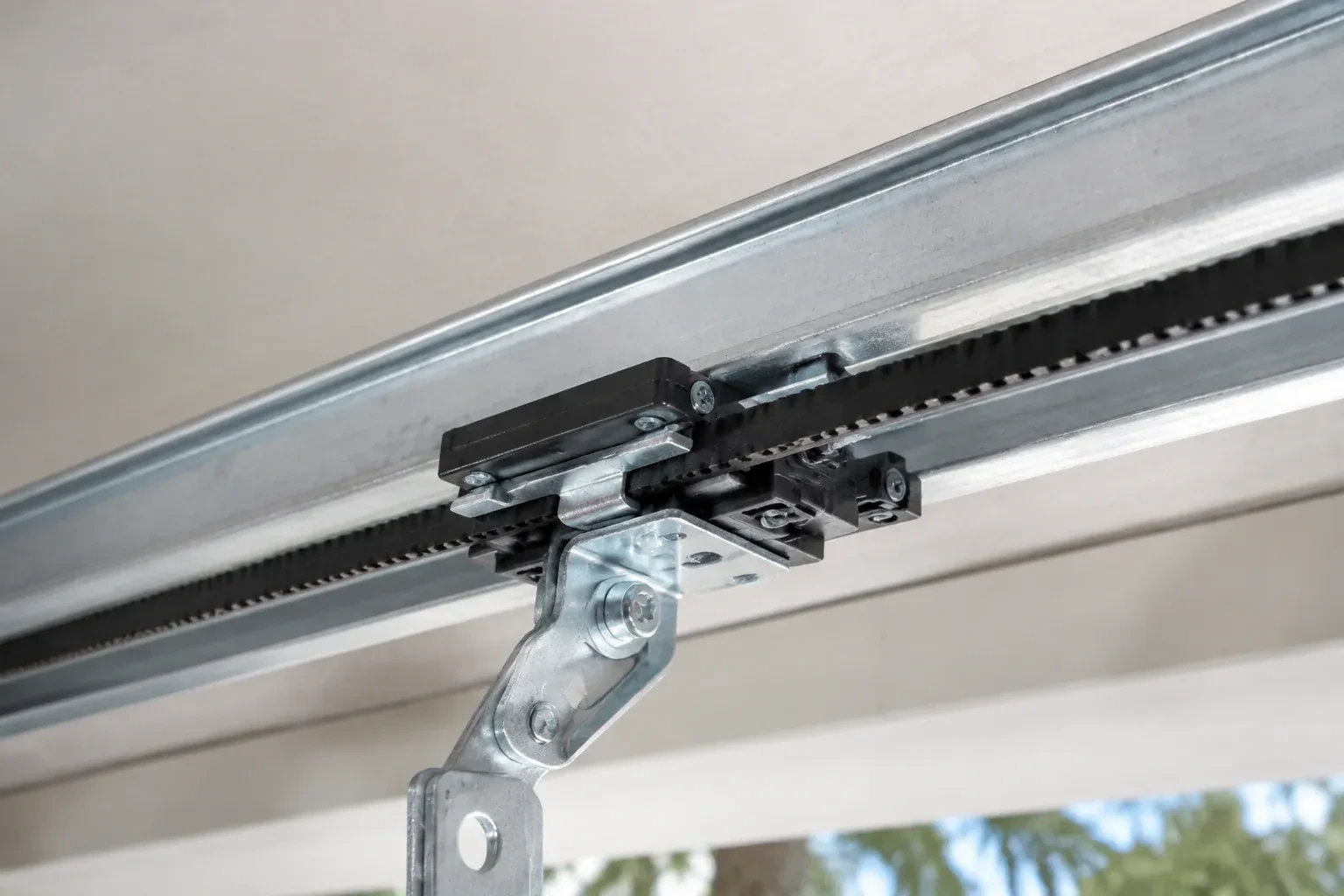
With the trolley run to one end of the rail and then the other, the whole length of the belt passes under the technician's eye and fingers, on the top run and the return. What they are looking for is specific: cracks across the back of the rubber, a glazed shine that says the belt has been slipping, an edge gone fuzzy from rubbing, a stretch where the teeth are flattened or torn away, cords showing through, and the state of the clip or link where the belt meets the trolley. Each of these points to a different cause as well as a different repair, and where the wear sits along the belt says a lot about which.
Re-tensioning a belt that has stretched
With the operator unplugged and the trolley released from the door, the technician turns the square nut on the inner trolley a little at a time, drawing the belt up until the tension spring reaches the length the maker specifies. Each turn lifts the belt slightly. They press the belt at mid-span to feel for the small give that means it is neither slack nor strained, then reconnect the trolley and run the door by motor, listening at the sprocket for the rattle that says the belt is still loose or has gone too tight. A belt that will not reach its spring length with the adjuster at its limit has stretched too far and is replaced instead.
A door that is balanced under a belt that is right
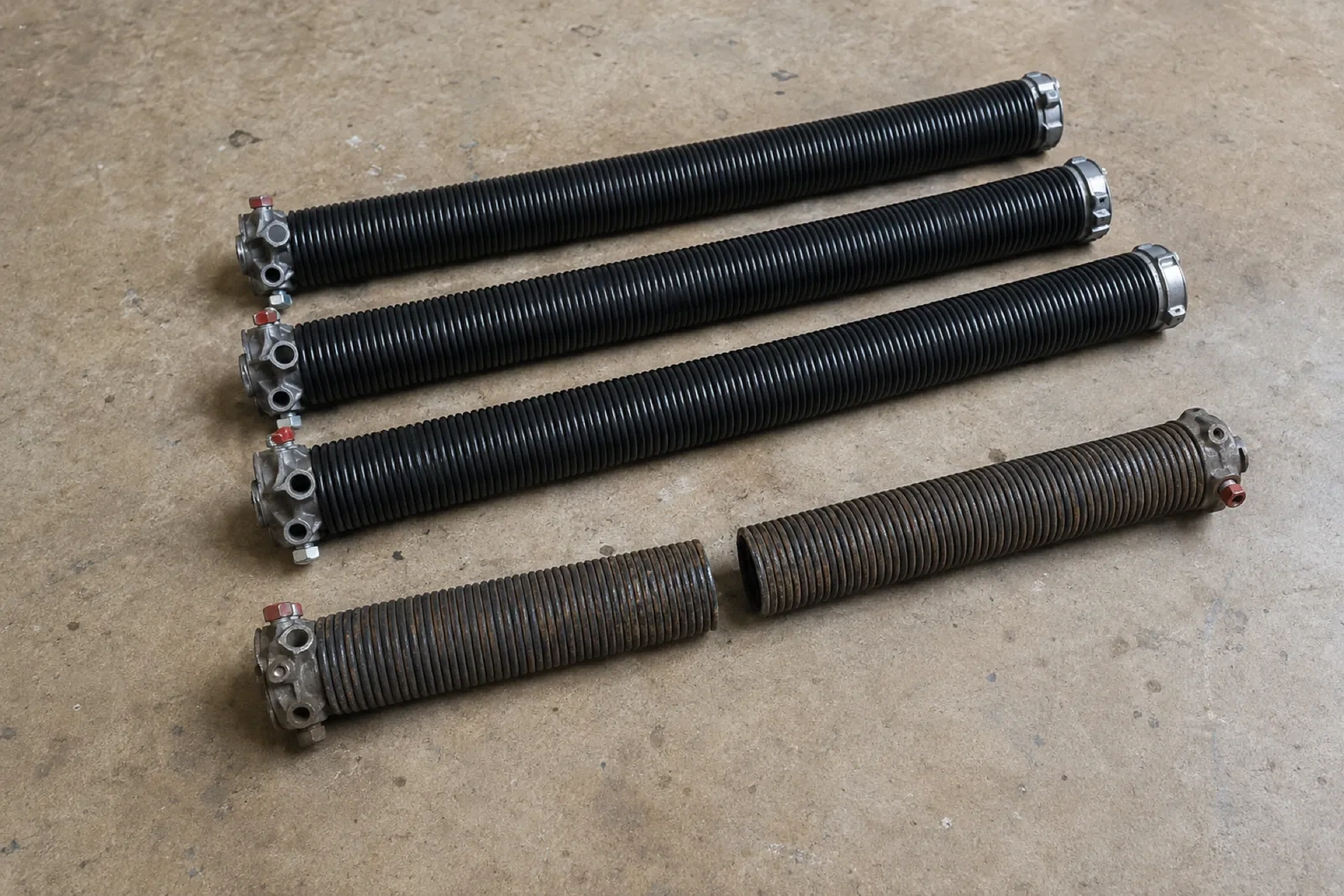
Because the door was tested by hand before the belt was touched, you leave with the springs and the drive in agreement. Once a season, with the door closed, unplug the operator, pull the release and lift the door to about a metre: it should stay there. If it drifts down or creeps up, the springs have moved and the belt will soon be working harder than it should, so book a spring adjustment before the belt shows it. A door that hesitates at one point in its travel with the operator disconnected is telling you about a roller or a hinge rather than the belt, and that too is a small visit.
Belt-Drive Opener Repair
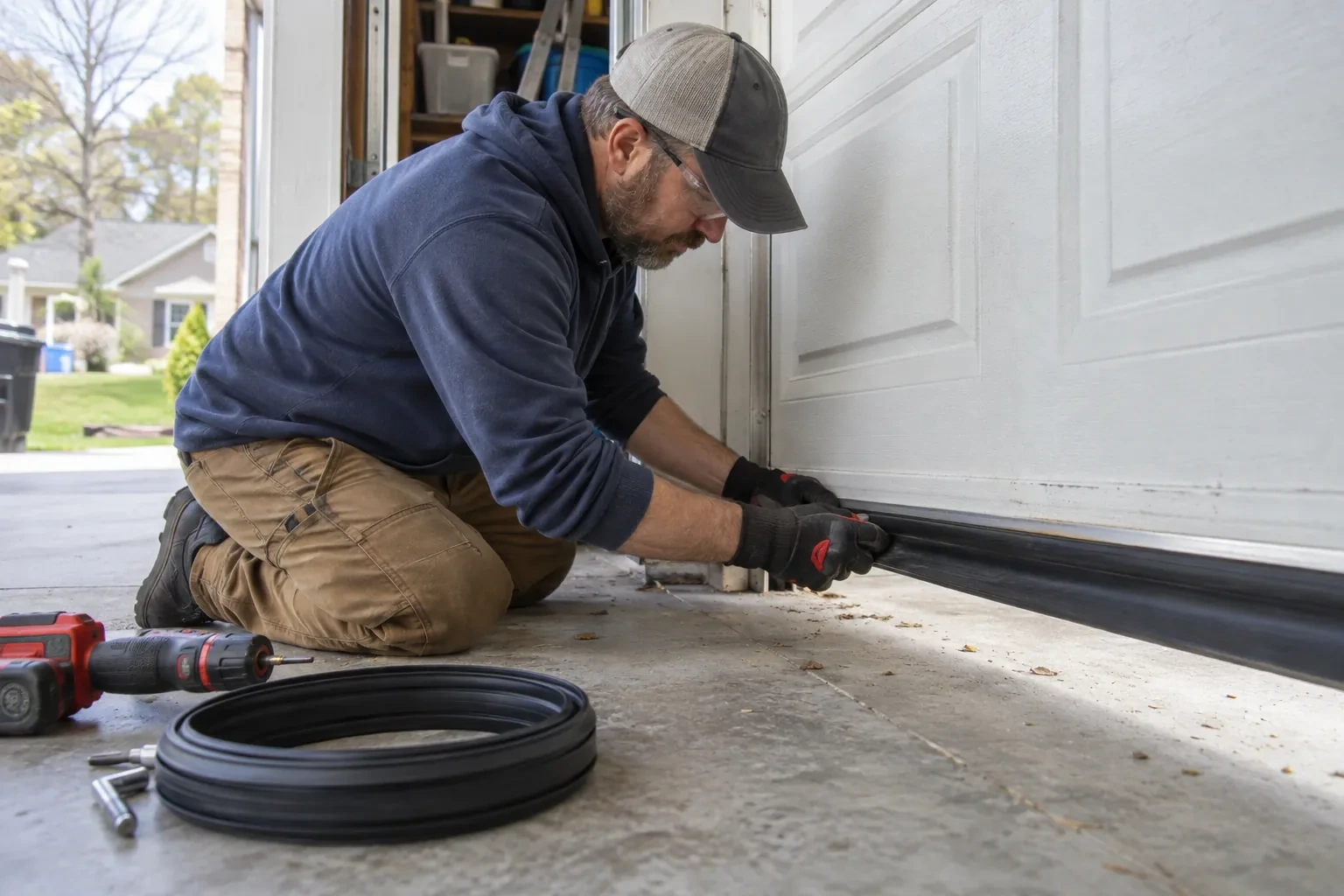
In the van
Light grease for the drive gear
Reinforced drive belt with clip
Garage-door lubricant for hinges and rollers
Idler pulley and bearing
2x4 offcut for the reversal test
Belt-Drive Opener Repair
What affects the quote
Age and model of the operator
Parts for a current model are on the van. An older or less common operator may need a belt or trolley ordered to fit, which changes timing and sometimes the part.
Trolley condition
A trolley that releases and re-engages cleanly stays. One that is cracked, stuck or loose on the rail is replaced during the same visit and listed as its own part.
Belt length and type
A belt for an 8 ft door rail is longer than one for a 7 ft rail, and belts differ by maker and tooth pitch, so the part named on the quote follows the operator's model.
What to have ready
- When did the trouble start, and did it follow a power cut or a pulled red cord?
- Is the garage heated and attached to the house, or a cold detached one?
- How wide is the door, and is it a single or a double?
Belt-Drive Opener Repair: questions
QuestionsIs a belt drive harder to repair than a chain drive?
No, just different. The belt is lighter, runs dry and is replaced as one length with a clip, where a chain has links and takes grease. The tensioning at the trolley works the same way on both, and the sprocket, idler and trolley are similar parts. What a belt drive rewards is care with tension and a straight rail, because it is chosen for quiet and shows any fault as noise.
What is the idler pulley and why does it squeal?
It is the wheel at the header end of the rail that the belt wraps around on its return. It spins on a small bearing, and when that bearing dries or fails the pulley squeals on every cycle and can let the belt wander to one side and fray. Replacing the pulley is a modest job done with the belt slack, followed by re-tensioning.
Can a belt from any opener be used, or does it have to match?
It has to match. Belts are made in lengths for particular rails, so a 7 ft door rail and an 8 ft rail take different belts, and the teeth must match the sprocket's pitch. The clip or link that joins the belt to the trolley also differs between makers. The technician reads the model from the head unit's label and brings the belt made for it.
Related services
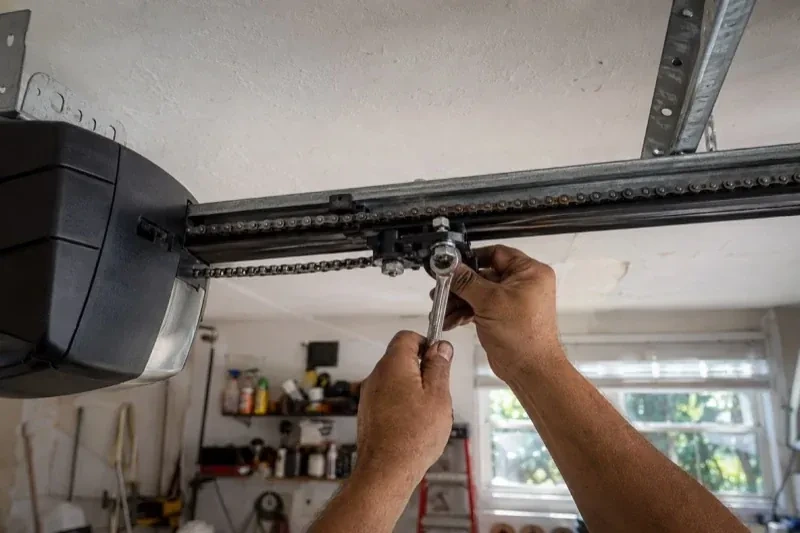
- Chain-Drive Opener RepairThe chain hangs in a loop under the rail and slaps against it on every cycle.
- Garage Door Opener ReplacementSince the storm the door behaves oddly: it reverses halfway down for no reason, the light flickers, and the travel limits drift so it either slams or stops short.
- Photo-Eye Sensor Alignment or ReplacementThe door will only go down while a finger stays on the wall button; let go and it stops or reverses.