Garage Doors in Wyebridge, OntarioA new door,chosen with care.
Choosing a garage door for a house in Wyebridge means thinking about insulation, windows, colour, how the panel pattern breaks up the face of the home, and how the door will sound at dawn. We walk through each of those questions with you and measure the opening before anything is ordered. We serve Grandview Beach, Paradise Point, Ebenezer, Elimere Point, Elliotts Corners, Evans Corner, Martyrs Shrine, Mertz's Corner, Ogden's Beach, Old Fort, Port McNicoll, Riverside, Triple Bay Park and Victoria Park as well.
Choosing a garage door for a house in Wyebridge means thinking about insulation, windows, colour, how the panel pattern breaks up the face of the home, and how the door will sound at dawn. We walk through each of those questions with you and measure the opening before anything is ordered. We serve Grandview Beach, Paradise Point, Ebenezer, Elimere Point, Elliotts Corners, Evans Corner, Martyrs Shrine, Mertz's Corner, Ogden's Beach, Old Fort, Port McNicoll, Riverside, Triple Bay Park and Victoria Park as well.
Explained before, tested after.
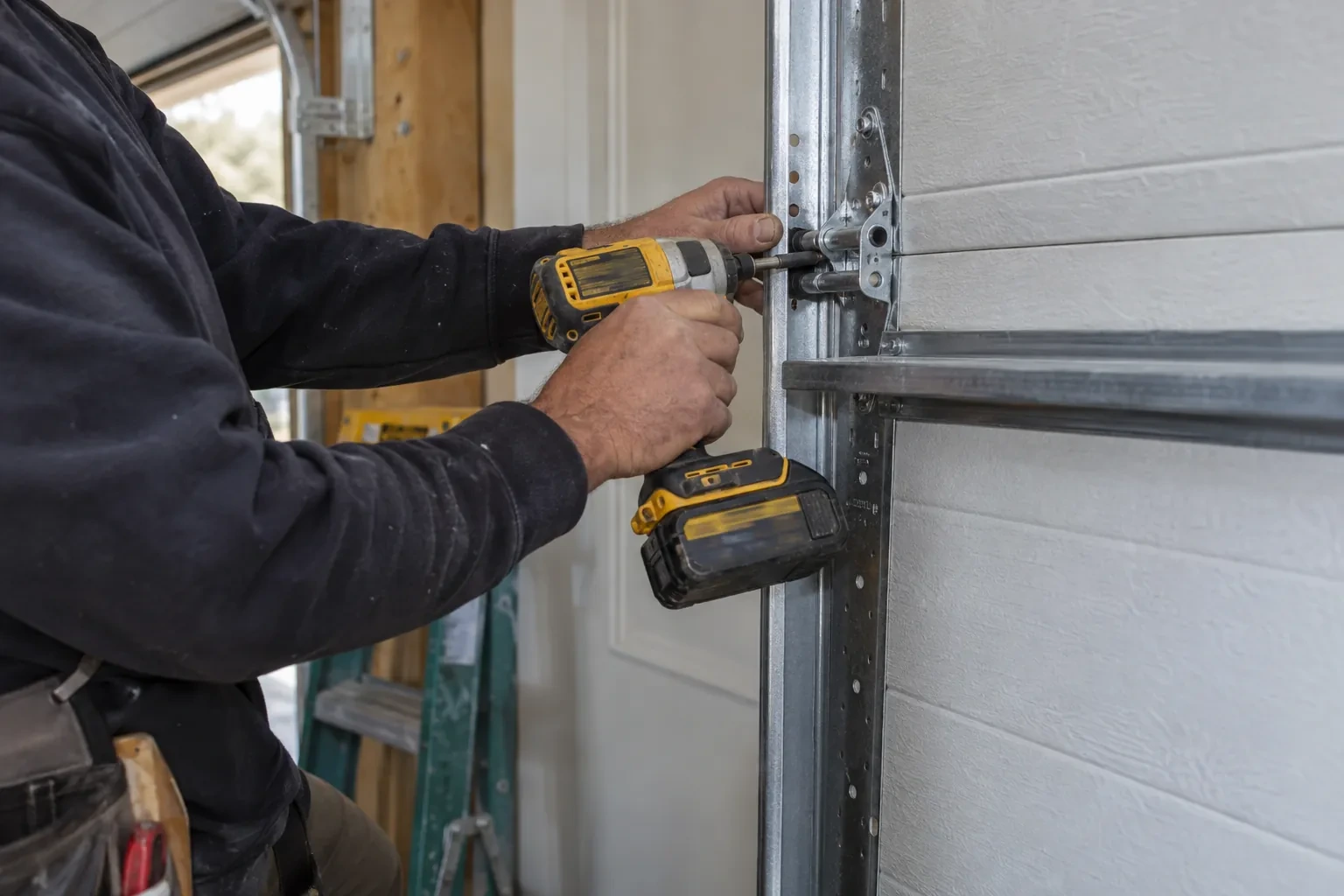
The garage door on a house in Wyebridge is usually the entrance the family uses most, so we treat a repair as something that has to hold. That means finding the cause rather than the symptom, replacing the worn neighbour as well as the broken part, and setting the door up so the opener is not straining.
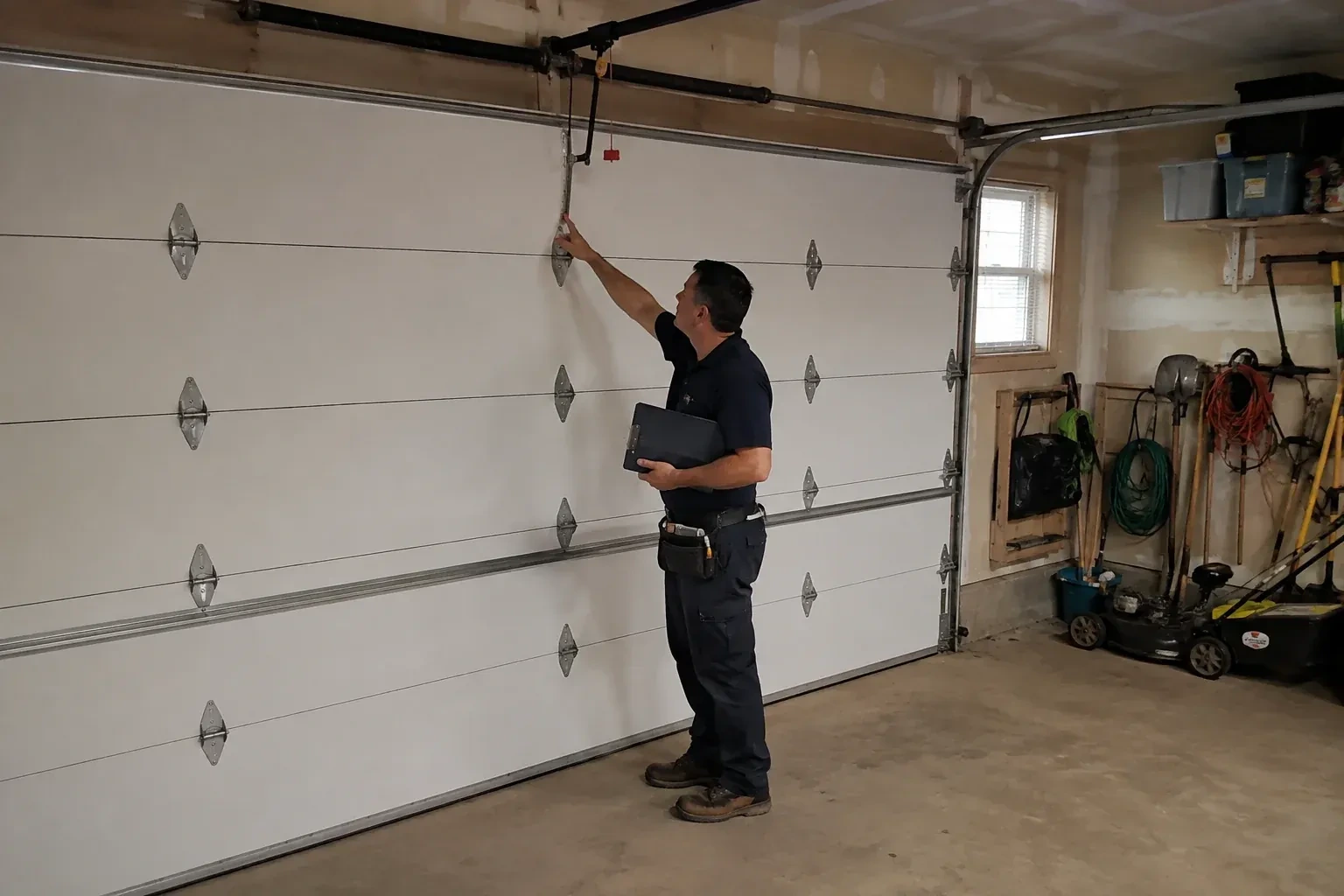
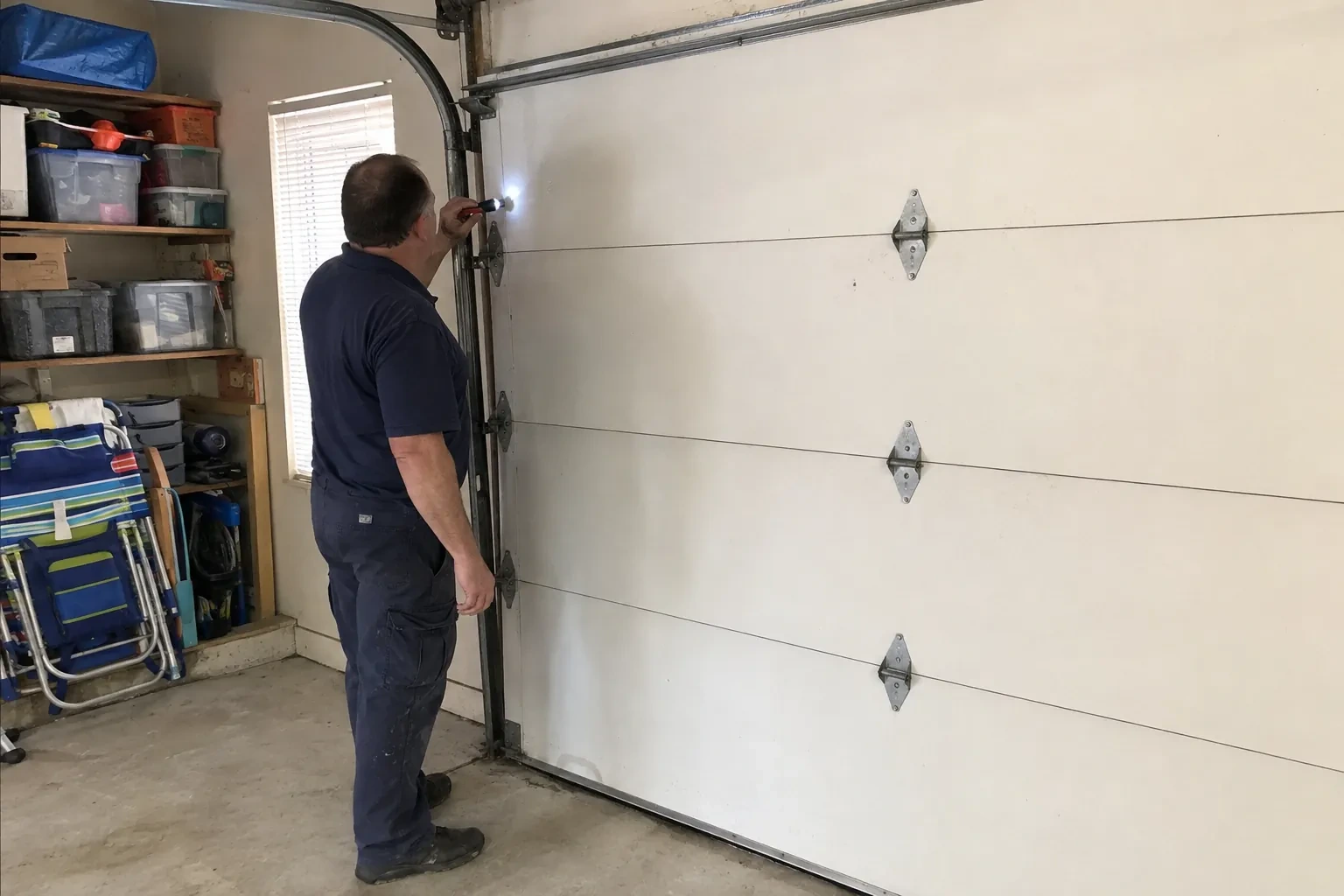
If your garage door in Wyebridge has started to struggle, rising a little and settling back, groaning on the way up or hanging lower on one side, the cause is usually one of a handful of familiar parts. We diagnose first, show you what we found, and repair it carefully. When a door has genuinely reached the end, we say so and talk through what a replacement involves.
13years in business
24/7open every day
Nothing hidden. Every part we replace, you can see. Every adjustment, we explain. If we find something unexpected, we stop and tell you before continuing.
Care with heavy parts. Springs and cables are handled with the right tools and a steady method, and the door is secured before any tension is released.
Clear about what comes next. Before we leave, you know what was done, what to watch for, and when the door might want attention again.
Get your Wyebridge garage door looked over properly.
From a stuck door on a winter morning to a planned replacement before the house goes on the market, the services on this page cover what garage doors in Wyebridge typically need. Each one explains what is checked, how the work is done and what you can expect afterwards.
About 47% of homes in Tiny were built in 1980 or earlier, according to the 2021 Census.
A neighbourhood with homes from several decades means a technician meets both generations of garage door in a single day: extension-spring wood doors next to steel sectionals on torsion hardware. The van carries parts for both so either kind of door is repaired on the first visit.
Single-detached houses make up about 97% of homes in Tiny (2021 Census).
Mostly houses
A detached house with its own garage is a natural fit for upgrades that need space: a jackshaft opener to free the ceiling, a high-lift door for a car hoist, or a wider door when a bigger vehicle arrives. The technician measures the opening and headroom and says what fits.
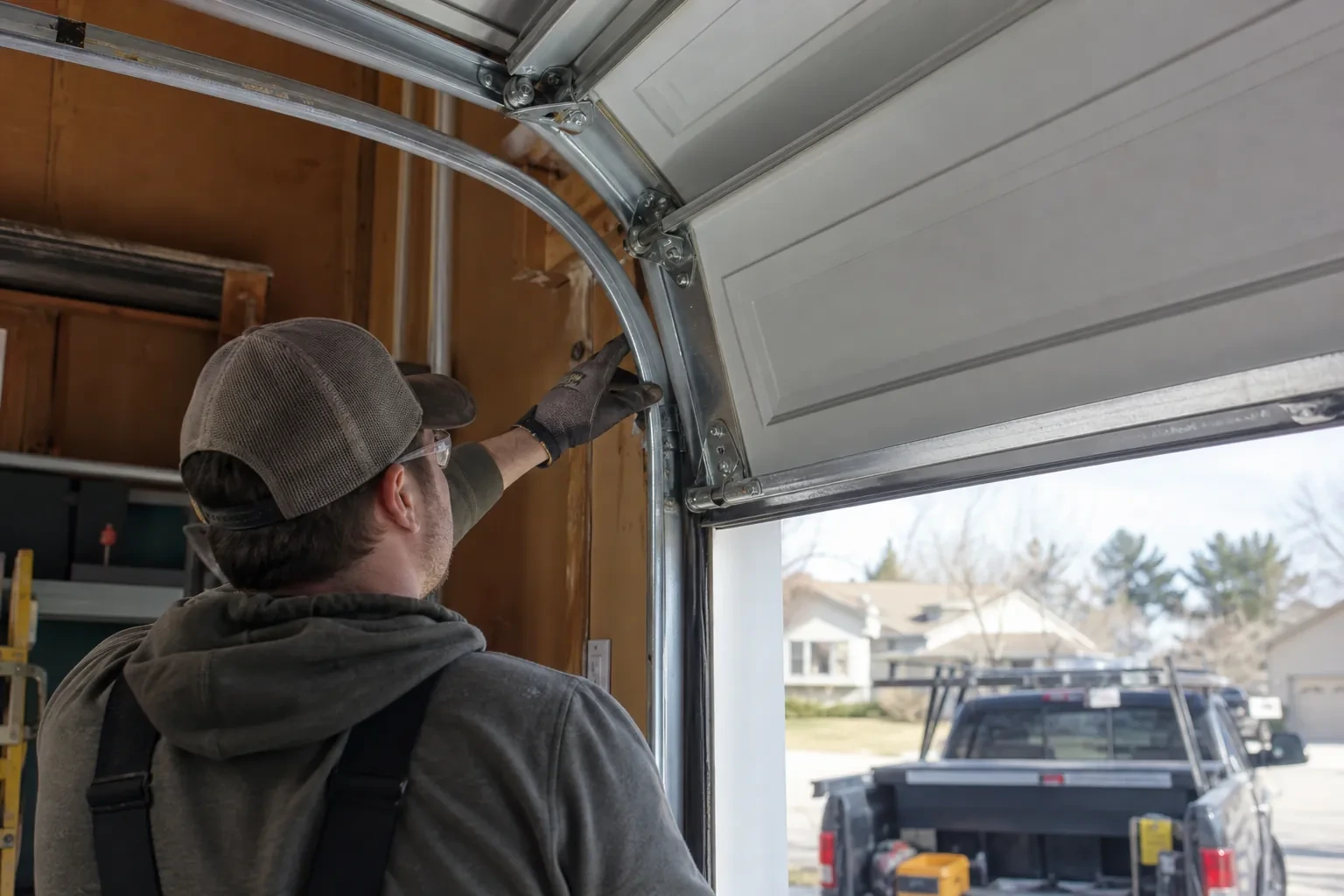
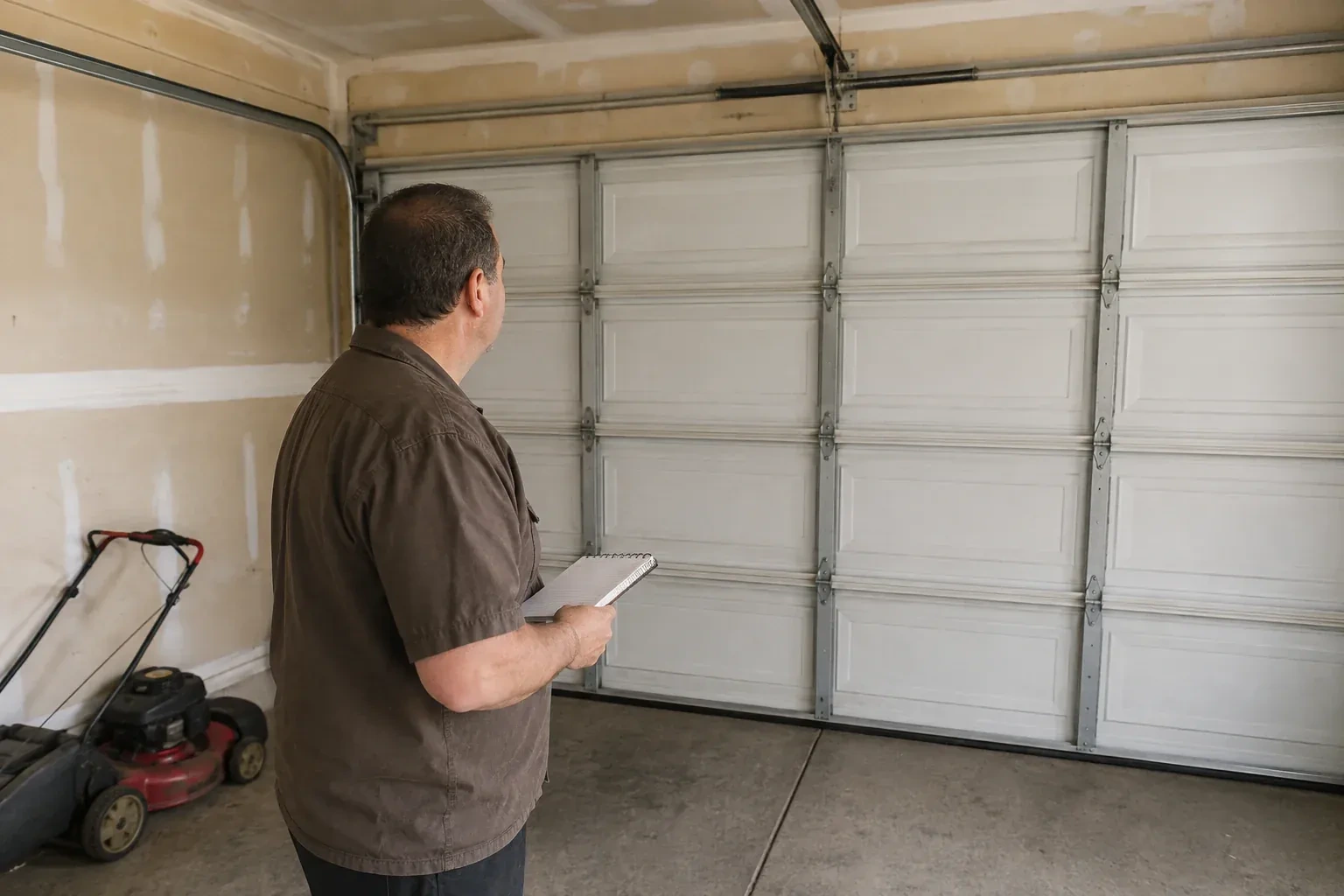
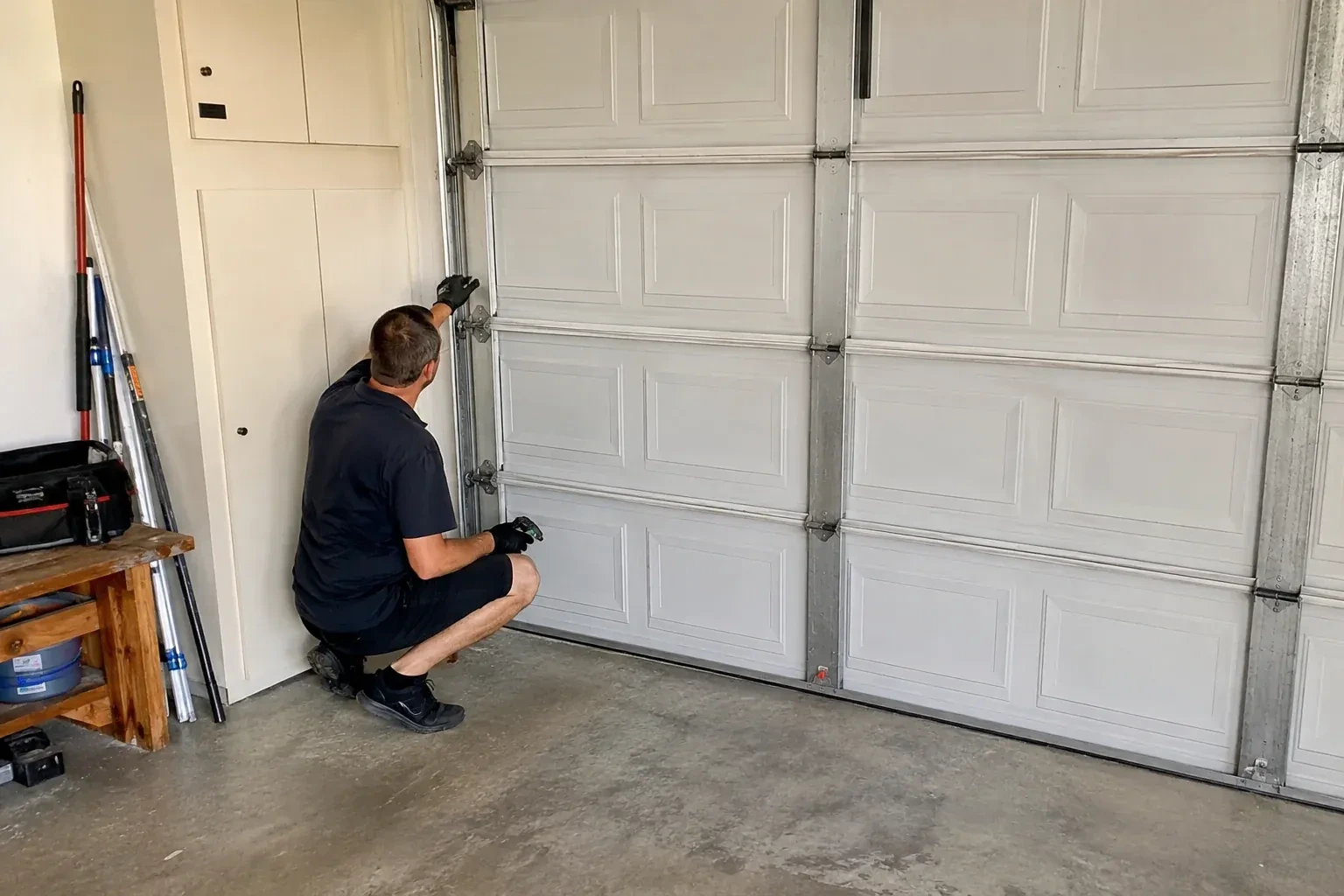
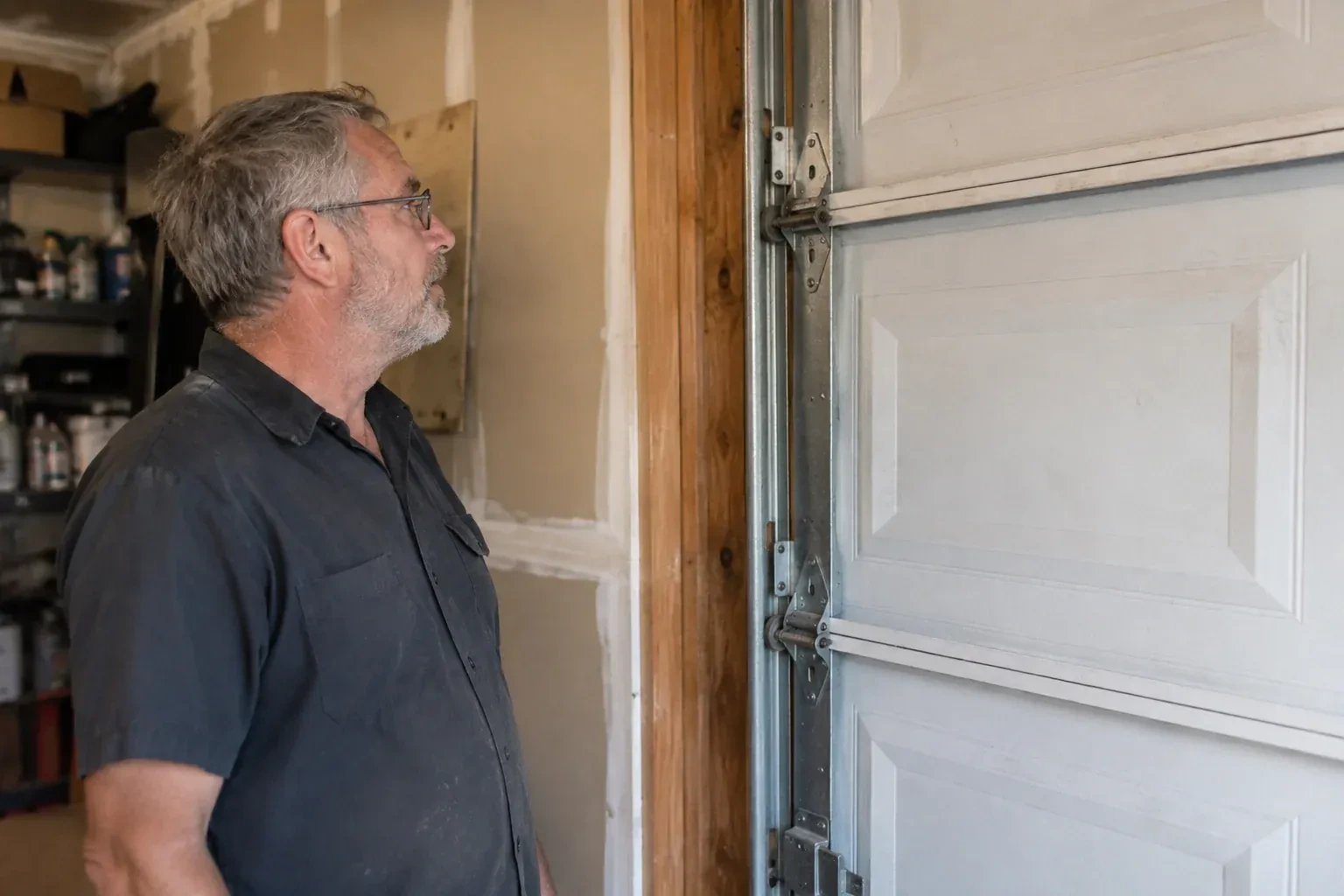
Watching from inside as the door opens, you can see the gap between the second and third panels open up on one side as they turn the corner into the ceiling, then close again. The other side stays tight.
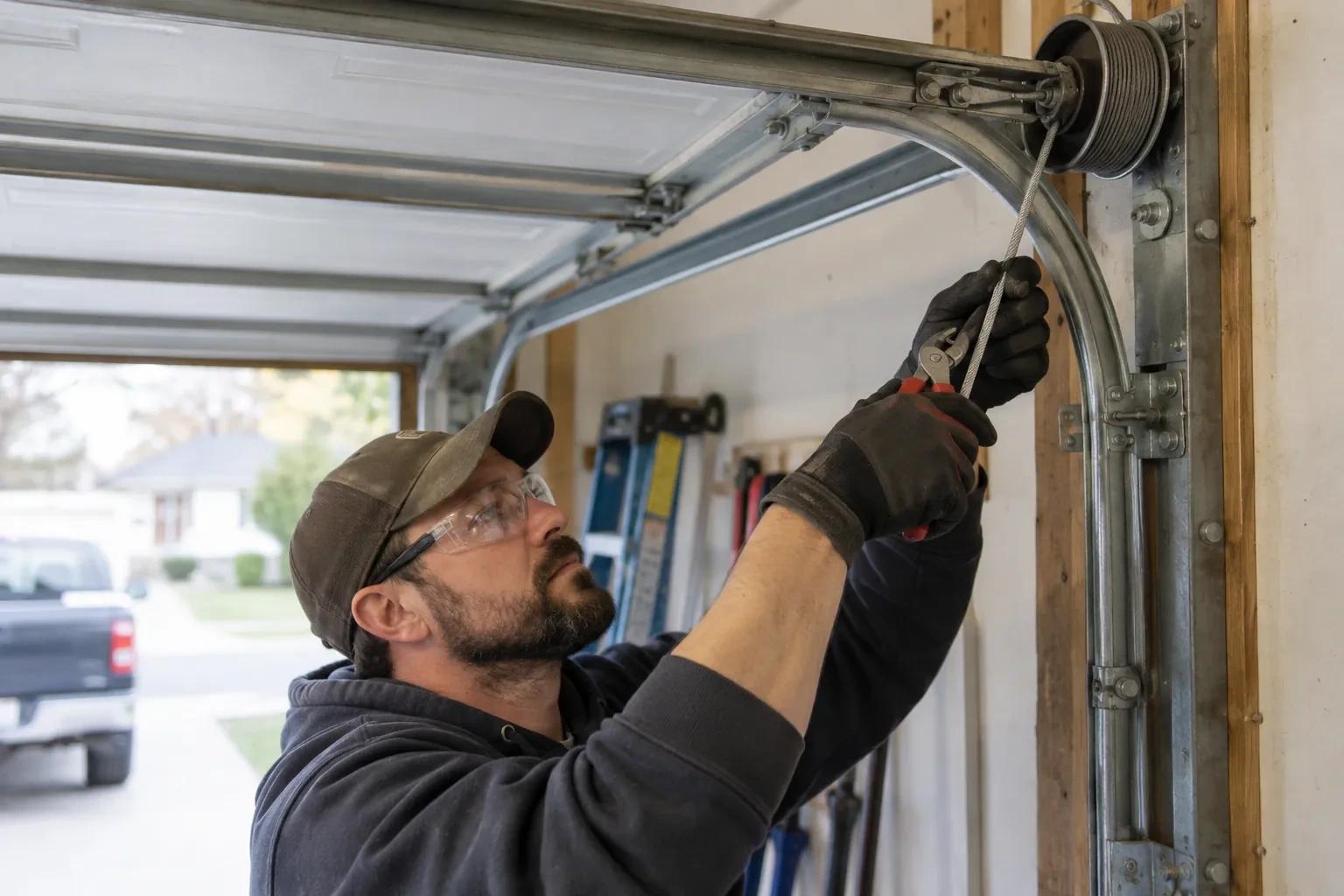
One side of the door sits higher than the other in the tracks, and a lift cable is hanging slack or has jumped off its drum. On a two-spring door this often follows one spring letting go while the other keeps pulling.
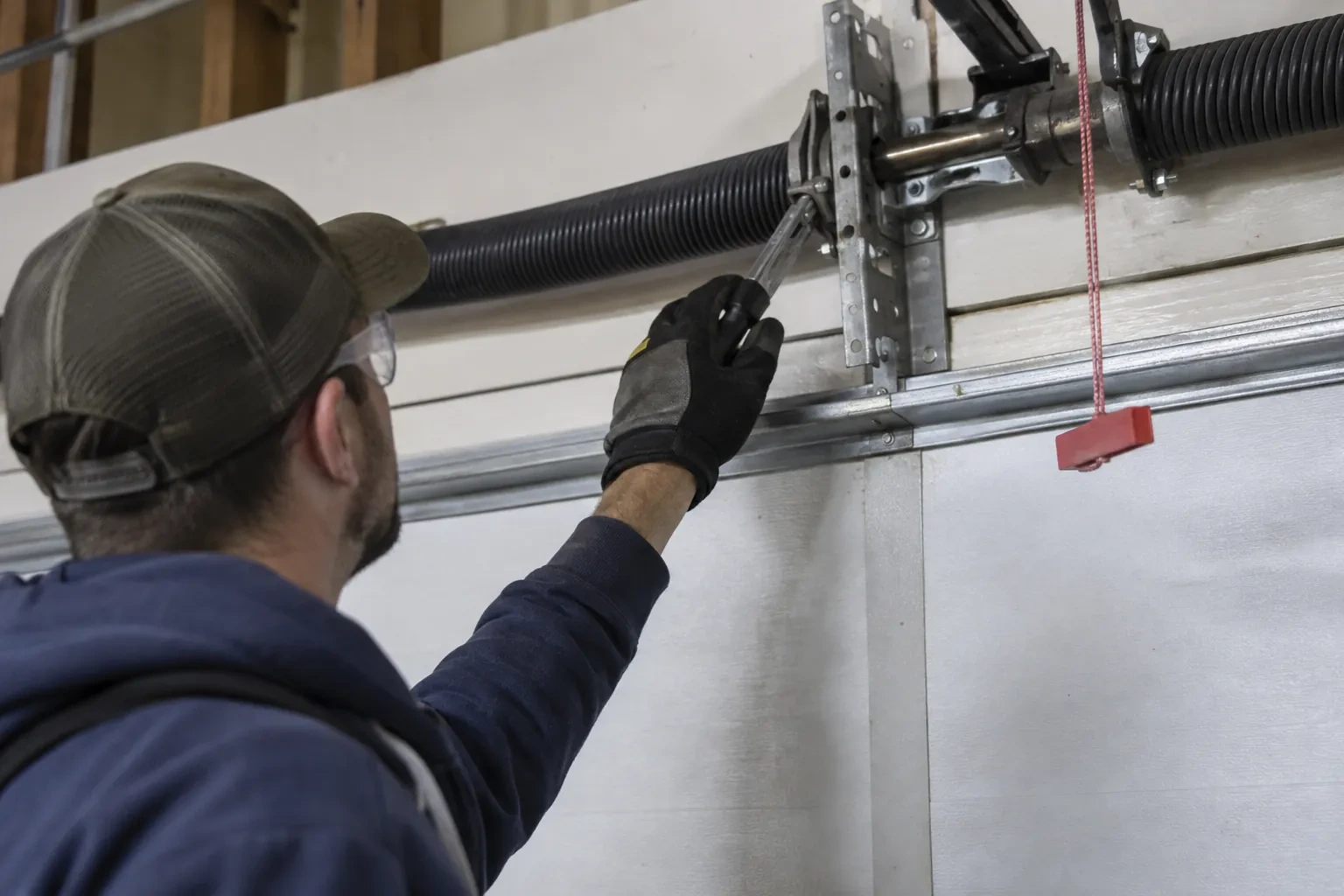
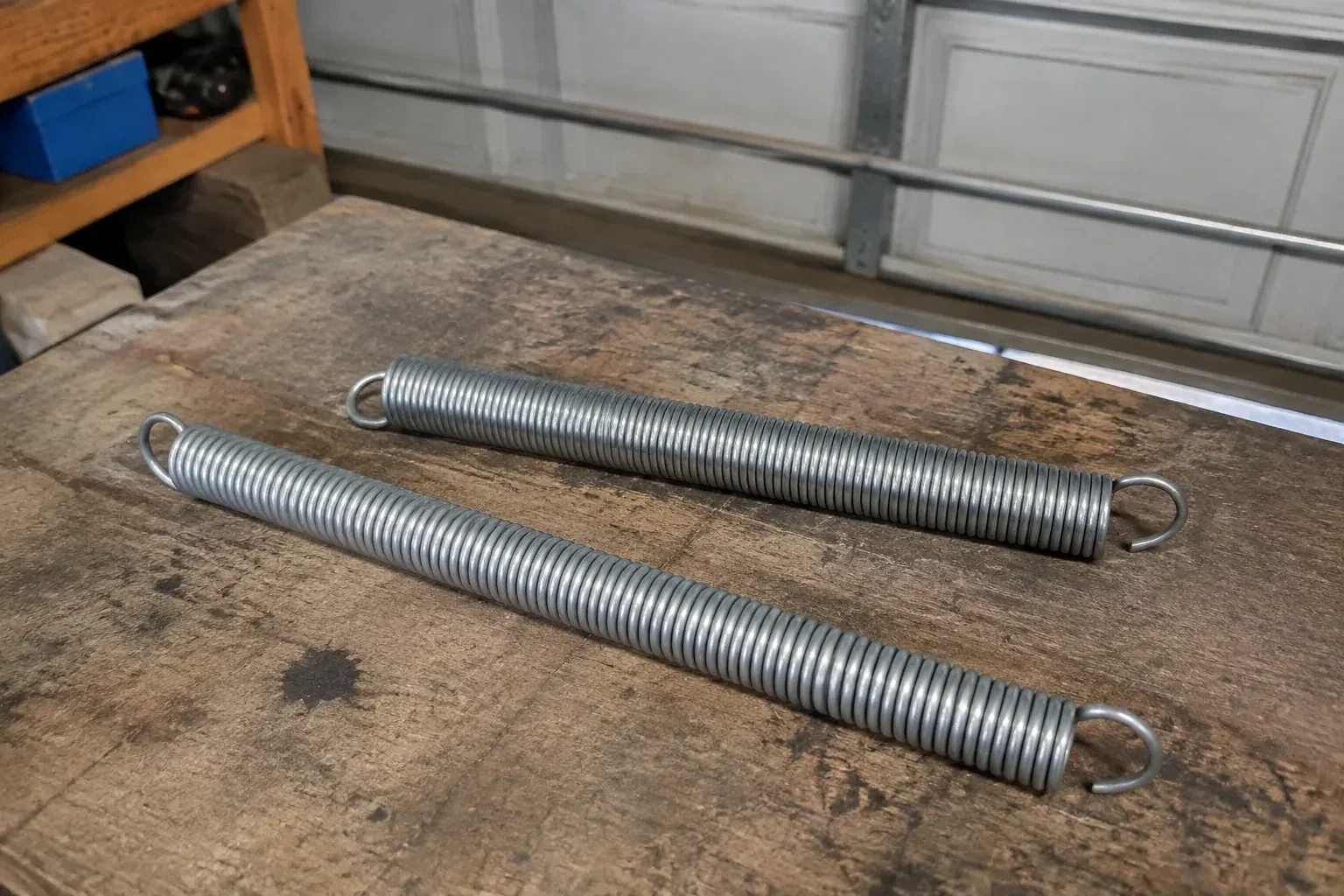
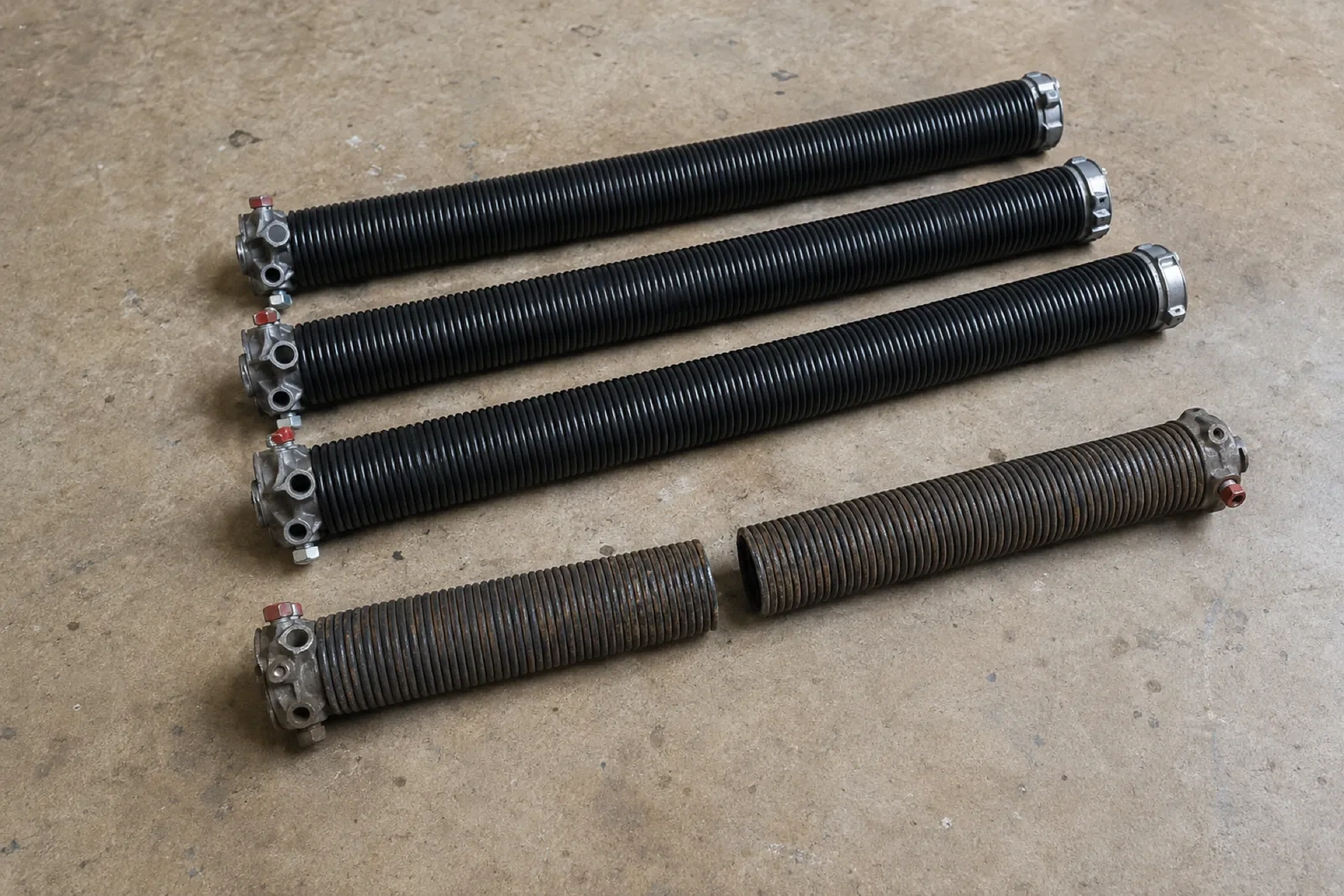
It is the first hard frost of the year and the door on the old detached garage has stopped halfway, squealing at one pulley. The springs are the ones that came with the door decades ago, orange with rust where they hang near the back wall.
Released from the opener, the door will not hold anywhere. Lift it to hip height, take your hands away, and it sinks back to the concrete, gathering speed on the way down. Two years ago it used to hover exactly where you left it.
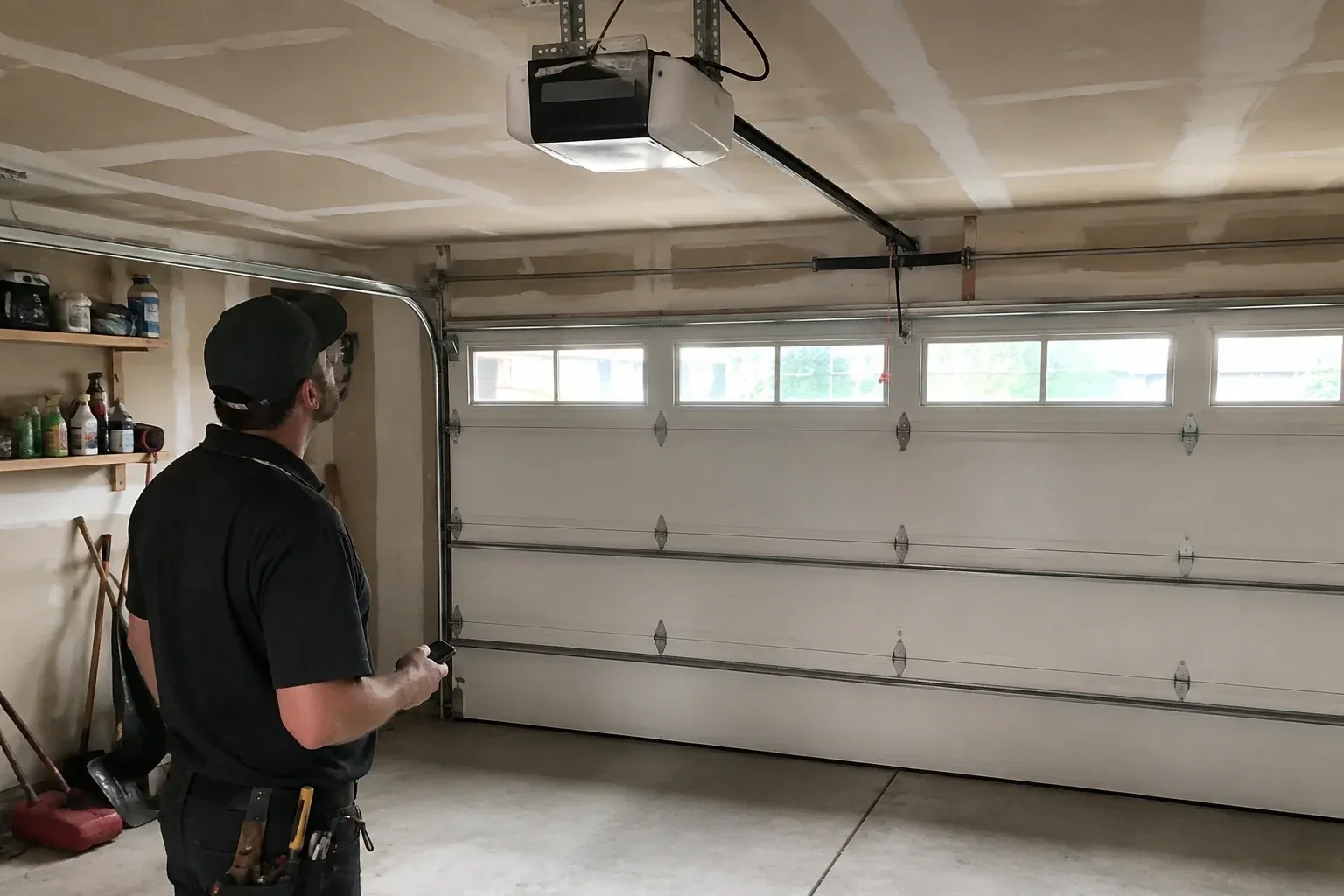
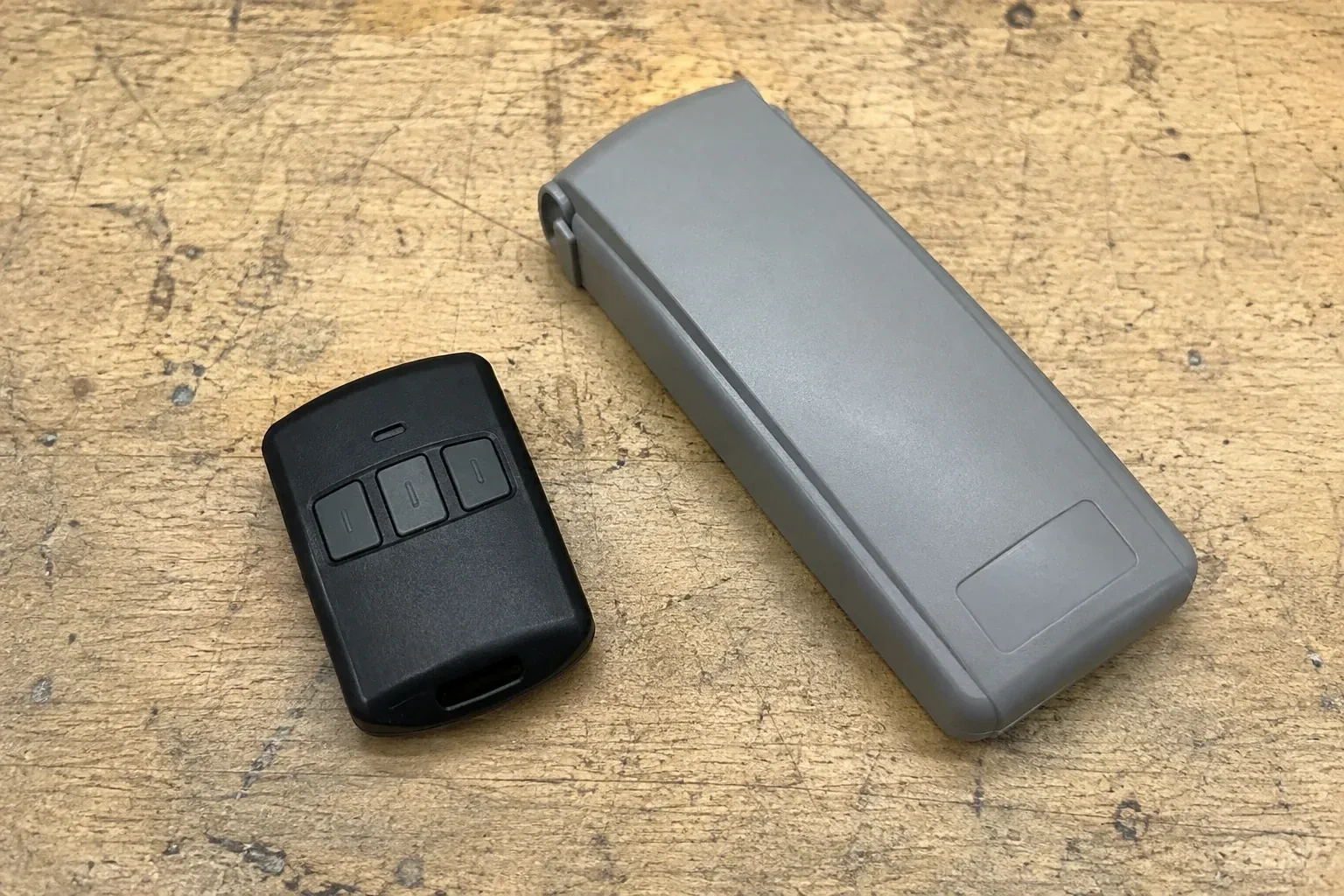
The remotes only work from the end of the driveway now, and one of them disappeared with a set of keys last month. Inside the remote are tiny switches instead of a learn button, so excluding the missing one means resetting the switch pattern on every remote and the receiver.
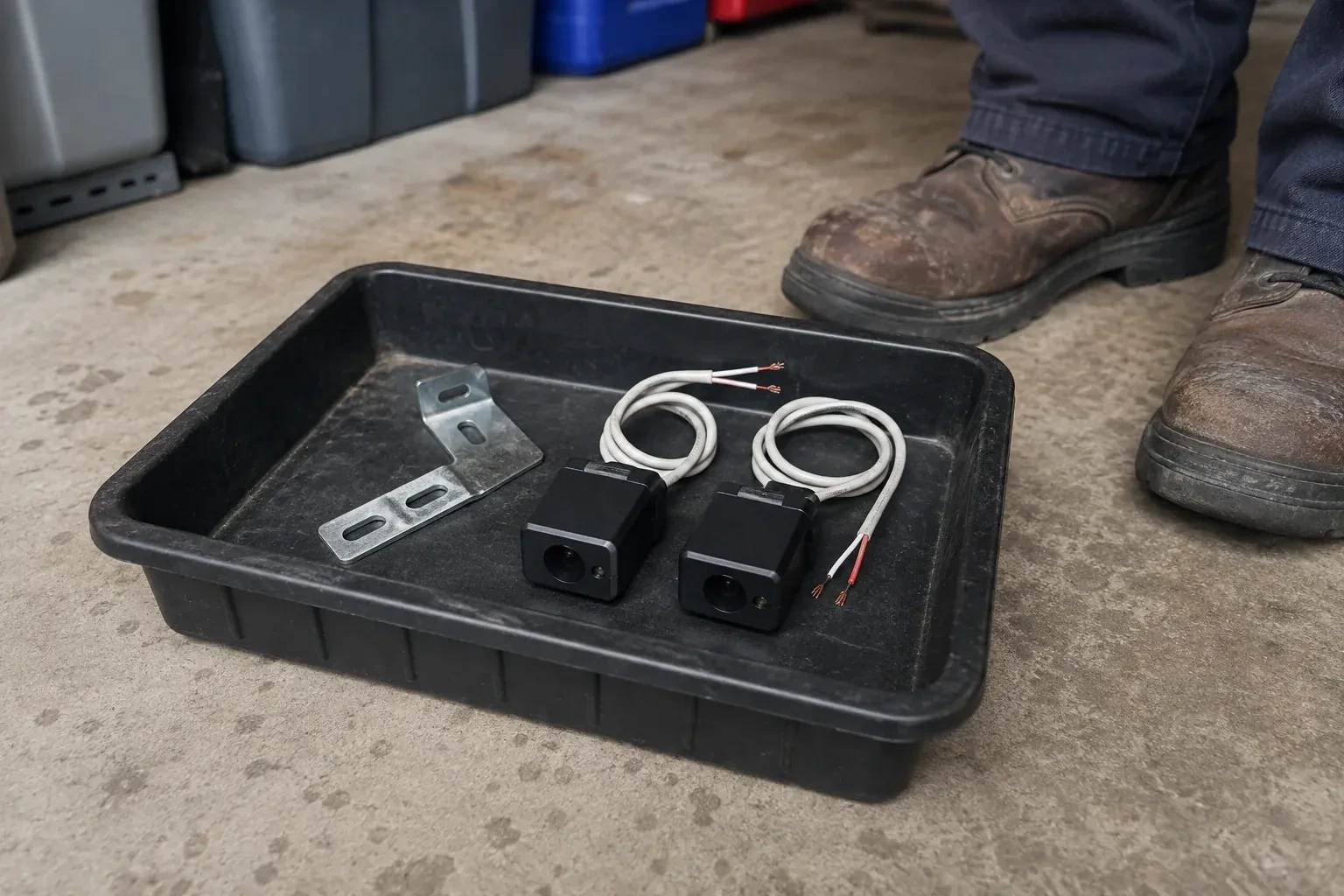
On bright mornings the door will not close, then by lunchtime it behaves itself. The garage faces the low sun, and the light reaches straight across the floor to one of the little black sensors.
After the move, the previous owner's remotes are somewhere in another city and the keypad on the outside wall wants a code nobody wrote down. The wall button works. Nothing else does, and you have no idea who else can open your garage.
You are twenty minutes down the highway when the thought lands: did the garage door close behind you? You cannot picture it. Turning back means being late, and not turning back means wondering about it all day.
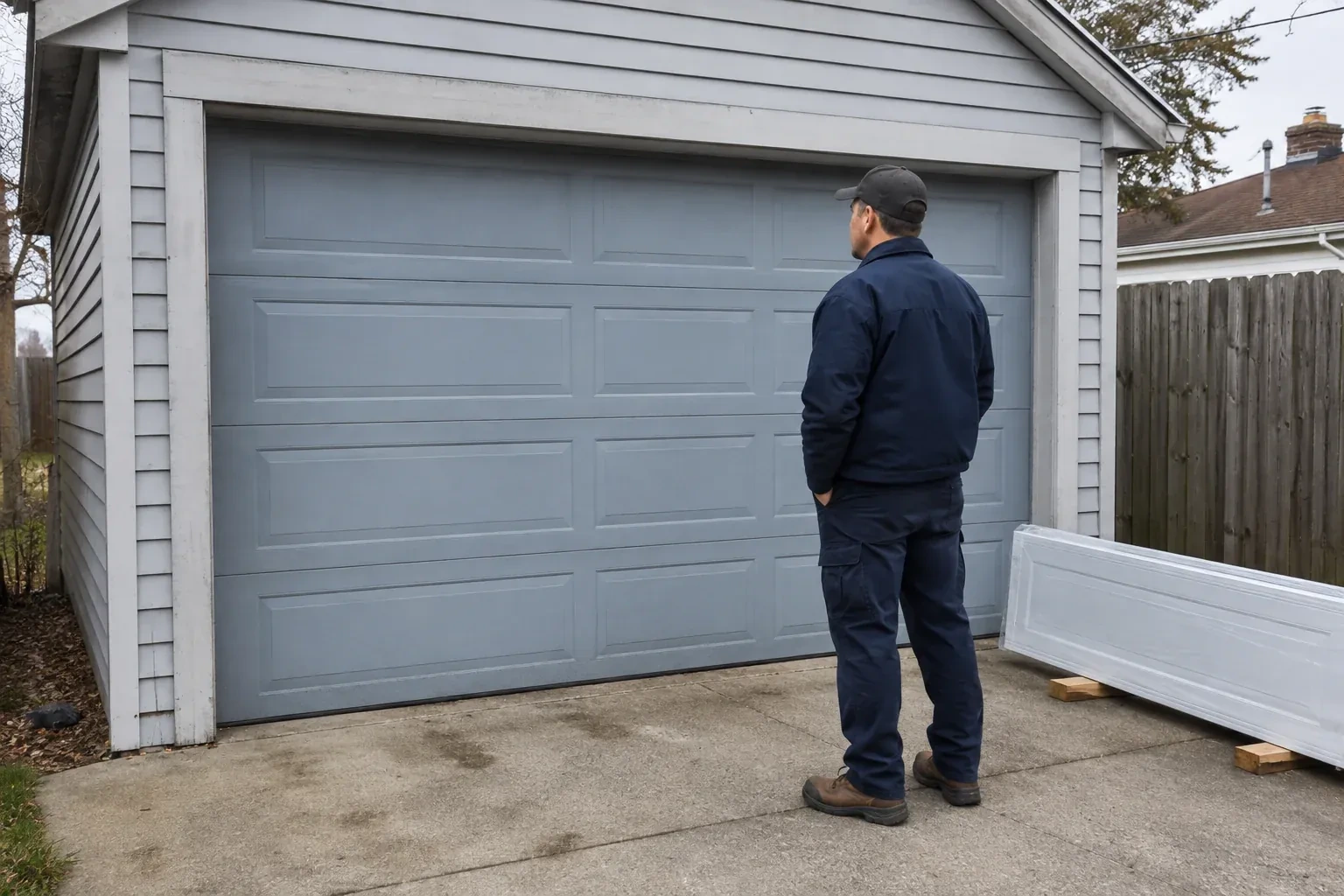
Strong gusts make the centre of your wide garage door bow inward and the rollers chatter in their tracks. Once the weather settles, the panels look straight again, but the movement has made you question how the opening is reinforced.
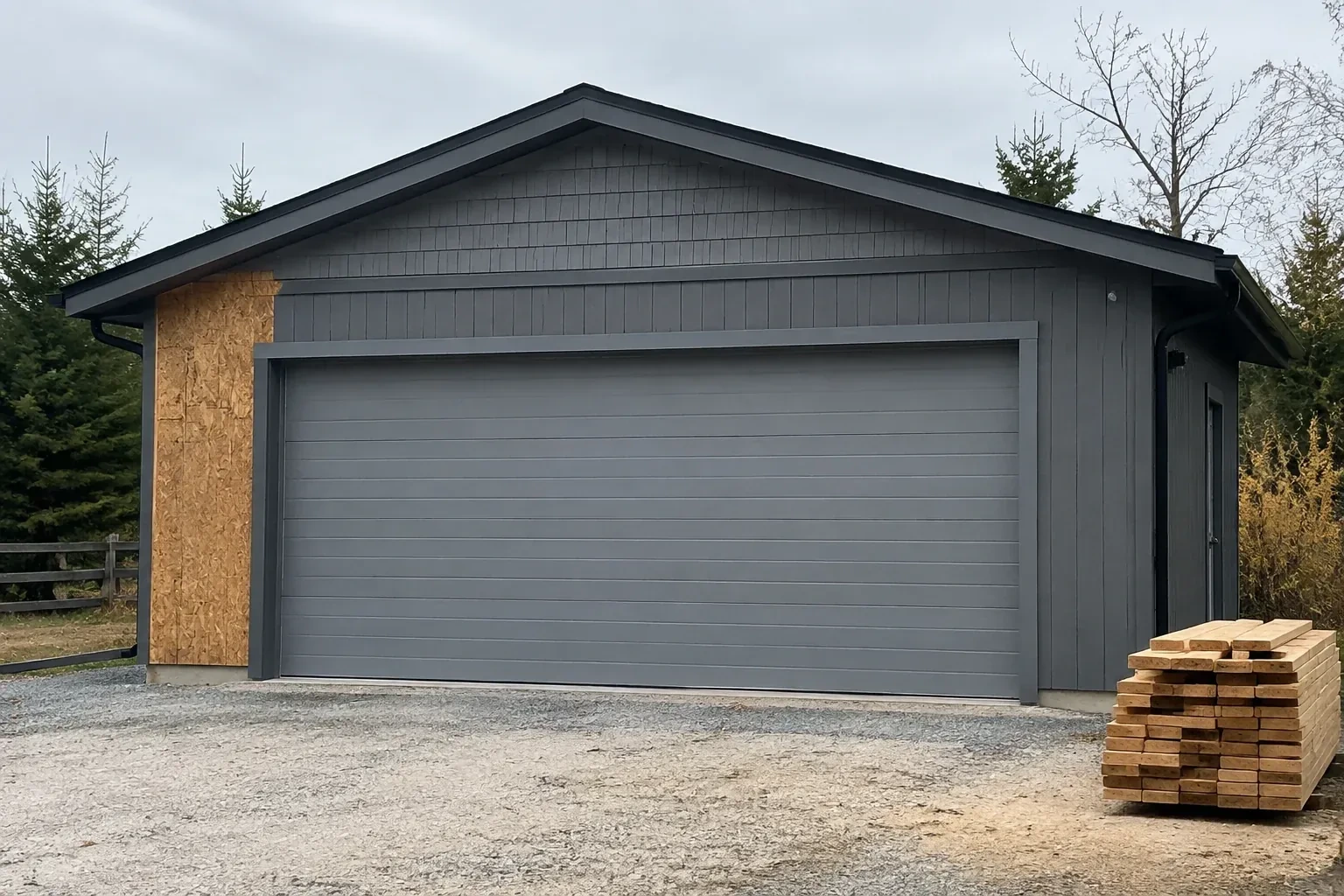
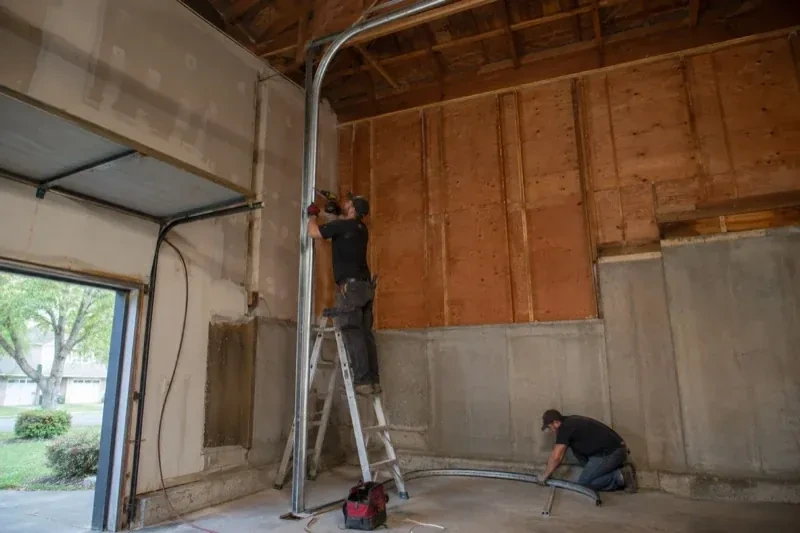
The build is nearing handover and the garage still needs its main moving component. A balanced door, fitted seals, working controls and a clear set of operating instructions will complete the opening for everyday use.
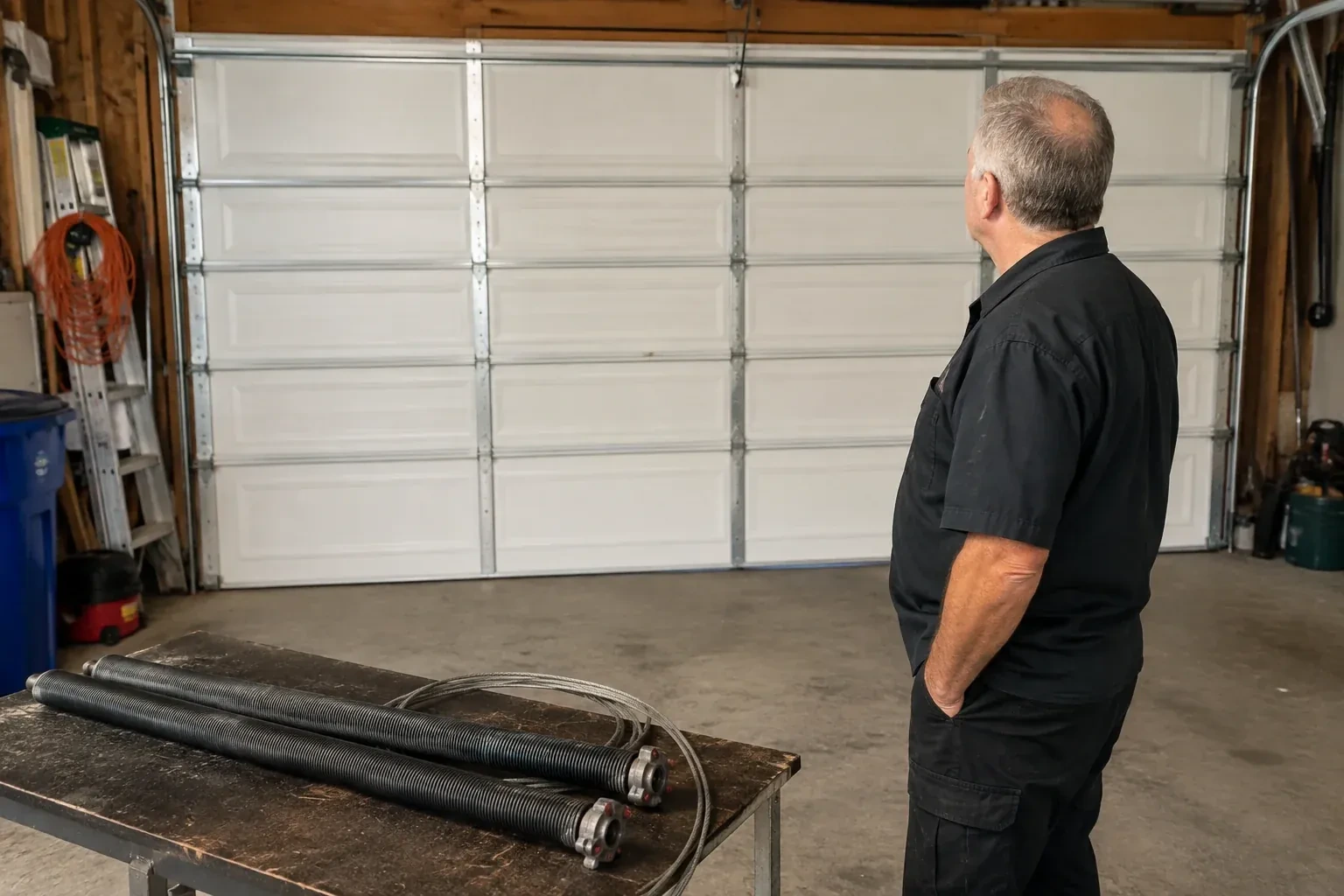
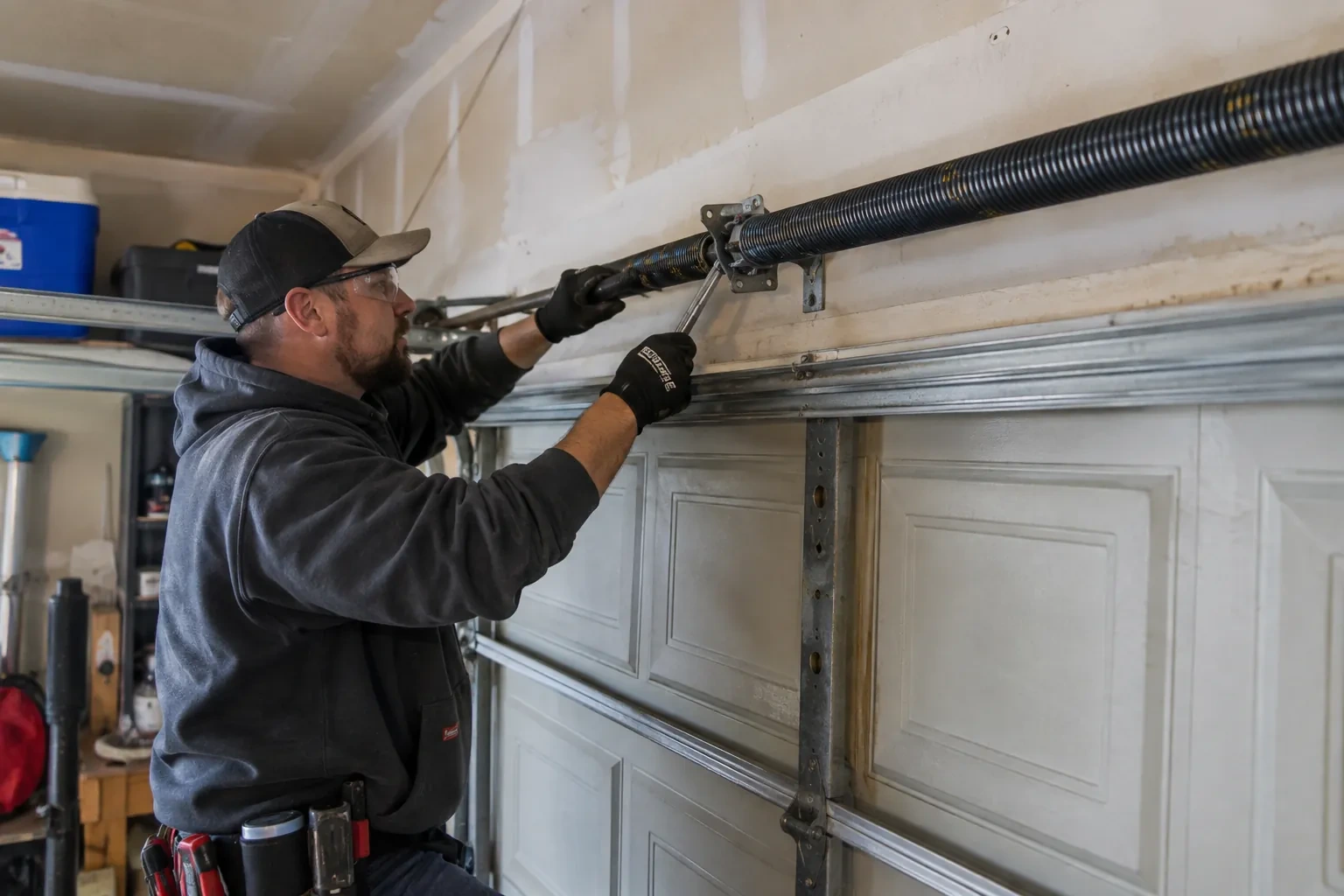
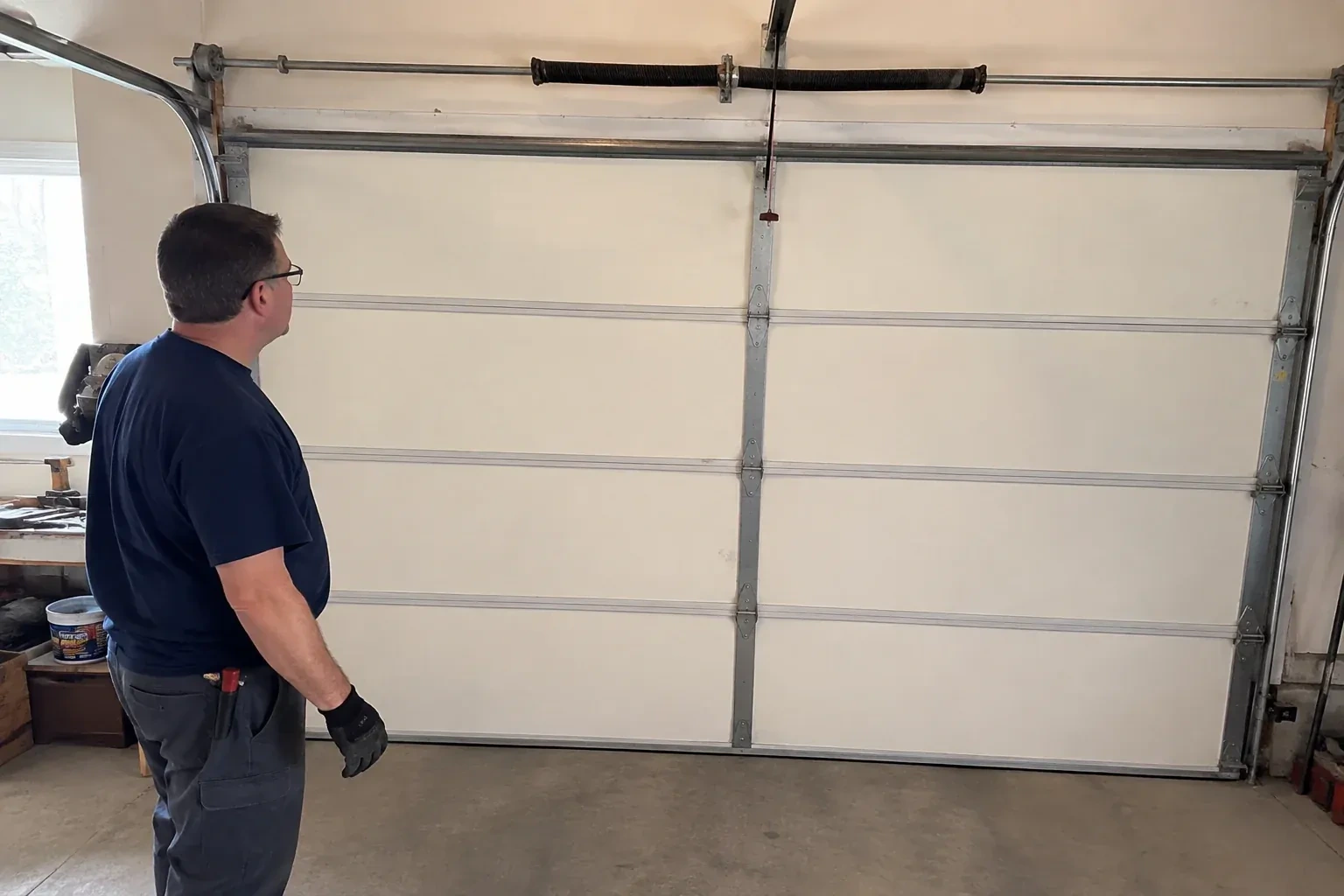
This is the heavy side of garage door work. A technician with winding bars, a set of stands and a measured approach can make a door that was dangerous to move feel light again.
Insulated doors change how an attached garage feels and how the rooms beside it hold their heat. Choosing the right construction for your house, and installing it so the perimeter seals properly, is the kind of work this category describes.
Watching from inside as the door opens, you can see the gap between the second and third panels open up on one side as they turn the corner into the ceiling, then close again.
WhyA garage door is balanced when its springs carry almost the whole weight of the door, so the door itself is nearly weightless in your hands and the opener only has to guide it.
The remotes only work from the end of the driveway now, and one of them disappeared with a set of keys last month.
WhyWhen permit drawings or a building designer specify wind criteria, the replacement is planned from those documents rather than from appearance alone.
The build is nearing handover and the garage still needs its main moving component.
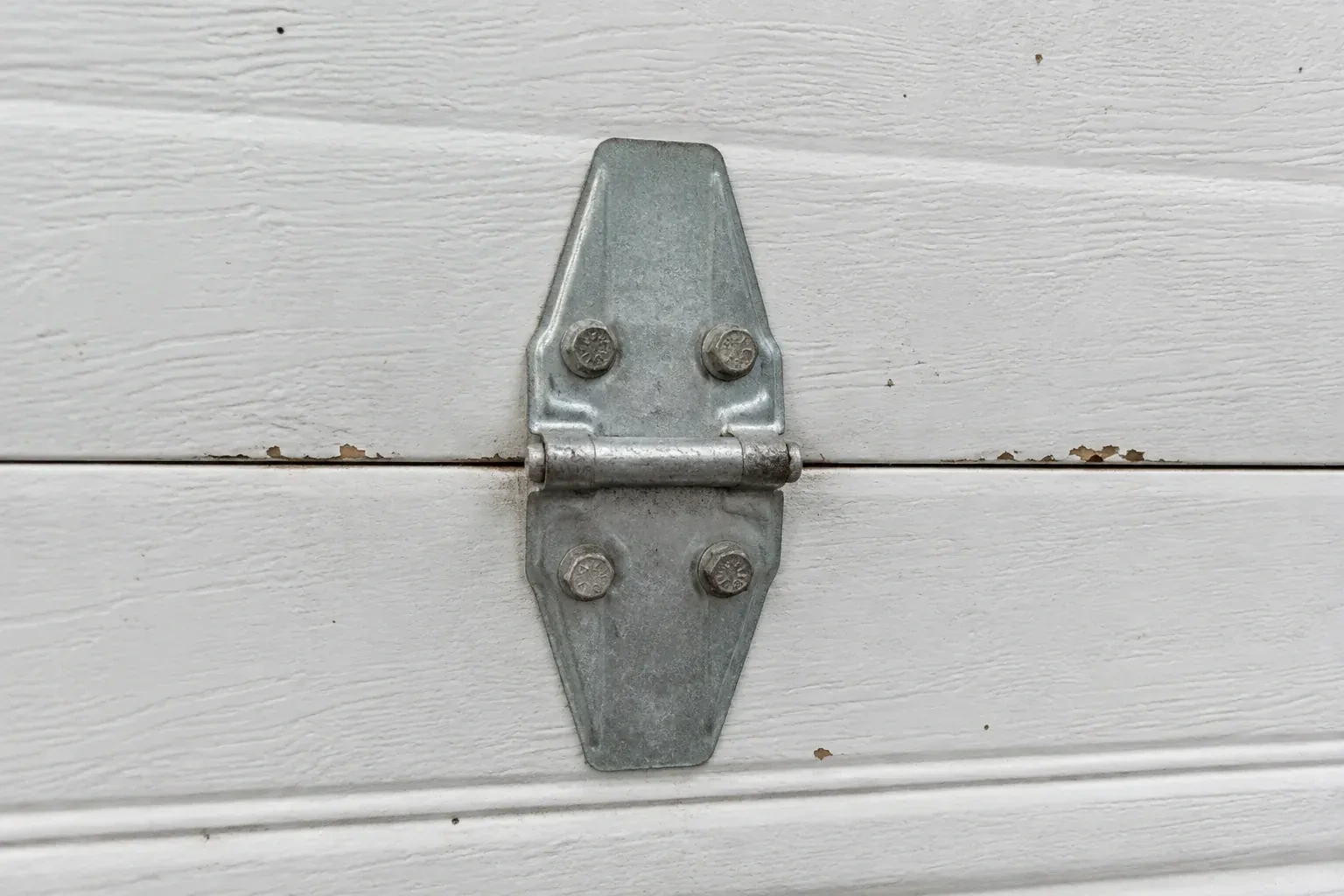
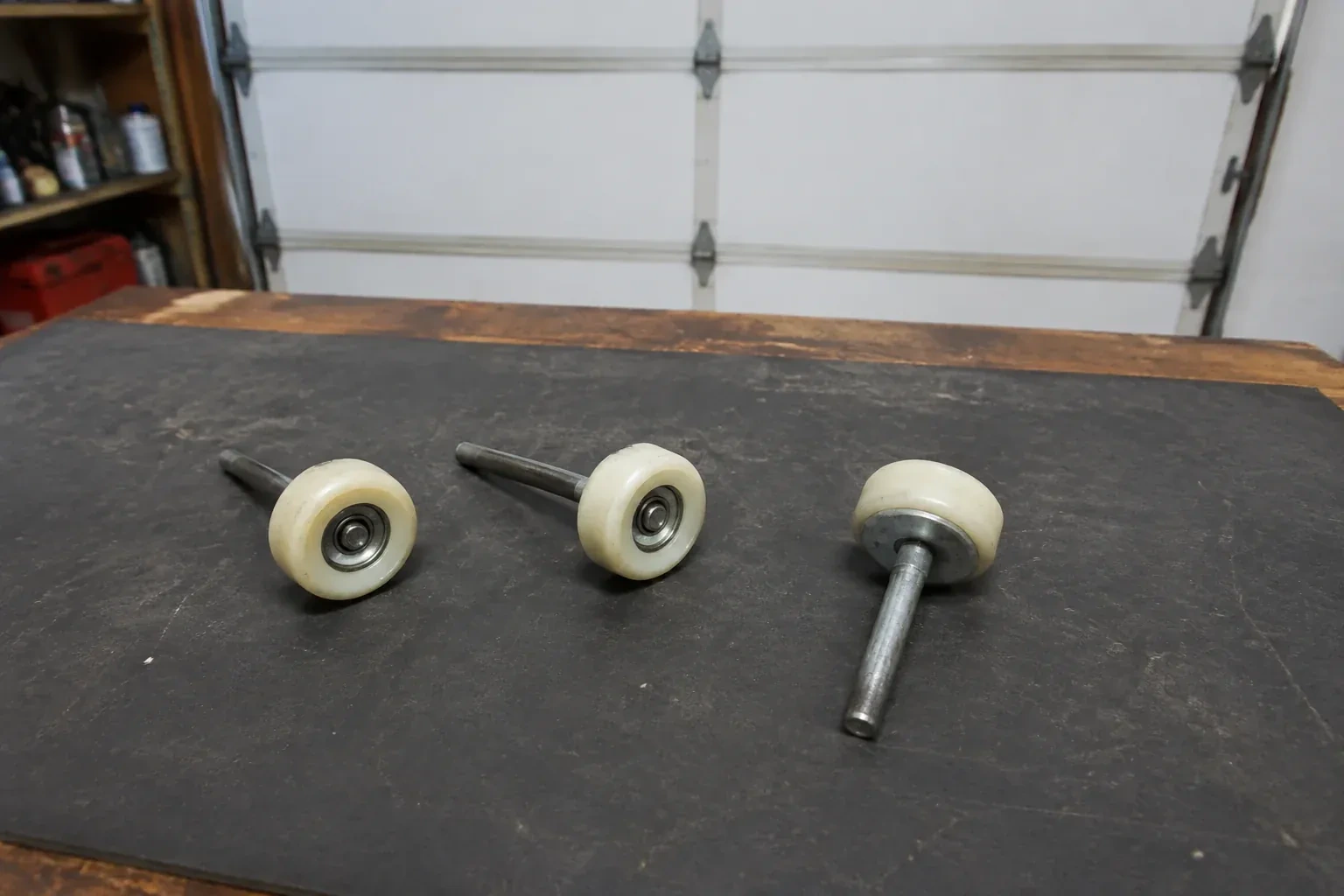
They are checked every time and replaced when they need it. The roller stem sits in a tube on the edge hinge, so when that hinge comes off the roller is already in hand, and fitting a new one adds a minute. A wheel that is cracked, flat-spotted or grinding on its bearing is the sort of thing that strained the hinge, so leaving it would ask the new hinge to carry the same load.
Will the new spring look the same as the old one?
Not necessarily, and that is fine. The paint colour on the winding cone or coil is a code that identifies wire size and wind direction, and different suppliers use their own schemes, so a matched replacement can carry a different colour than the spring it replaces. What matters is that the wire size, diameter, length and wind direction suit the door's weight and height, which is confirmed by the balance test.
What is a safety cable, and does my door need one?
A safety or containment cable is threaded down the inside of each extension spring and fixed at the hanger behind and the bracket in front. It carries no load in normal use. If a spring snaps, the cable keeps the broken halves in place beside the track. Every extension-spring door should have one each side, and the industry's inspection checklist asks for it. Doors installed decades ago often have none; they are added with the new springs.
Is this something I can do myself?
The hand test, yes, and it is a good habit. The adjustment itself is a job for a trained technician, because the springs, cables, drums and bottom brackets are under high tension whenever the door is closed, and the industry's own guidance reserves any change to them for someone with the right bars, clamps and method. Leaving that part to the visit keeps the whole thing uneventful.
The door is frozen to the floor. Why does the opener reverse?
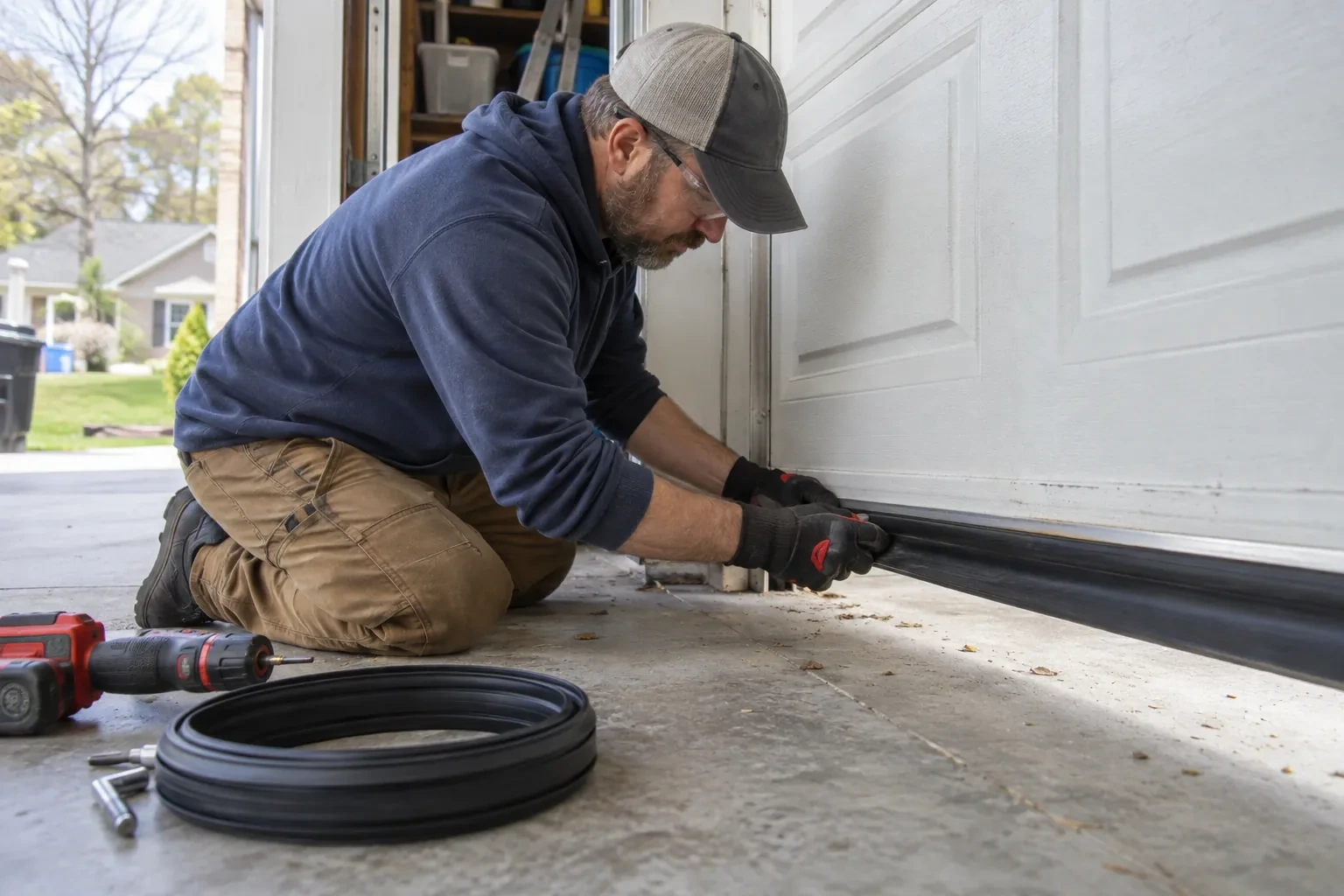
Because the operator is protecting the door. Its force setting is tuned to the small effort a balanced door needs, so a seal glued to the concrete by ice registers as an obstruction and the door heads back up rather than ripping the rubber or bowing the top panel. Loosen the seal with a plastic scraper or a hair dryer along the sill, then try again; a shovelled threshold before a cold night keeps it from recurring.
My opener has no sensors at all. Can they be added?
If the opener predates the entrapment-protection standard, which operators have had to meet since the mid-1990s, its board has no sensor circuit and a pair cannot simply be wired in. The positive news is that a modern operator brings the whole package: matched sensors, force reversal and a monitored circuit. The technician confirms the model first, because some units do have the terminals and simply had their sensors removed.
Can I give a visitor or cleaner a code that stops working?
Many keypads allow a temporary code alongside your main one. It can be set to expire after a chosen number of hours, up to several days, or after a set number of openings. Once expired it no longer opens the door, though on some models it can still close it. That suits a cleaner, a trade or a house-sitter better than sharing the main code, and it can be set again whenever needed.
The previous owner's controller is still on the ceiling. Can I use it?
Usually, once it is released from their account. If the seller can be reached, they remove the device from their app; if not, the technician performs a factory reset using the maker's documented steps, which clears the old registration. The hub and sensor are then paired fresh, joined to your network and claimed under your own login, and the battery and sensor placement are checked rather than assumed.
Is a building permit needed for replacement?
A like-for-like door change and a project involving structural alteration are different situations. Enlarging an opening, combining bays, replacing framing, or completing work already covered by a permit can introduce municipal review. Ask the local building department about the specific scope, and keep its direction with the door selection and installation documents.
Which documents should stay with the completed door system?
Keep the door and operator manuals, model or component identification, approved selections and any relevant drawings with the building records. The closeout note can include door size, track arrangement, counterbalance type, controls and completed commissioning checks. Private access codes remain with the owner rather than in a general service file. These records make future maintenance and compatible part identification much more straightforward.
Request a visit
The garage door on a house in Wyebridge is usually the entrance the family uses most, so we treat a repair as something that has to hold. That means finding the cause rather than the symptom, replacing the worn neighbour as well as the broken part, and setting the door up so the opener is not straining.