Springs · Wyebridge
Extension Spring Replacement in Wyebridge
A bang like a dropped toolbox came from the garage last night.
In plain words
A spring visit follows a fixed order, so you know what to expect. The technician releases the opener, raises the door fully and clamps it, because an extension spring is at its slackest with the door open. Then both springs, the pulleys, cables, hangers and containment cables are inspected and the door is weighed. Old springs come off, new ones go on with containment cables threaded through, cables are routed over the pulleys and both sides are hooked at the same setting. The clamps come off, the door is balanced by hand, and only then is the opener reconnected, adjusted and put through its reversal tests.
How the visit goesIt is the first hard frost of the year and the door on the old detached garage has stopped halfway, squealing at one pulley. The springs are the ones that came with the door decades ago, orange with rust where they hang near the back wall.
Extension Spring Replacement
How the visit goes
Hangers, brackets and what they are screwed into
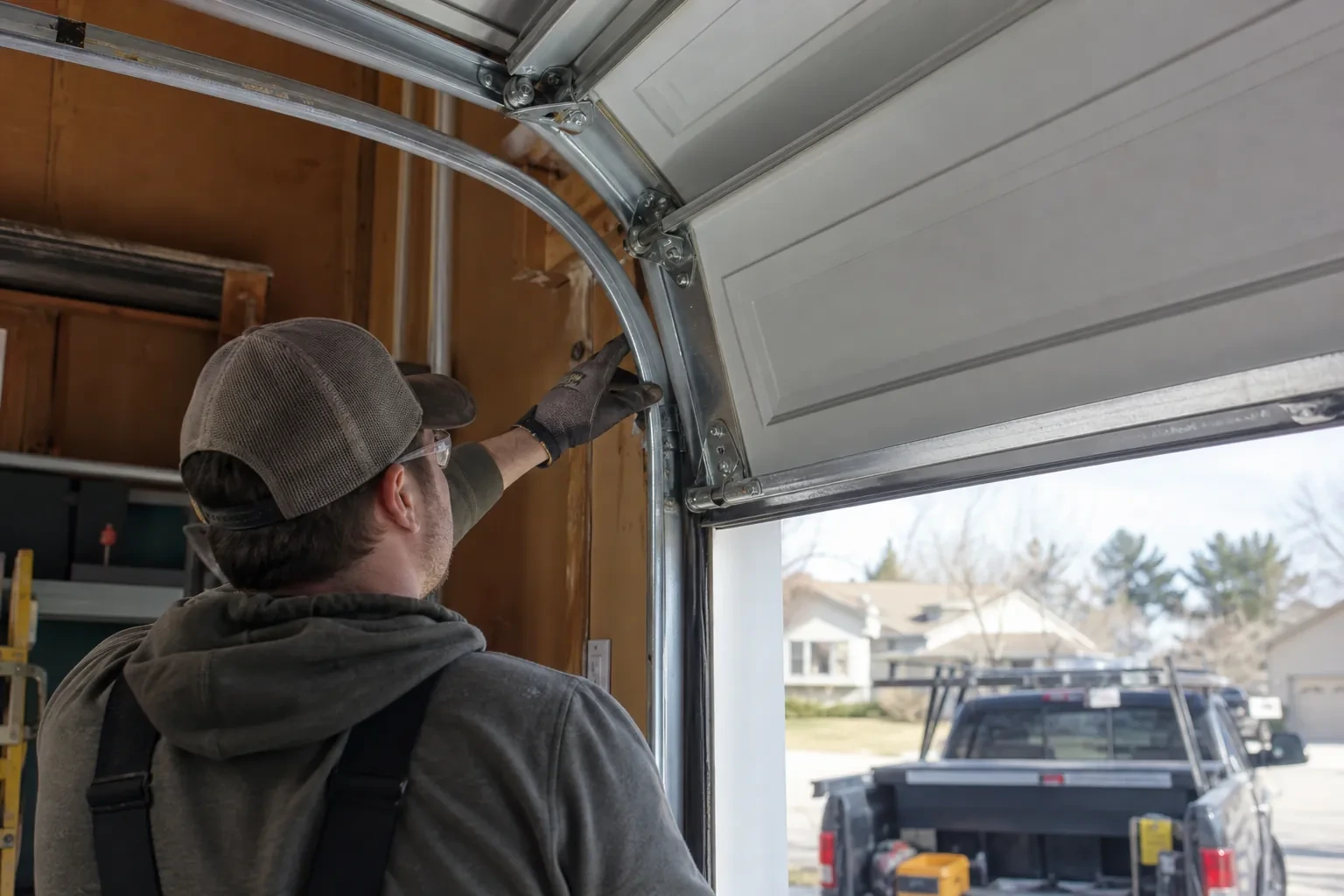
Extension springs pull against whatever holds their back end, usually an angle-iron hanger bolted to the rear track support or lag-screwed into a ceiling joist. The technician checks that this anchor is tight, that the lag screws bite into wood rather than drywall or a split joist, and that the hanger has not bent under years of load. The bracket that carries the fixed pulley at the front of the track is checked the same way, along with the bottom brackets on the door that the lift cables pull on. An anchor that has loosened lets the spring's geometry drift, which is one reason a door slowly becomes uneven.
Taking the old springs down
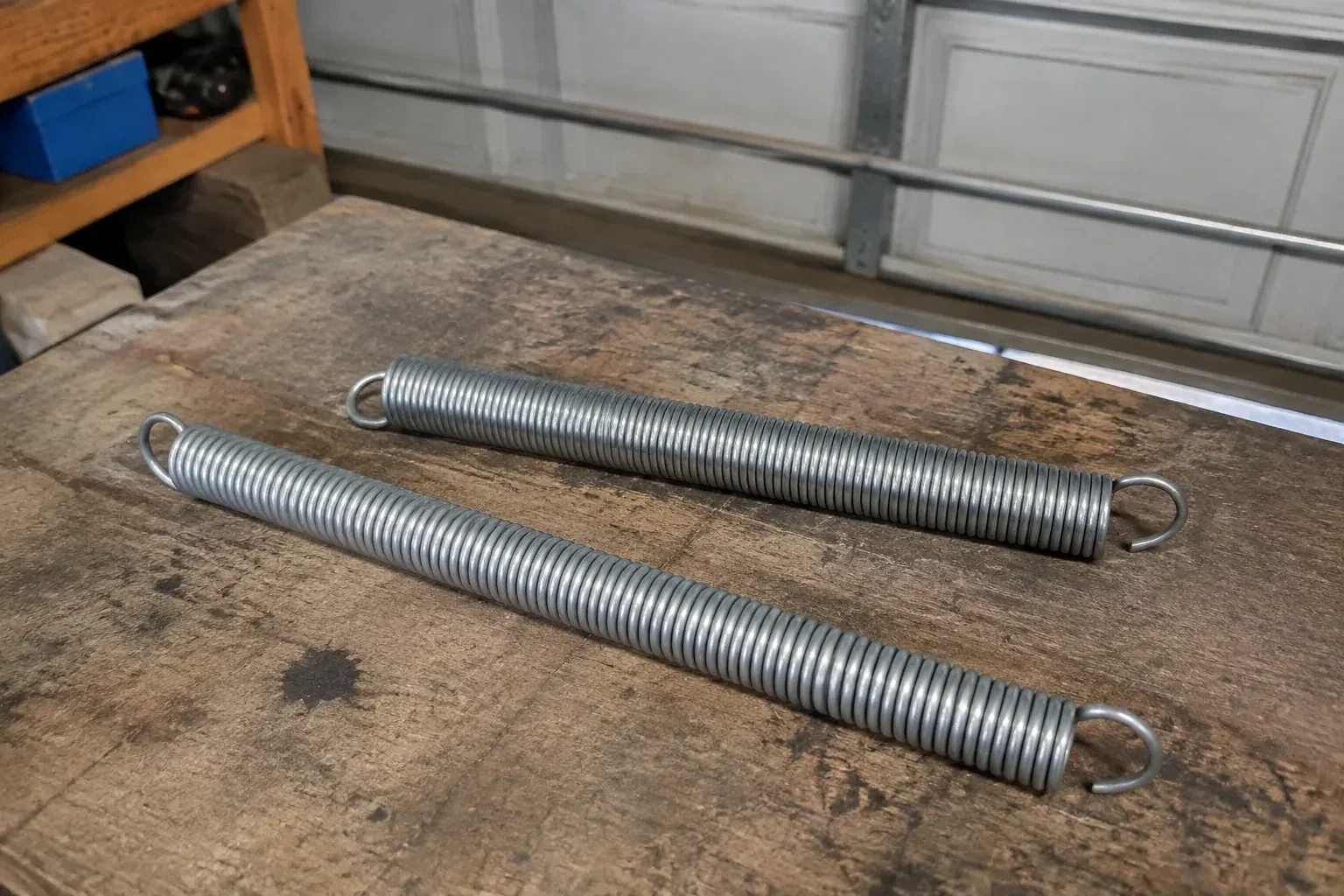
With the door open and clamped, each old spring is nearly slack, and removal is straightforward. The technician unhooks the lift cable from its S-hook or clip at the front, which lets the spring's pulley end drop free, then lifts the rear loop off the hanger. The old containment cable is unclipped from its anchors and pulled out of the coil. On a door with a broken spring, the two halves are gathered and the containment cable, if there was one, is inspected for the marks of having done its job. Everything that comes down is laid out on the floor so the old spring can be measured against its replacement and you can see the wear.
Containment cables, and leaving them be
Your door now has a cable running through the middle of each spring, anchored at the back hanger and at the front of the track. It carries no meaningful load while the springs work, though a trace of slack as the door cycles is normal. Its job begins only if a spring ever breaks, when it holds the pieces on the cable instead of letting them fly. It should not be removed, used to hang anything, or tied back to the wall. If it ever looks badly slack, frayed or pulled from its anchor, call to have it corrected promptly rather than waiting for a routine visit. A home inspector looks for this cable when a house is sold.
Extension Spring Replacement
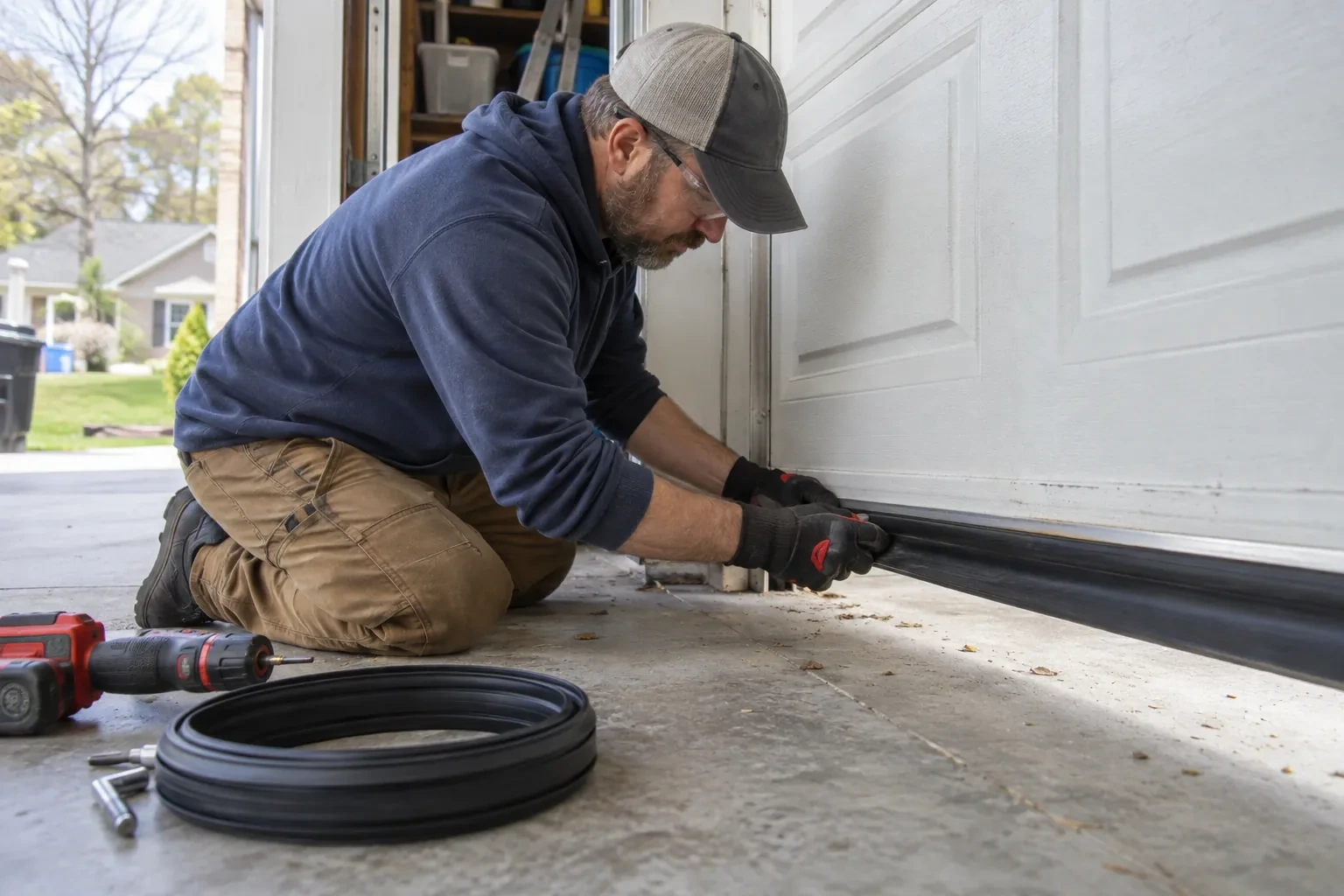
In the van
Lag screws and hanger bolts
Containment (safety) cables
Extension springs, matched pair
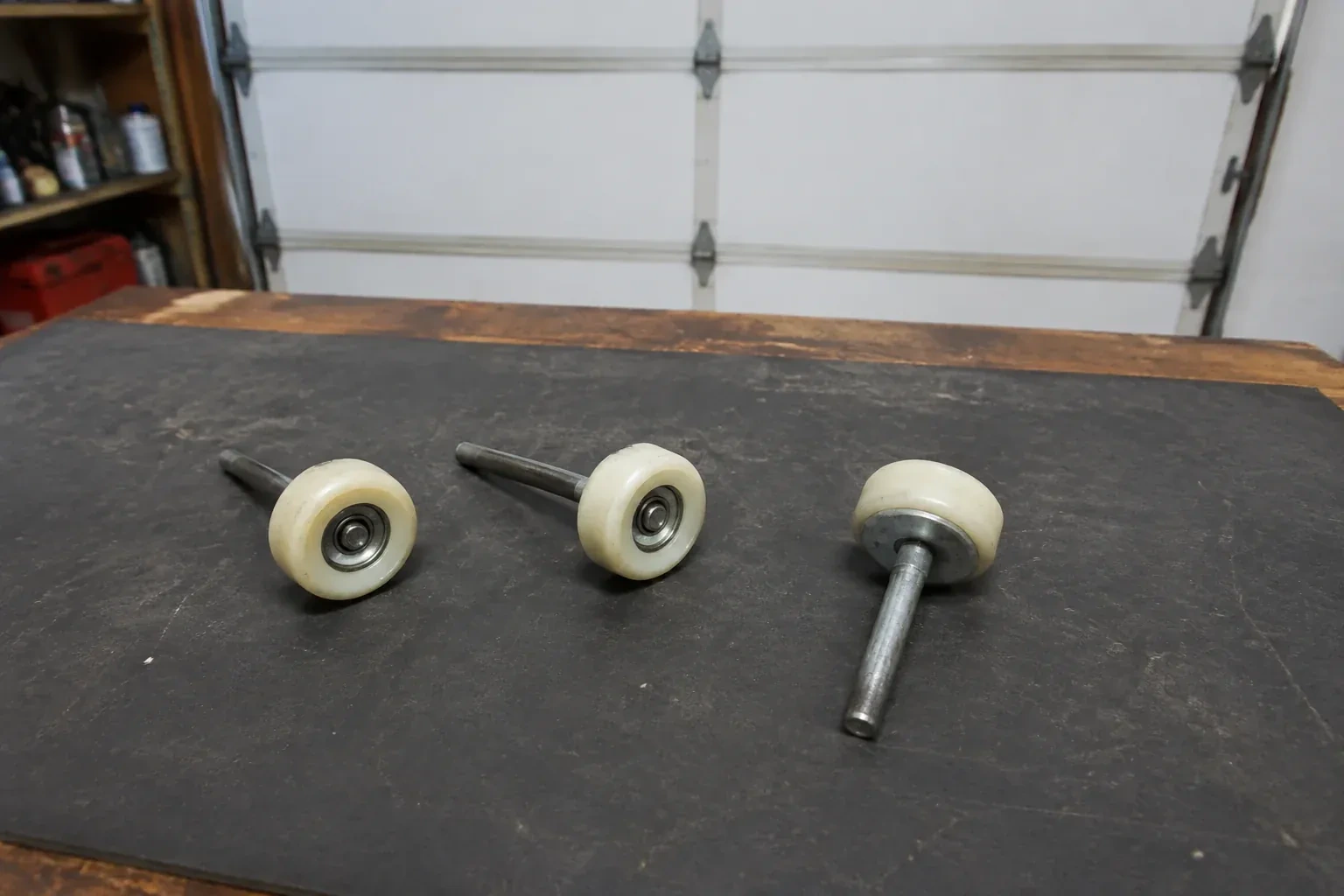
Replacement rollers and hinges
Track clamps or locking pliers
Extension Spring Replacement
What affects the quote
Opener adjustment and testing
Resetting the opener's force and travel to the newly balanced door and running the reversal tests is a short task that the quote names when it applies.
Condition of the lift cables
Cables with fraying, rust at the loop or a kink are renewed as a pair while the springs are off. Sound cables are re-routed and set, and the quote says which applies.
Converting to torsion instead
Where the garage has the headroom, some owners take the opportunity to move to a torsion system. That is a different job with different hardware and is quoted as its own option.
What to have ready
- Does one corner of the door hang lower than the other?
- Is it a single or a double door, and what is it made of?
- Does the opener still move the door, and does it sound strained?
Extension Spring Replacement: questions
QuestionsHow do you know which springs my door needs?
By weight. Extension springs are rated for the weight they lift, so the technician releases the opener and weighs the door on a scale, then matches that figure and the door's height to a spring rating and stretch length. The old springs are measured as a check on wire size, coil diameter and length. Where the two disagree, the scale decides, since doors gain weight from added insulation or panels.
What is a safety cable, and does my door need one?
A safety or containment cable is threaded down the inside of each extension spring and fixed at the hanger behind and the bracket in front. It carries no load in normal use. If a spring snaps, the cable keeps the broken halves in place beside the track. Every extension-spring door should have one each side, and the industry's inspection checklist asks for it. Doors installed decades ago often have none; they are added with the new springs.
Would a stronger spring make the door easier to lift?
Not in a useful way. The aim is a spring that matches the door's weight, so the door holds still wherever you leave it. A spring rated above that weight pulls the door up on its own, makes it hard to close, and leans on the opener to hold it down. A spring rated below lets it sink. Matched springs, set to the same hook position, give the light, even feel you want.
Related services
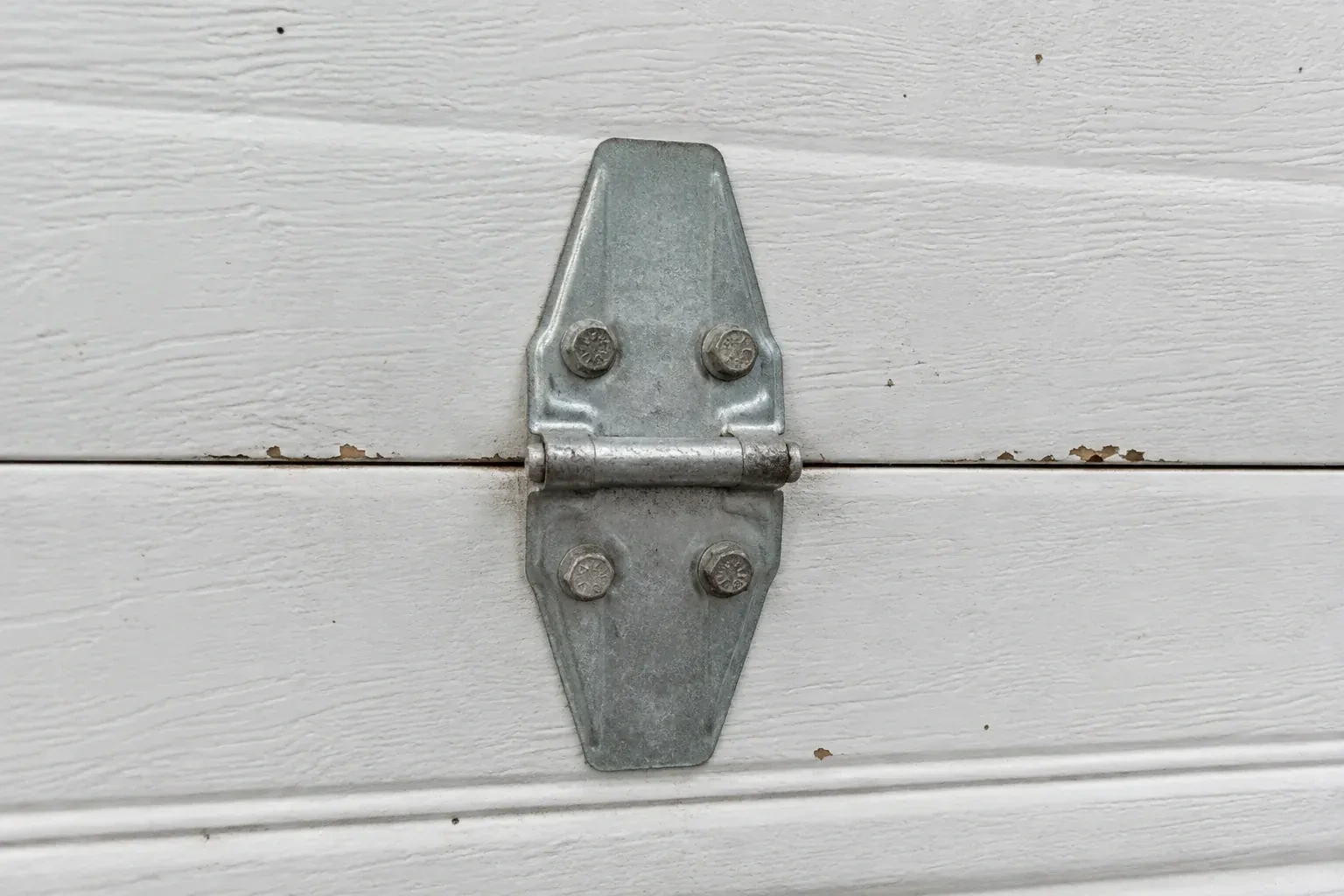
- Garage Door Hinge ReplacementWatching from inside as the door opens, you can see the gap between the second and third panels open up on one side as they turn the corner into the ceiling, then close again.
- Garage Door Track Repair or ReplacementHalfway up, the door lurches and one roller rides onto the lip of the channel.
- Garage Door Cable ReplacementSomeone left the snow shovel leaning in the opening and the door came down on it.